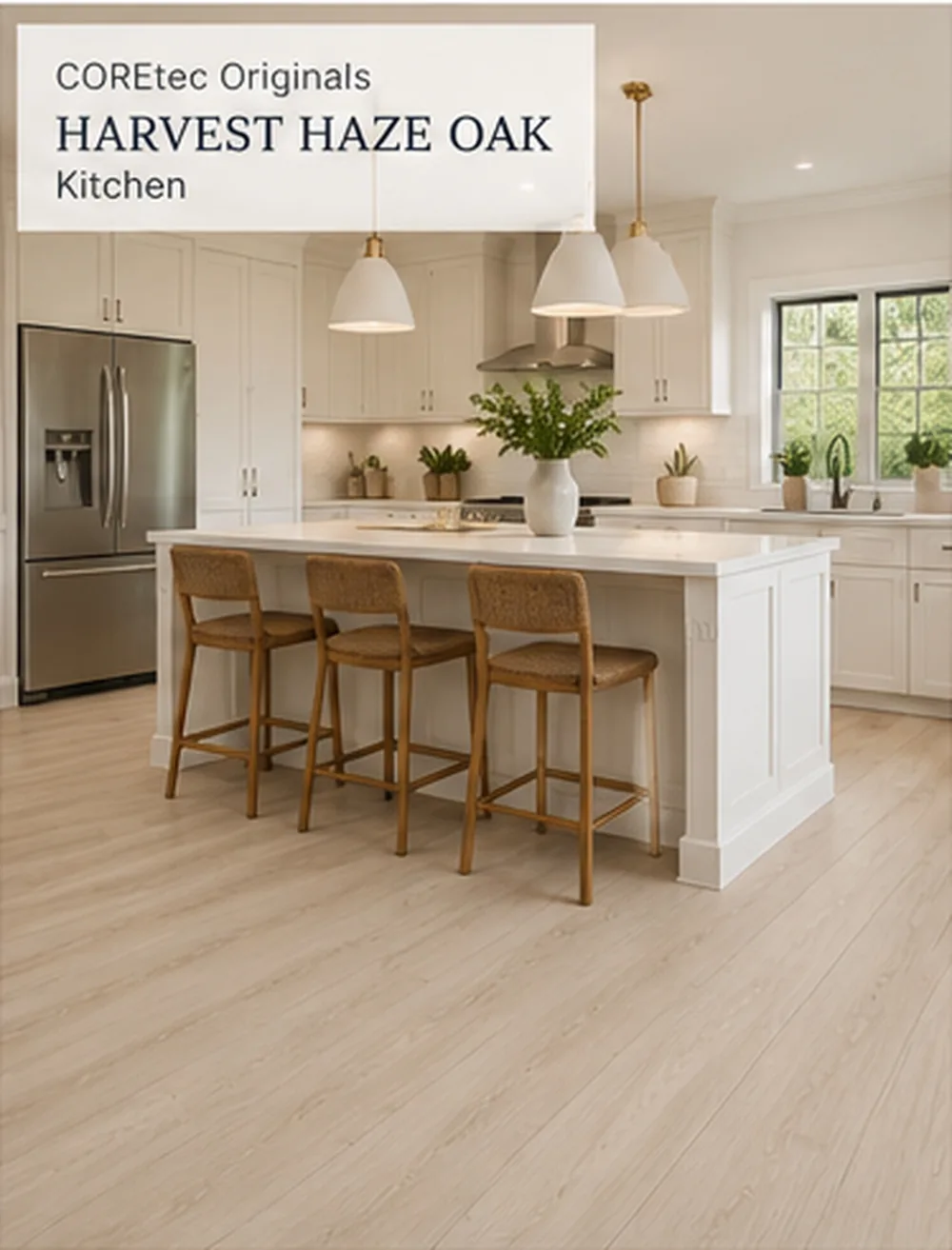
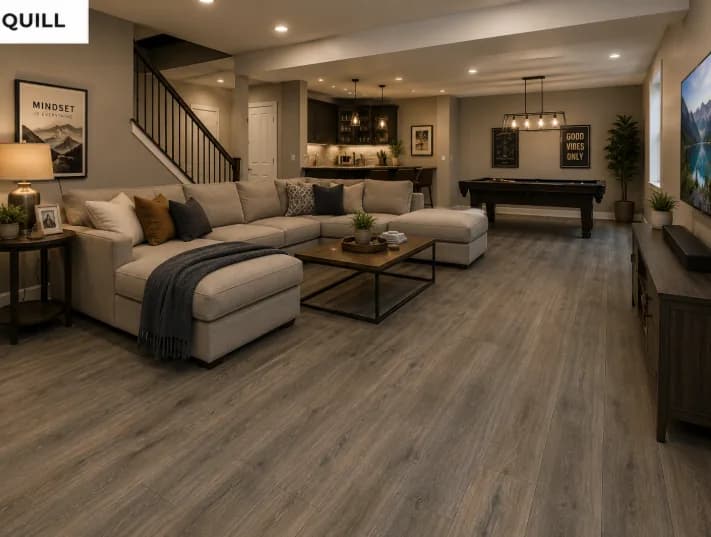
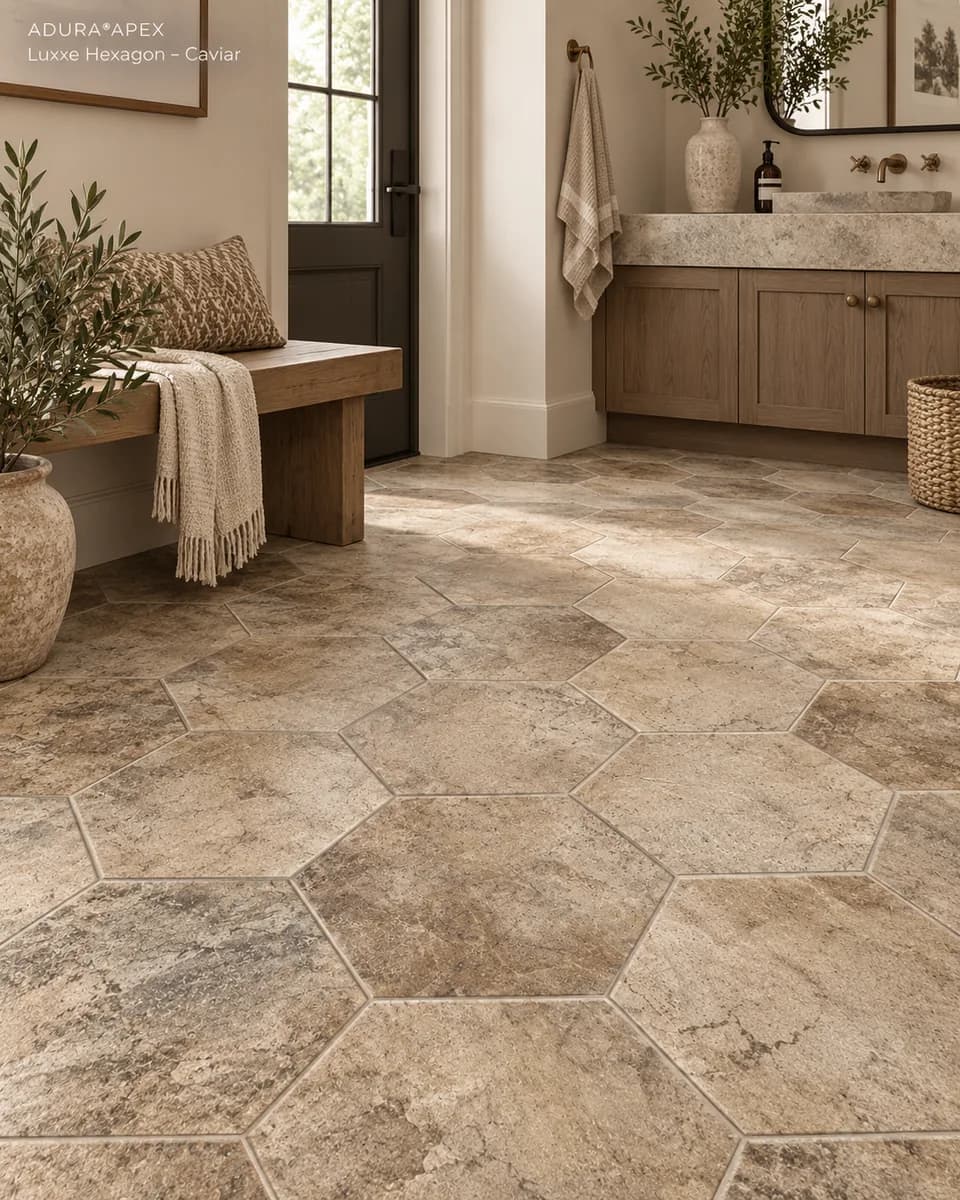
Luxury vinyl and laminate from Mannington and COREtec. Every Mannington line here is FloorScore certified for indoor air quality.
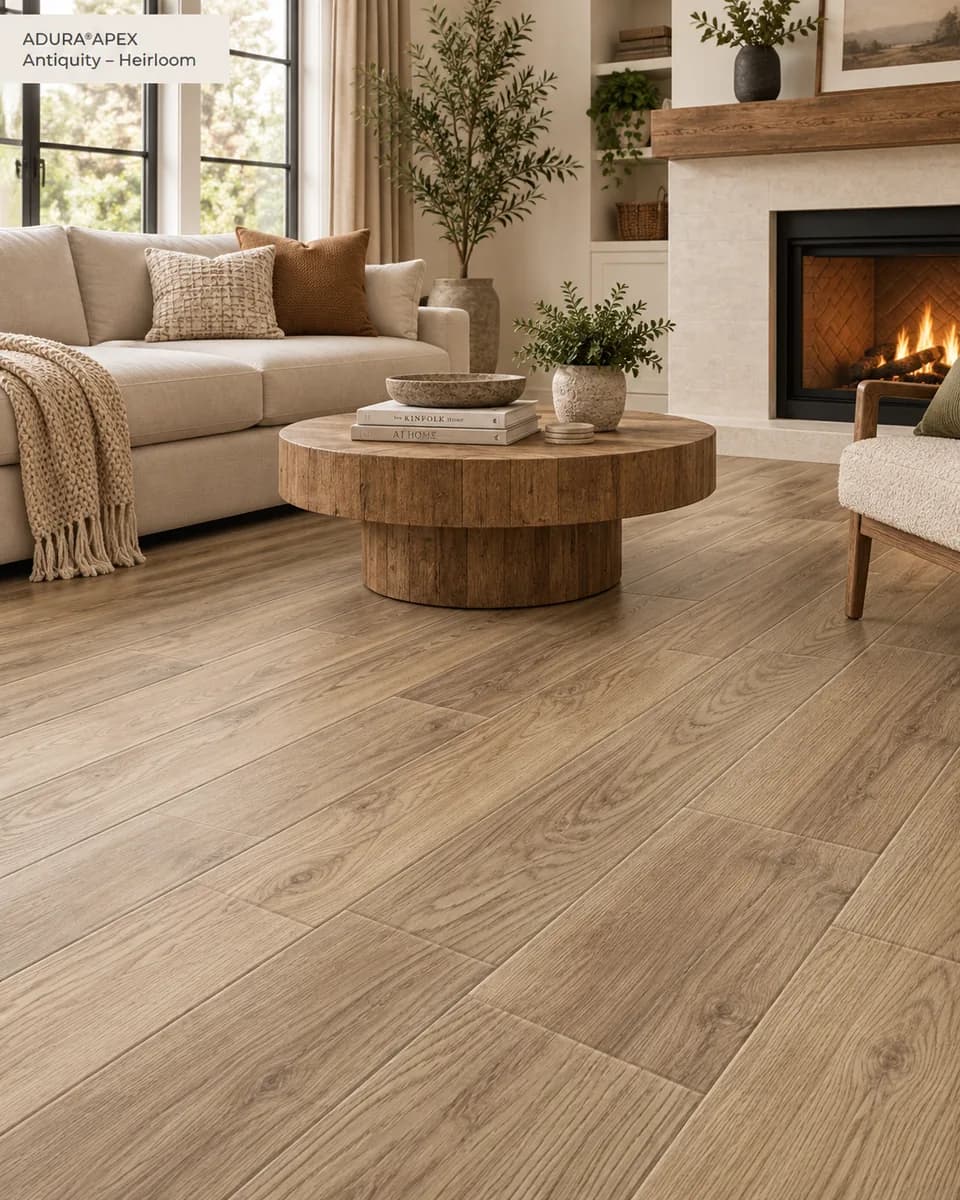
Mannington ADURA APEX Antiquity 8" x 72" Luxury Vinyl Plank
3 Colours · Heirloom
Waterproof
WPC
White Oak
8" x 72"
8mm
20 mil wear layer
Attached pad
Embossed in Register
A six foot white oak plank at a full 8" wide, with the grain embossed in register and an attached pad underneath. Waterproof WPC construction and a 20 mil wear layer.
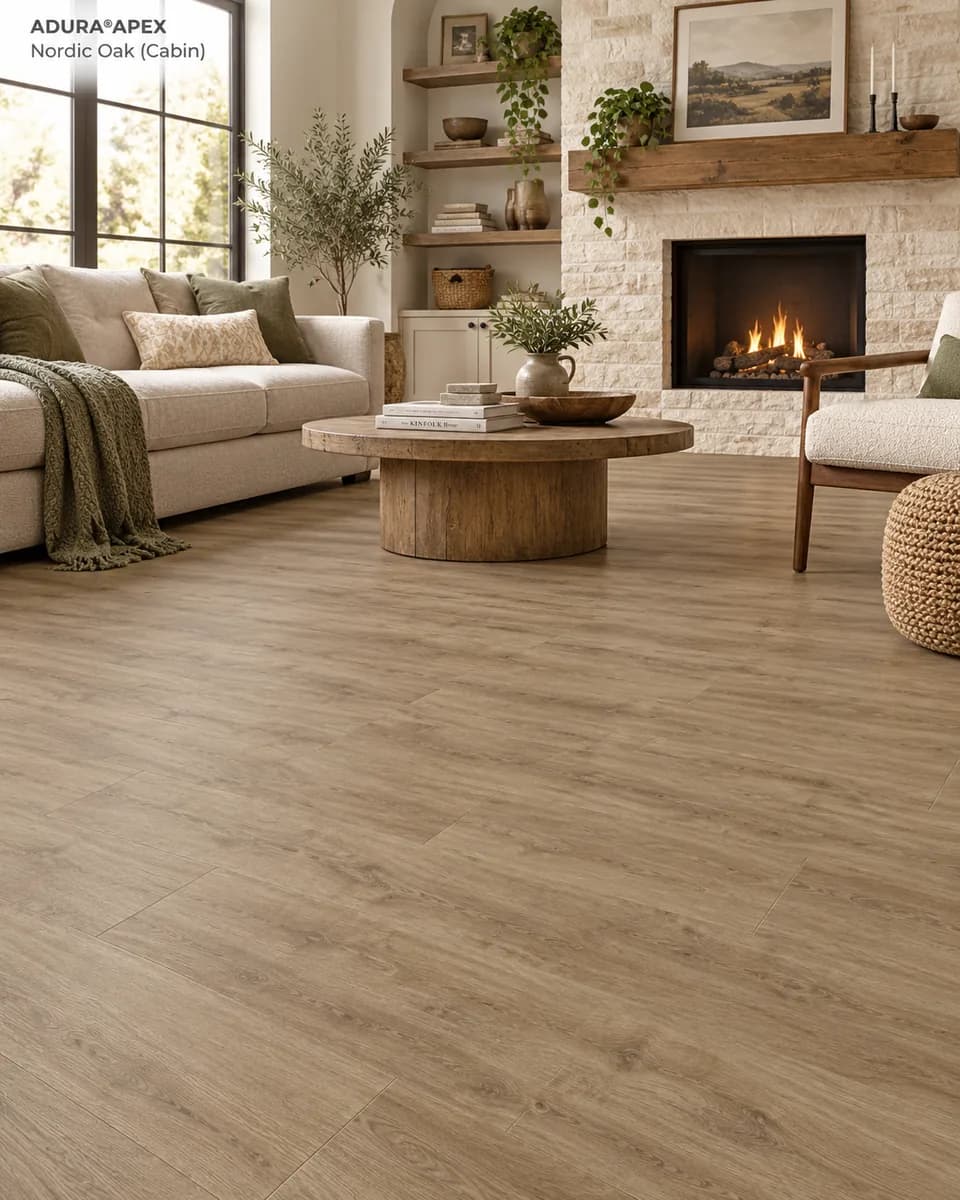
Mannington ADURA APEX Nordic Oak 8" x 72" Luxury Vinyl Plank
1 Colour · Cabin
Waterproof
WPC
Oak
8" x 72"
8mm
20 mil wear layer
Attached pad
Embossed in Register
A quiet greige oak with straight grain and very little contrast, on an 8" x 72" waterproof WPC plank. Microban and ScratchResist, and it resists fading.
The collection that invented rigid-core vinyl, with cork bonded to the back of every plank. Eight wood decors from pale greige oak through to deep whiskey brown.
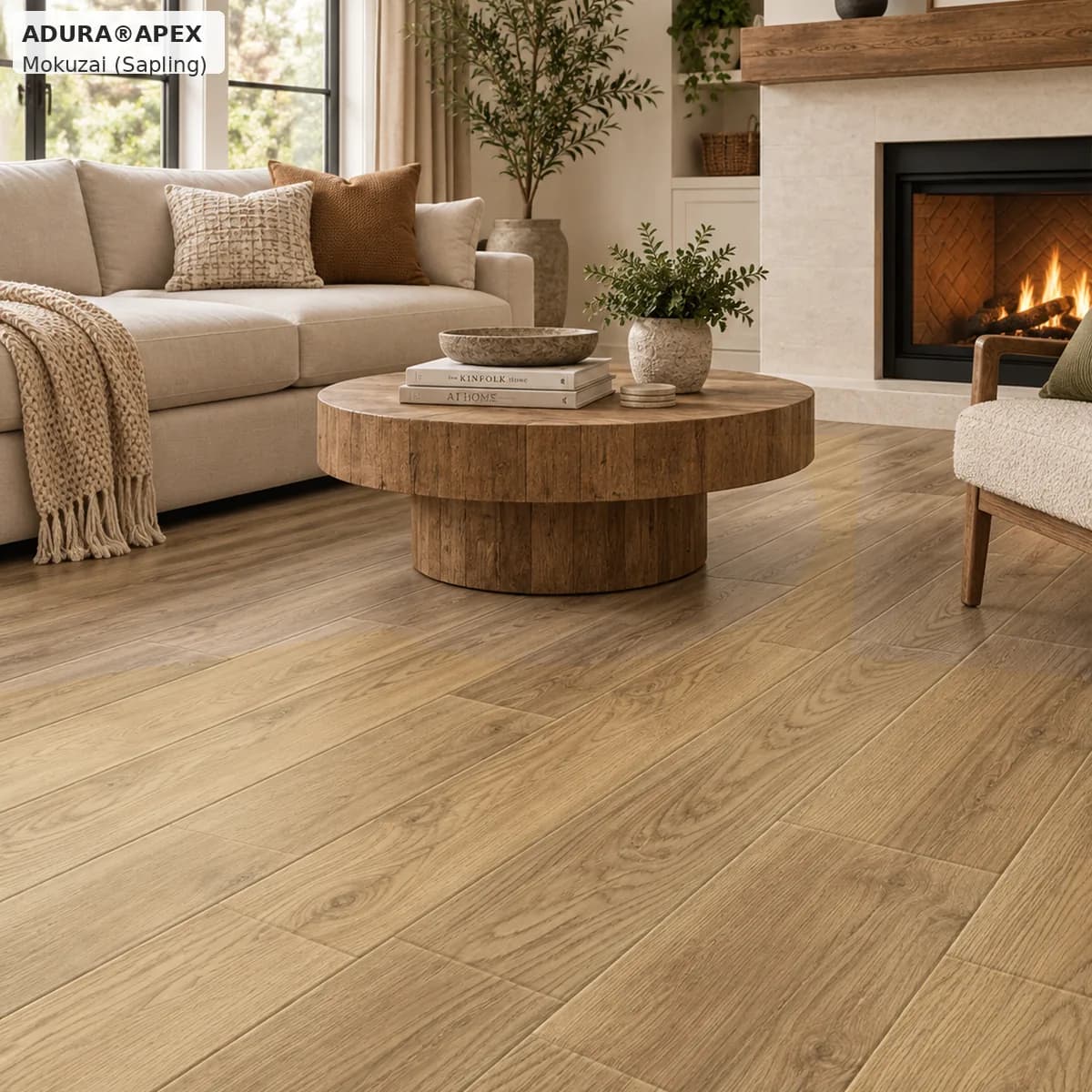
Mannington ADURA APEX Mokuzai 8" x 72" Luxury Vinyl Plank
1 Colour · Sapling
Waterproof
WPC
Maple
8" x 72"
8mm
20 mil wear layer
Attached pad
Embossed in Register
A pale maple drawn from Japanese joinery, with a large-scale figure and very low sheen. The lightest floor in the range, on an 8" x 72" waterproof WPC plank.
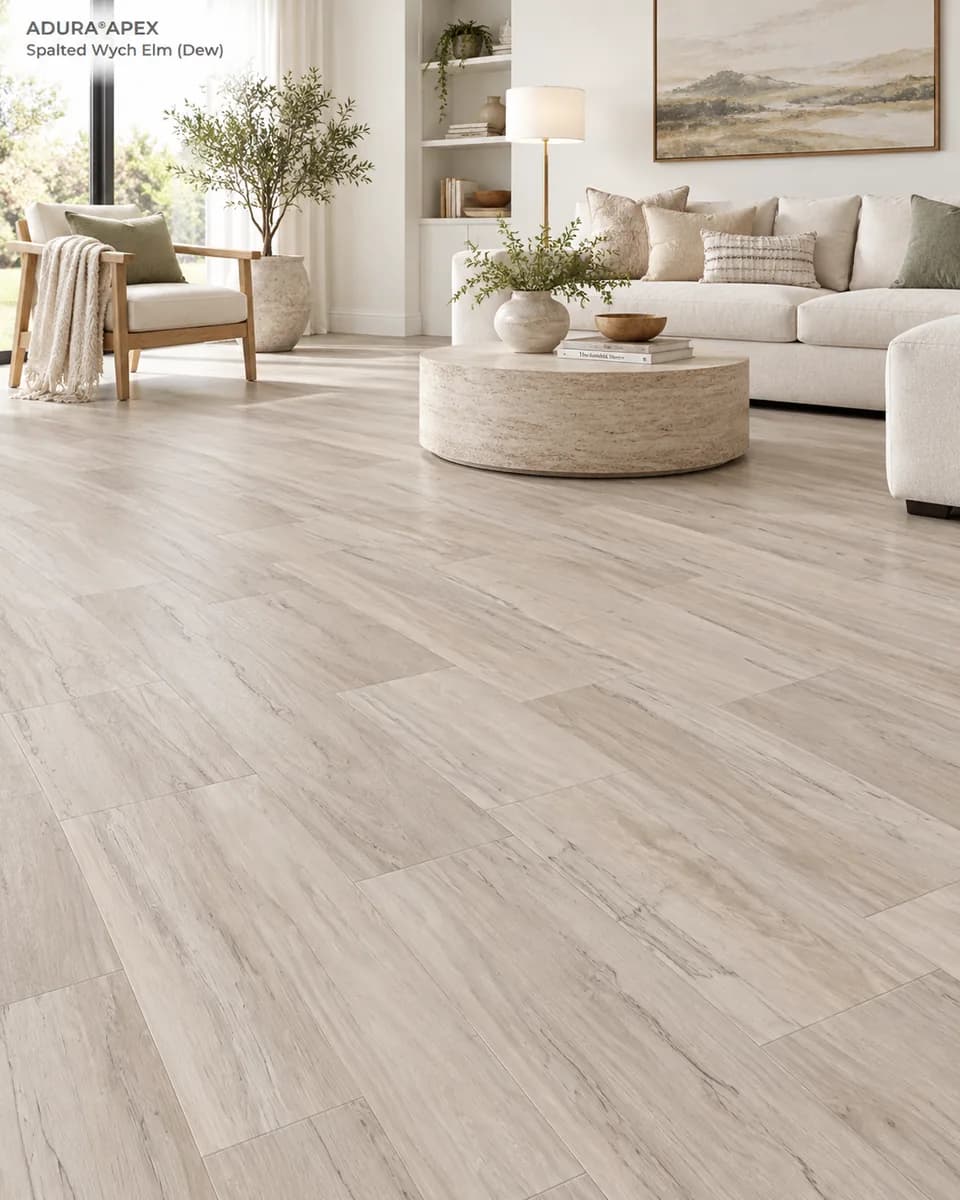
Mannington ADURA APEX Spalted Wych Elm 8" x 72" Luxury Vinyl Plank
1 Colour · Dew
Waterproof
WPC
Elm
8" x 72"
8mm
20 mil wear layer
Attached pad
Embossed in Register
Spalted elm, with the dark mineral lines a real spalted board carries, printed into a whitewashed 8" x 72" plank. The most distinctive floor in the range.
Three species blended into one floor, across 20 unique plank visuals. A thick 12mm board with SpillShield Plus waterproofing and a 25 year residential warranty.
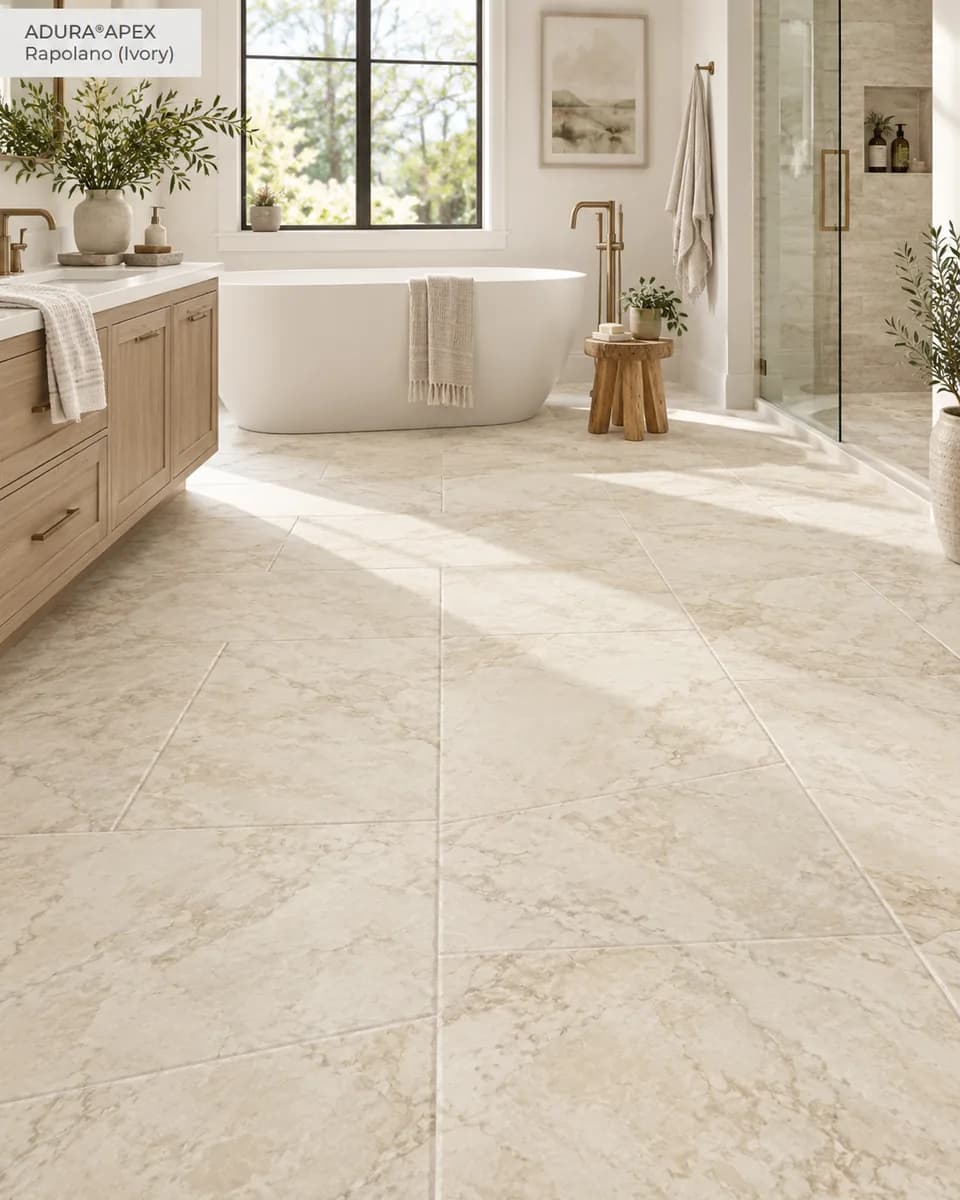
Mannington ADURA APEX Rapolano 18" x 36" Luxury Vinyl Tile
3 Colours · Ivory
Waterproof
WPC
Travertine
18" x 36"
8mm
20 mil wear layer
Attached pad
Embossed
A large-format 18" x 36" travertine on a waterproof WPC core with an attached pad. Three colourways, and a TumbledEdge that reads like a real stone joint.
The longest plank in the Restoration Collection at 59 1/2", in a wide 7 2/3" hickory. Waterproof 12mm construction, SculptedEdge bevels and 18 unique plank visuals.
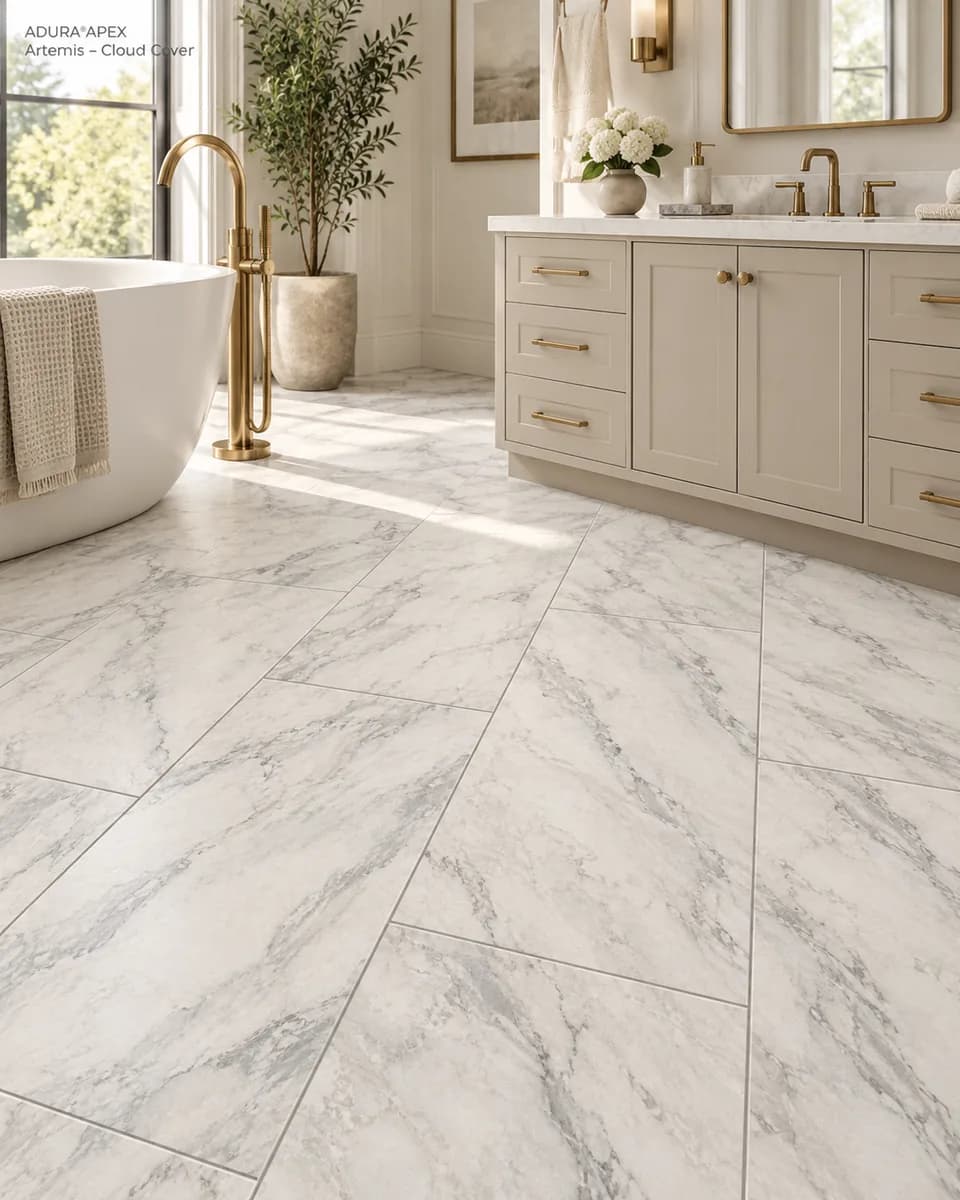
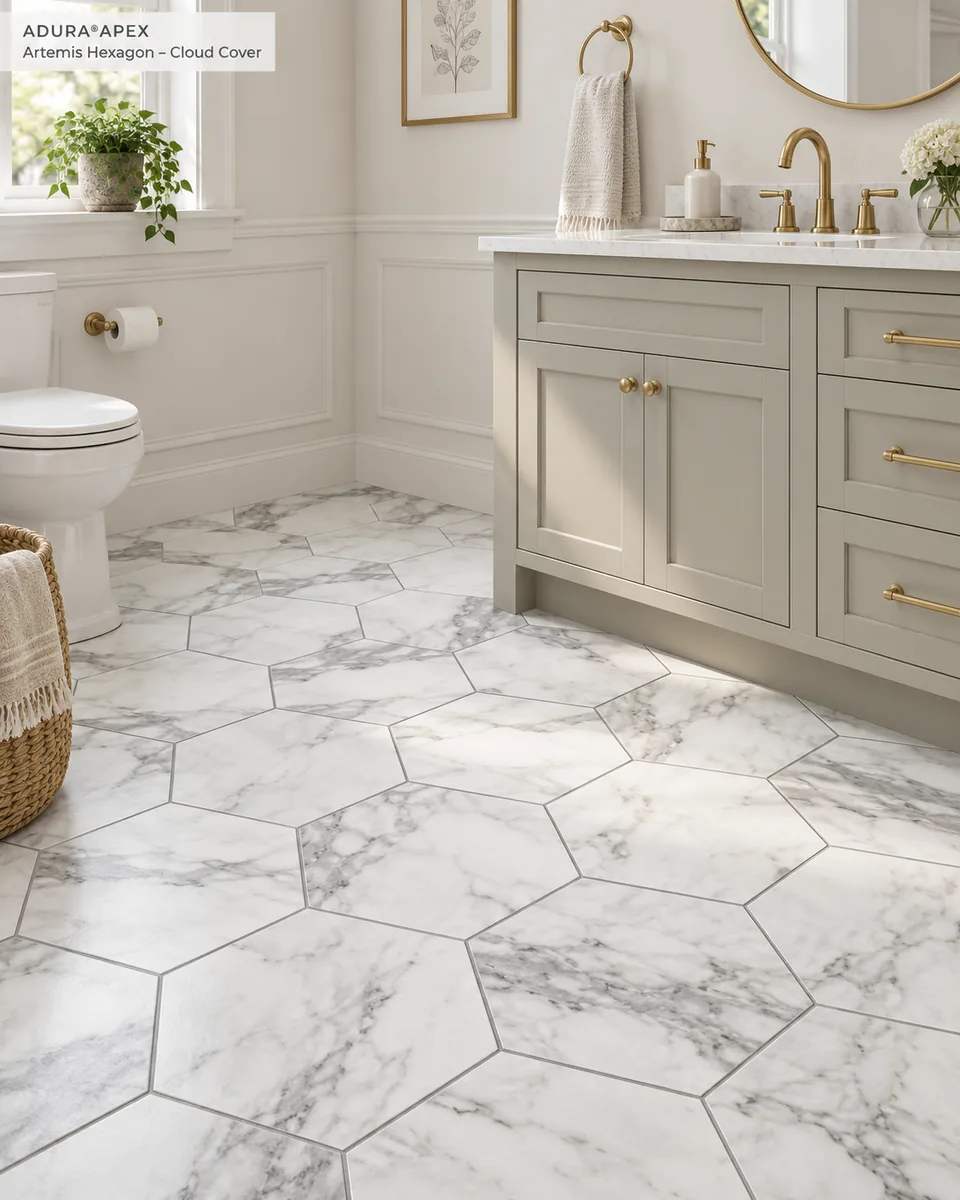
Mannington ADURA APEX Artemis 18" x 36" Luxury Vinyl Tile
1 Colour · Cloud Cover
Waterproof
WPC
Marble
18" x 36"
8mm
20 mil wear layer
Attached pad
Embossed in Register
A marble at the scale a real slab is cut, 18" x 36" with the veining embossed in register. Waterproof WPC with an attached pad, and high variation tile to tile.
A soft, large-scale oak in four warm neutrals, with 20 unique plank visuals and a low lustre finish. Waterproof 12mm construction that also resists fading and staining.
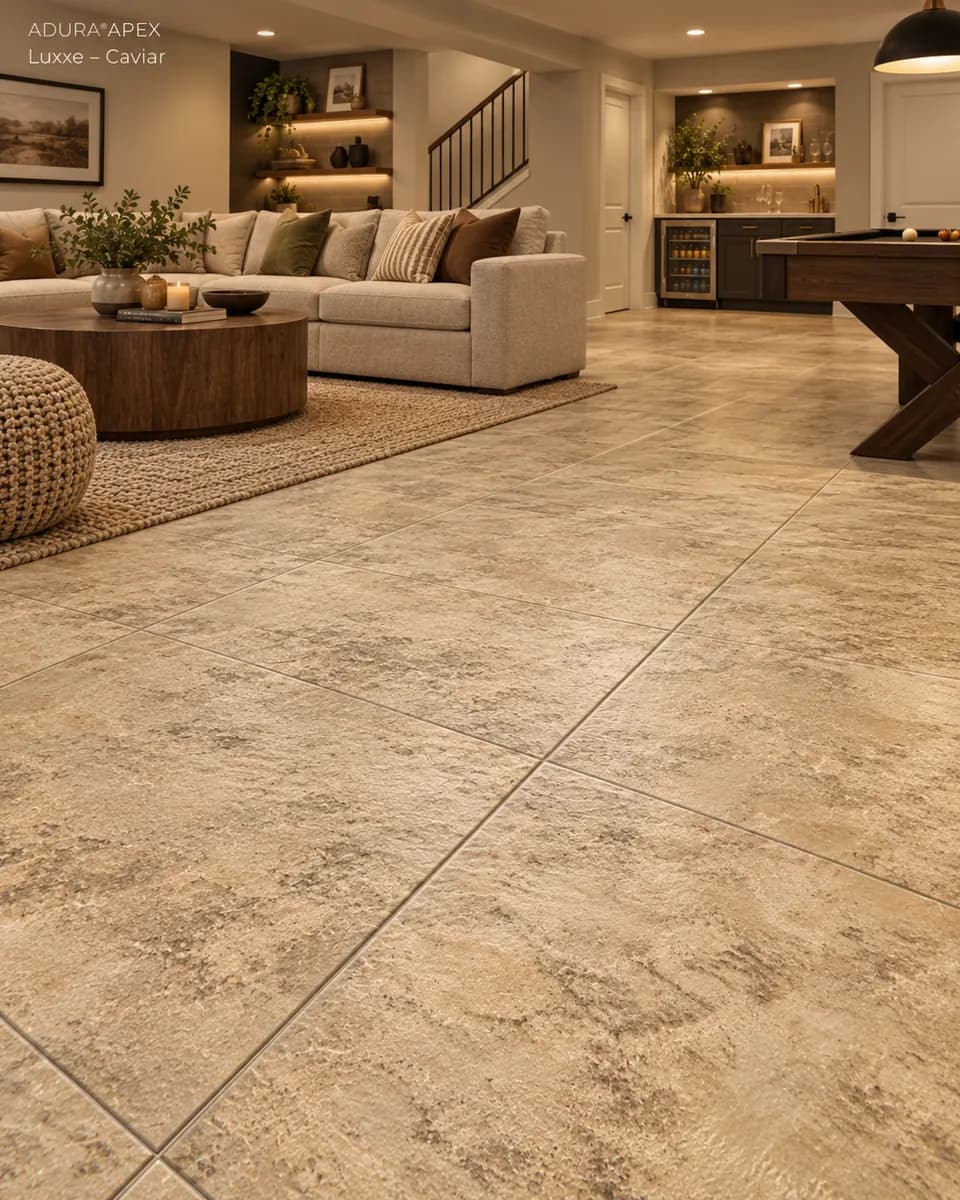
Mannington ADURA APEX Luxxe 12" x 24" Luxury Vinyl Tile
2 Colours · Caviar
Waterproof
WPC
Marble
12" x 24"
8mm
20 mil wear layer
Attached pad
A 12" x 24" stone-look tile on the same waterproof WPC core as the planks, with a TumbledEdge that reads like a real grout joint. Warm underfoot in a way porcelain never is.
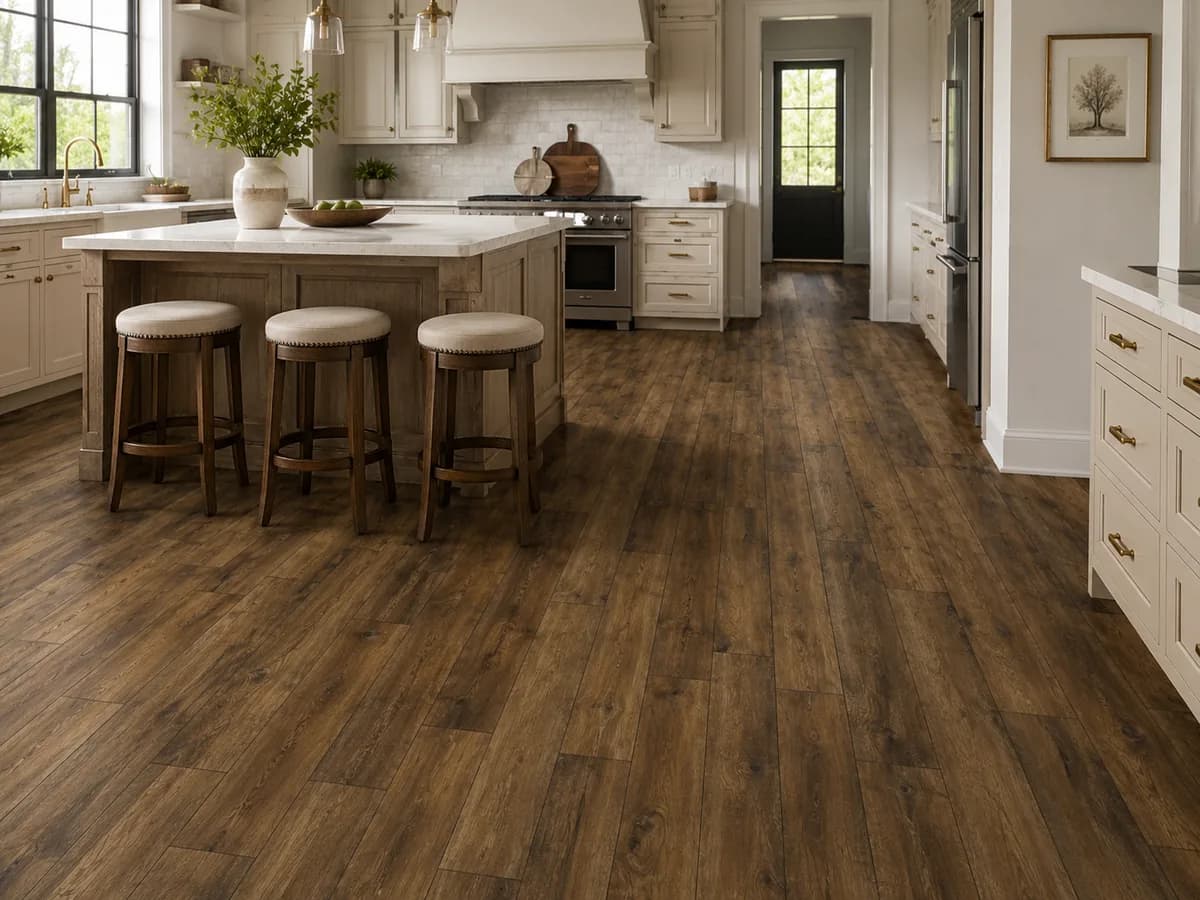
Rustic hickory with knots, splits and saw marks printed in register, in four colours from Acorn to Coal. Waterproof 12mm, and approved for walls as well as floors.
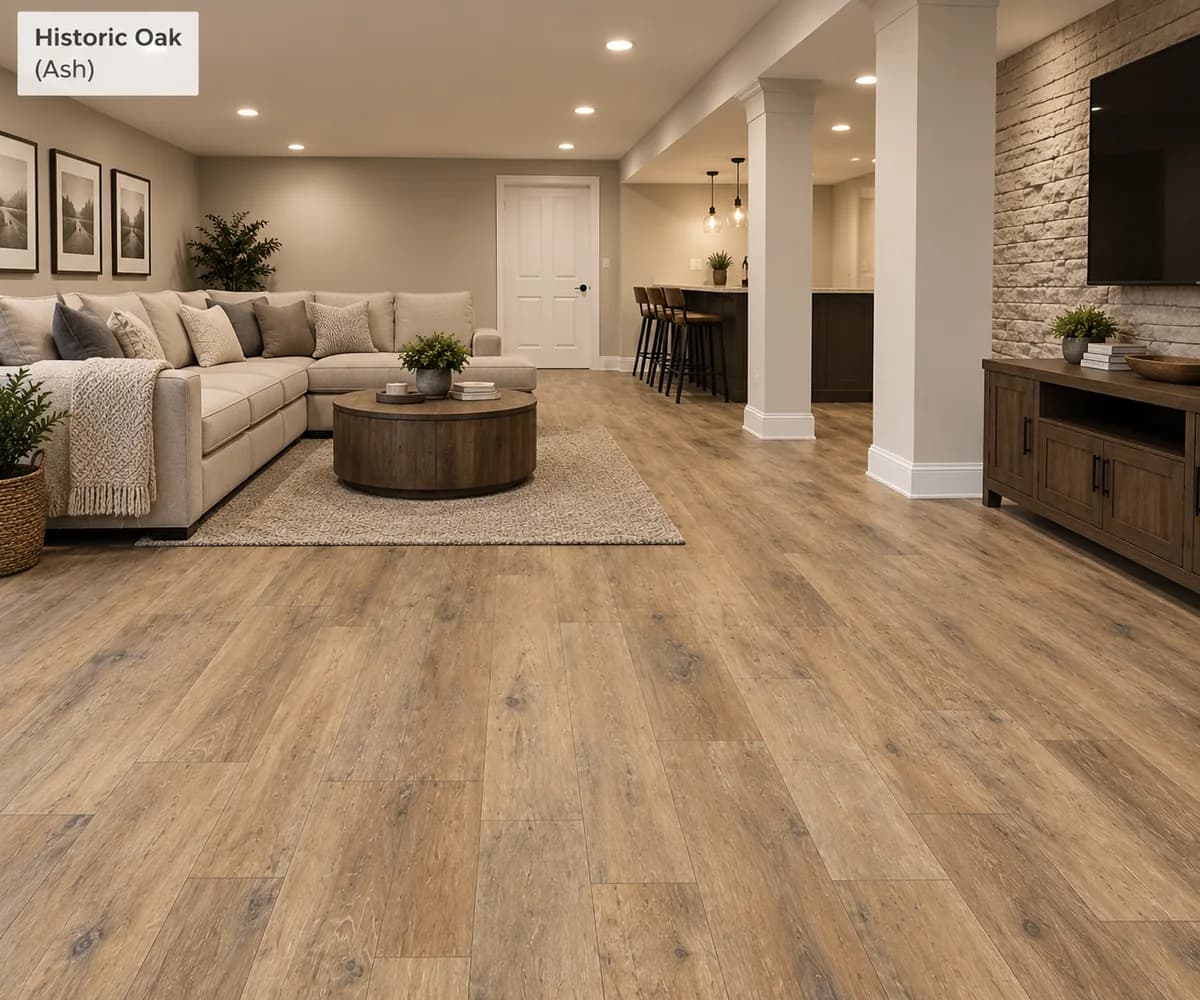
Mannington Restoration Historic Oak 6 3/8" Laminate
2 Colours · Ash
Waterproof
Oak
6 3/8" wide
12mm
Embossed in Register
12 plank visuals
A reclaimed-look oak at a traditional 6 3/8" width, in weathered Ash and deep Charcoal. Waterproof 12mm, wall approved, and the narrowest plank in the collection.
A marble-look hexagon at 13.6" x 11.8", with all 28 tiles in the carton drawn differently. A 5mm glue-down LVT, thin enough to meet an existing floor without a ramp.
Our North Bethesda showroom carries hundreds more eco-friendly flooring samples across a dozen major brands, and we can order well beyond what is on display. If you have a colour, width, or finish in mind that is not shown here, ask. There is very likely a sample waiting for you.
Sustainable flooring balances responsible sourcing, healthy indoor air, and long service life so the greenest floor is the one you never have to replace.
FloorScore and CARB-compliant products keep harmful off-gassing out of your indoor air.
Long-Lasting
Durable, refinishable floors last for decades, cutting down on landfill waste and replacements.
Recyclable
Natural and recyclable materials keep flooring out of the waste stream at end of life.
What Is the Most Environmentally Friendly Flooring?
There is no single “greenest” floor — the most sustainable choice depends on the room, the traffic, and how long the floor needs to last. In practice, the lowest-impact flooring is almost always the floor you install once and never replace. Three materials consistently top the list for renewability and recycled content:
Bamboo & cork — rapidly renewable. Bamboo matures in 3–5 years and cork is harvested from bark that regrows without felling the tree, giving both the smallest raw-material footprint of any wood-look floor.
Reclaimed & FSC-certified hardwood — reclaimed boards harvest zero new trees, and FSC-certified wood guarantees responsibly managed forests. Because real wood can be sanded and refinished many times, it can last a century, keeping it out of landfill.
Natural stone & recycled-content tile — a zero-VOC, lifetime surface. Many porcelain lines now use recycled content and low-energy firing, and stone lasts indefinitely.
Is laminate flooring eco-friendly? It can be. Modern laminate is built largely from recycled wood fiber and now meets strict low-formaldehyde emission standards (CARB2 / TSCA Title VI), making it a low-emission, budget-friendly option — though it is not biodegradable at end of life the way solid wood or true linoleum is. If healthy indoor air is your priority, look for the FloorScore and GreenGuard Gold labels — the industry benchmarks for low-VOC, non-toxic, zero-VOC flooring.
Your Local Eco-Friendly Flooring Contractor in the DMV
2020 Flooring is an environmentally conscious flooring contractor serving Montgomery County and Howard County, Maryland, Washington DC, and Fairfax County, Northern Virginia. From our North Bethesda showroom we offer free in-home consultations for green renovations — bring us your sustainability goals and budget and we will spec certified, low-VOC materials room by room.
You can see and touch these eco-friendly lines in person at our North Bethesda showroom. We stock samples across every category so you can compare finishes, certifications, and recycled content side by side before you buy.
Responsibly harvested solid and engineered hardwood from FSC-certified forests is one of the greenest flooring choices — long-lived, refinishable, and ultimately biodegradable. Choosing engineered hardwood uses less slow-growth timber per square foot than solid wood.
Best for: Homeowners who want a natural, renewable, decades-long floor.
Modern FloorScore-certified luxury vinyl plank is manufactured with phthalate-free, low-VOC materials and often incorporates recycled content — durable, healthy indoor air, and long-lasting.
Best for: Healthy-home builds where indoor air quality is a priority.
Porcelain and stone tile is made from abundant natural materials, lasts a lifetime, and many lines now use recycled content and energy-efficient firing — a low-impact, zero-VOC surface.
Best for: Long-term installs where durability reduces replacement waste.
Today's laminate flooring uses high recycled wood-fiber content and meets strict low-formaldehyde emission standards, delivering a wood look with a smaller resource footprint.
Best for: Budget-conscious projects that still want a greener footprint.
Planning a renovation or new build? We help spec eco-friendly materials across the whole project — from residential flooring to pet-safe flooring — so durability and indoor air quality go hand in hand.
Best for: Whole-home renovations and new construction.
Harvested from bark that regenerates every three years without cutting the tree, cork is one of the most renewable flooring materials available. It has natural anti-microbial properties, is fire retardant, and acts as a natural insect repellent. Quality cork floors last 10–30 years and can be refinished or re-stained. Best sealed every few years and kept away from standing water.
Best for: Bedrooms, living rooms, and low-moisture areas where comfort and renewability matter.
Bamboo Flooring
Bamboo is a grass that reaches maturity in 3–5 years — a fraction of the 20+ years needed for hardwood trees. It shares hardwood's warmth and durability while carrying a fraction of the environmental footprint. Best suited to dry areas such as living rooms, bedrooms, and hallways; avoid kitchens and bathrooms where moisture causes warping.
Best for: Dry-area installs where rapid-renewable sourcing is a priority.
True linoleum — not vinyl — is made entirely from natural ingredients: linseed oil, cork dust, tree resins, wood flour, and ground limestone. It is fire retardant, water resistant, and biodegradable. Unlike synthetic vinyl, it contains no chlorinated petrochemicals. We install both sheet and click linoleum, including Marmoleum — Forbo's premium natural-linoleum brand. See our full Marmoleum vs. linoleum guide for formats, costs, and room-by-room picks, or compare it head-to-head against vinyl in our linoleum vs. LVP vs. LVT guide. Requires polishing once or twice a year to maintain its finish.
Best for: Homeowners who want a zero-petrochemical, biodegradable surface.
When concrete already exists as your subfloor, polishing and tinting it eliminates the need for a new flooring layer entirely — the greenest choice is reusing what is already there. We can polish existing slabs to your exact taste with tints, patterns, and inlays. Extremely durable, easy to clean, and unlikely to ever need replacement.
Best for: Open-plan living, modern interiors, and renovations where the slab is already in place.
Wool carpet is a natural, non-toxic alternative to synthetic carpet, with no VOCs or synthetic toxins. Wool is biodegradable, exceptionally long-lasting, and has been used as a floor covering for centuries. Other natural fiber options — sisal, jute, and cotton — offer similar sustainability credentials with distinct textures suited to different design styles.
Best for: Bedrooms and comfort areas where indoor air quality and natural materials are a priority.
Polyester Berber carpet is manufactured from recycled plastic bottles, keeping them out of landfill while delivering a durable, spill-resistant surface. Available in a range of colors with a characteristic flecked finish that suits most interior styles. An economical and environmentally responsible choice for family rooms and hallways.
Best for: Budget-conscious projects that still want a recycled-content, circular-economy floor.
Rubber flooring made from recycled tires diverts waste from landfill and produces a comfortable, highly water-resistant surface. Long a staple in gyms and playgrounds, modern rubber flooring now comes in colors and textures that suit kitchens, sunrooms, and bathrooms — areas where waterproofing and cushioning both matter.
Best for: Kitchens, bathrooms, utility rooms, and spaces where water resistance and comfort combine.
Reclaimed hardwood repurposes timber salvaged from old barns, warehouses, and factories — giving new life to wood felled long ago with no new trees harvested. It carries rich character, natural aging, and visual history that new-cut boards cannot replicate. Where reclaimed stock is unavailable in your preferred species, FSC-certified new hardwood is the next best sustainable choice.
Best for: Character-rich installs, older homes, rustic interiors, and anyone committed to zero new-harvest wood.
Choose Thoughtful Flooring Before Year-End Renovations
Fall projects can prioritize responsibly sourced materials, recycled content, lower-emitting finishes, and products designed for long service life. DMV homes and businesses can complete the work before holiday traffic and winter moisture arrive. A durable floor that can be repaired may reduce waste more effectively than a trend-driven replacement. Evaluate sourcing, maintenance, installation materials, and future reuse as one complete decision.
Explore Related Flooring Services
Sustainable choices show up across our catalog. These services pair naturally with an eco-friendly home.
Tell us about your project and sustainability goals. We will recommend certified, low-VOC flooring that fits your style and budget — with a free in-home estimate.
For over 25 years, residential and commercial members of the DC, Maryland, and Virginia community have trusted 2020 Flooring. Check out what our customers have to say!
“We had a last minute major issue in the flooring we selected from another flooring installer on our kitchen renovation and addition. We had initially loved another flooring choice that we saw at 2020 Flooring. Unfortunately we found out it had been discontinued. Carol from 2020 Flooring went above and beyond to help us locate the amount of LVP flooring we needed by scouring the country. She found just the right amount and was able to get the order expedited so we could continue on the time schedule with our general contractor. Bobby from 2020 Flooring was great in helping us remedy an issue with the subfloor. We now have the exact flooring we wanted which has made our new kitchen and addition complete. Can't thank them enough!”
“As an architect, from the moment we walked into 2020 Flooring, upon seeing a standout recommendation on NextDoor, I was immediately impressed with Bobby and Carol's technical expertise, friendliness and professionalism. They asked the right questions, took their time to weigh flooring options for us without pressure and worked hard to meet our budget for new floors for our townhome. They committed to a date for installation and made it work. Their crew, led by Mariano, was highly competent, discrete, meticulous and worked long hours to complete the job in time. They stand by their work proudly and their warranty is better than anyone else's. Our new floors are fabulous and we wholeheartedly recommend 2020 Flooring!”
“I spent many hours trying to select a quality vinyl floor with the right color combination for my house and Carol at IDESIGN made the job easy with a great selection that I am very satisfied with. In general IDESIGN carries a good selection of quality floors but the added value of Carol's design expertise made the difference and I greatly benefited from her help. Thanks Carol😊”
Reviews sourced from Google. 2020 Flooring was given permission to publish reviews on this site.