What Is Engineered Hardwood Flooring?
Engineered hardwood offers the beauty of real wood with superior dimensional stability. Its multi-layer construction resists moisture and temperature changes, making it suitable for basements, kitchens, and over radiant heat systems.
At 2020 Flooring, we install engineered hardwood throughout Maryland, Washington DC, and Northern Virginia. It is our recommended choice for basements, kitchens, condos with concrete subfloors, and homes with radiant heat systems where solid hardwood is not suitable.
Benefits of Engineered Hardwood
Superior Moisture Resistance
The cross-grain plywood core resists expansion and contraction caused by humidity changes far better than solid wood. This makes engineered hardwood suitable forbasements, kitchens, bathrooms, and other areas where moisture levels fluctuate. In the humid Maryland and DC climate, this stability is a significant advantage.
Installs Over Concrete
Unlike solid hardwood, engineered hardwood can be installed directly over concrete slabs using floating or glue-down methods. This opens up hardwood flooring options for basement remodels, condos, townhomes, and slab-on-grade construction where solid hardwood is not feasible.
Wider Plank Options
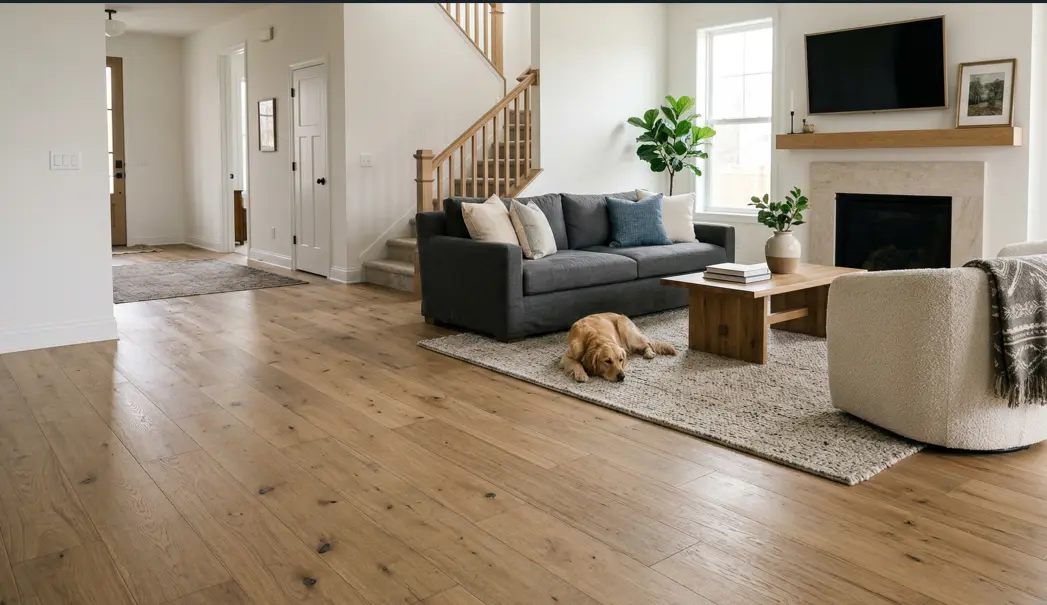
The layered construction of engineered hardwood allows for wider planks (up to 7 inches and beyond) without the cupping and warping risks associated with wide solid hardwood planks. Wide planks create a modern, open look with fewer seams that showcases the wood grain beautifully.
Compatible with Radiant Heat
Engineered hardwood's dimensional stability makes it the preferred hardwood choice for homes with radiant floor heating systems. The multi-layer construction handles the temperature fluctuations from heating cycles without gapping or buckling, keeping your floors warm and beautiful.
Understanding Multi-Layer Construction
Wear Layer (Top)
The top layer is real hardwood veneer, available in the same species as solid hardwood: oak, maple, walnut, hickory, and more. Thicker wear layers (4mm to 6mm) can be sanded and refinished 1 to 2 times, while thinner veneers (2mm to 3mm) offer excellent value but should not be sanded.
Core Layers (Middle)
Multiple layers of plywood or high-density fiberboard are arranged with the grain of each layer running perpendicular to the layers above and below. This cross-grain construction is what gives engineered hardwood its dimensional stability, preventing the expansion and contraction that affects solid wood.
Backing Layer (Bottom)
A final layer of hardwood or plywood on the bottom provides balance and prevents the plank from warping. The balanced construction ensures the floor lies flat and remains stable throughout seasonal changes in temperature and humidity.
Popular Engineered Hardwood Brands
Shaw
One of the largest flooring manufacturers in the world. Shaw's engineered hardwood lines include the popular Epic Plus and Repel collections, featuring enhanced moisture protection and a wide variety of species and stain colors. Their ScufResist Platinum finish provides excellent scratch and scuff protection for busy households.
Featured: Epic Plus, Repel Hardwood
Bruce
A trusted American brand with over 130 years in hardwood flooring. Bruce engineered hardwood is known for consistent quality and value. Their Turlington and Hydropel collections offer excellent water resistance for kitchens and entryways. Bruce floors are available in classic American species at competitive price points.
Featured: Turlington, Hydropel
Mohawk
Another industry leader offering engineered hardwood with their exclusive Uniclic locking system for easy floating installation. Mohawk's TecWood and UltraWood collections feature Scotchgard Protector for stain resistance and ArmorMax finish for superior scratch protection. Ideal for families with pets.
Featured: TecWood, UltraWood
Having It Installed
Engineered planks are glued down or floated over concrete, below grade, and over radiant heat, and nailed down over a plywood subfloor on upper levels. Which method your floor gets depends on the subfloor, not on the product — we settle it at the in-home measurement, after the slab has been moisture-tested.
The full method-by-method breakdown, subfloor requirements, and timeline live on our installation page.
How we install engineered hardwoodHow to Read an Engineered Hardwood Spec Sheet
Every product card above lists the same six numbers. Here is what each one actually tells you about how the floor will look and how long it will last.
Wear layer
The real wood on top, measured in millimetres. Under 2mm is a surface you maintain and eventually replace. At 3mm and above the floor can be sanded and refinished at least once, which is what separates a twenty-year floor from a forty-year one. It is the single most important number on the sheet.
Plank width
Wider boards mean fewer seams and a calmer, more contemporary floor; narrow strip reads traditional and busier. Engineered construction is what makes 7 inch and wider practical — the cross-ply core holds that width flat where solid wood of the same size would cup.
Species and Janka
Janka is a hardness score in pounds of force. Hickory sits around 1820, maple 1450, oak 1290, walnut 1010. Higher resists denting better, which matters with dogs and dining chairs — but grain pattern and colour drive the look far more than hardness drives the wear.
Surface and finish
Smooth, wire-brushed, or hand-sculpted. Texture hides dust, scratches, and footprints; a smooth face shows everything but reads cleaner. Over that sits the coating — usually UV-cured aluminium oxide — and the gloss level, given as a percentage. Low sheen (7–15%) is the current default and the most forgiving.
Colour variation
Graded from low to extremely high. It describes how much boards differ from each other, not how dark the floor is. High variation gives a lively, natural floor and forgives a mismatched board; low variation gives a uniform surface that shows any replacement plank later. Judge it from an installed photo, never a single swatch.
Install methods and grade
The manufacturer states which methods are approved and whether the product is rated above, on, or below grade and over radiant heat. This is the line that decides whether a floor can go in your basement at all — and it is a warranty condition, not a suggestion.
Engineered vs. Solid Hardwood: Which Is Right for You?
Both engineered and solid hardwood are real wood flooring, and both deliver the beauty and warmth homeowners desire. The right choice depends on your subfloor type, moisture conditions, and personal preferences. Engineered hardwood is the better option when installing over concrete slabs, in basements, in kitchens, or over radiant heat systems.Solid hardwood is preferred above grade, over a wood subfloor, when you want the ability to refinish many times over the floor's lifetime.
Our team at 2020 Flooring will evaluate your space, discuss your priorities, and recommend the right type of hardwood for your specific project. We carry both solid and engineered options from all the major brands, so you are never limited in your choices.