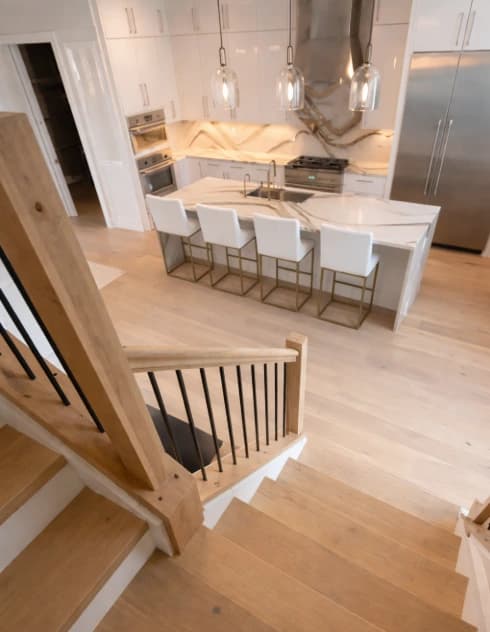
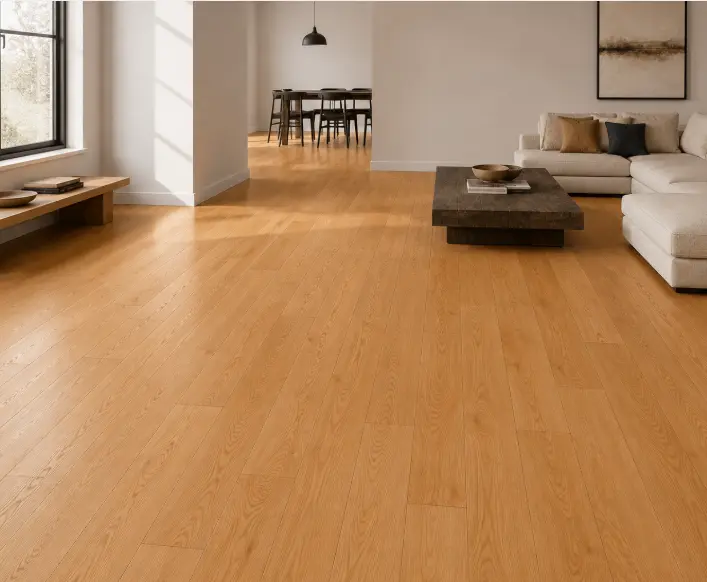
Why Choose Solid Hardwood Flooring?
Solid hardwood is the gold standard of flooring — milled from a single piece of wood, it can be sanded and refinished multiple times over decades. We install all species including red and white oak, maple, walnut, hickory, cherry, and exotic woods.
At 2020 Flooring, we install solid hardwood flooring throughout Maryland, Washington DC, and Northern Virginia. Our experienced installers work with all major domestic and exotic species, ensuring your floors are acclimated, fitted, and finished to perfection.
Benefits of Solid Hardwood
Exceptional Durability
Solid hardwood is one of the most durable flooring options available. Harder species like hickory and maple resist dents and scratches from daily wear, pet claws, and furniture. With proper care, solid hardwood floors last 75 to 100 years or more, far outlasting carpet, vinyl, and laminate.
Refinishable for Generations
The biggest advantage of solid hardwood is that it can be sanded and refinished multiple times. A 3/4-inch thick plank can typically be refinished 6 to 8 times over its life. This means you can change the stain color, switch from matte to glossy finish, or repair deep scratches without replacing the entire floor.
Increases Home Value
Real estate studies consistently show that homes with hardwood floors sell faster and for higher prices. Solid hardwood is considered a premium feature by homebuyers and appraisers alike. It is one of the few home improvements that can return more than its cost at resale.
Timeless Beauty
Solid hardwood develops a rich patina over time that only enhances its beauty. The natural grain patterns, color variations, and character marks in real wood create a warmth and elegance that manufactured flooring cannot replicate. Every floor is truly unique.
From our blog
Hardwood Flooring 101: Choosing a Wood Species
Deep-dive into Janka hardness, grain patterns, colour, and which species suits each room — before you commit.
Prefinished or Site-Finished?
Solid hardwood is sold two ways, and the choice changes both what the finished floor looks like and how long you are out of the room. It is the one decision worth making before you fall in love with a colour.
Prefinished
The boards arrive sealed from the factory, cured harder than anything that can be applied on site, and usually carrying a long finish warranty. The floor is walkable the day the last board goes down, with no dust, no fumes, and no waiting. The trade-off is a micro-bevel at every board edge — a subtle line you will see across a large room — and you are choosing from the colours the manufacturer makes. Everything in the grid above is prefinished.
Site-Finished
Unfinished boards are laid, then sanded flat and stained and sealed in place. The result is one continuous surface with no bevels at all, in any colour you can mix — which is why it is the choice when matching an existing floor or running new wood into old. It adds three to five days plus cure time, and the stain colour is settled on your actual boards rather than from a sample.
Having It Installed
Solid hardwood is nailed or stapled down over a plywood or OSB subfloor, above grade. It does not go directly over concrete, and it does not go over radiant heat — that is what engineered hardwood is for. Every solid floor needs the subfloor flat within 3/16 inch over 10 feet and the wood acclimated in your house for at least three to five days, verified with meter readings.
The fastening schedule, subfloor prep, and full timeline live on our installation page.
How we install solid hardwoodChoosing Plank Width and Grade
Solid hardwood is available in strip widths (2-1/4 inch) and plank widths (3 inch to 5 inch and wider). Narrower strips create a classic, traditional look, while wider planks offer a more contemporary or rustic appearance depending on the species and finish selected.
Grading determines the amount of character in the wood. Select and Better grade features uniform color and minimal knots for a clean, formal look. Common grade includes more natural variation, knots, and mineral streaks that add rustic charm and character. Our team will help you choose the grade that matches your design vision and budget.
Whichever width and grade you pick, the floor is 3/4 inch of real wood, which is what lets it be sanded and refinished six to eight times over its life — a different colour each time, if you want one. Laid in a pattern instead of straight runs, the same boards become parquet.