
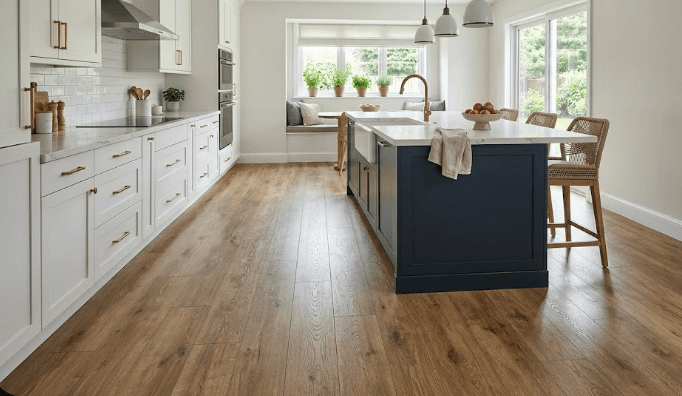



LVP vs Carpet for Apartments & Multifamily Properties
The real cost comparison for property managers: installed price per unit, replacement cycles, turnover savings, and break-even math — plus volume pricing and unit-turn scheduling from a DMV flooring contractor that has served the region since 1997.
The Short Answer for Property Managers
LVP costs roughly twice as much as apartment-grade carpet to install, but in multifamily service it typically saves 30–50% over a 10–15 year hold. Carpet in rental units is replaced every 5–7 years and professionally cleaned at every turn; quality LVP lasts 10–15+ years, turns with a mop, and shrugs off the pet and moisture damage that totals carpet. Break-even usually arrives at the first carpet replacement — around year 5 to 7 — and every year after that widens the gap.
2020 Flooring installs both luxury vinyl plank and carpet for apartment communities across Maryland, Washington DC, and Northern Virginia — unit turns, phased conversions, and full-community replacements, with volume pricing and scheduling built around your move-out calendar.
Cost Comparison: LVP vs Carpet Per Unit
Typical installed pricing for DMV multifamily properties (apartment-grade carpet with pad vs 12–20 mil wear layer LVP):
| Carpet (apartment grade) | Luxury Vinyl Plank (LVP) | |
|---|---|---|
| Installed cost per sq ft (materials + labor) | $2.50 – $4.50 | $5.50 – $8.50 |
| Typical 850 sq ft unit (installed) | $2,100 – $3,800 | $4,700 – $7,200 |
| Typical service life in a rental unit | 5 – 7 years | 10 – 15+ years |
| Replacements over a 15-year hold | 2 – 3 | 0 – 1 |
| Cleaning between tenants | Professional cleaning every turn ($100 – $300/unit) | Standard cleaning — no extraction needed |
| Pet, stain & moisture damage risk | High — often forces early replacement | Low — waterproof, scratch-resistant wear layer |
Ranges reflect typical DMV multifamily pricing; actual quotes depend on product selection, unit count, subfloor condition, and scheduling. Estimate LVP costs with our calculator.
Break-Even Analysis: When LVP Pays for Itself
Take a typical 850 sq ft unit over a 15-year hold:
- Carpet: ~$3,000 installed, replaced twice more at years ~6 and ~12, plus $150–$250 extraction cleaning at each turn. Fifteen-year cost: roughly $10,000–$12,000 per unit.
- LVP: ~$6,000 installed once, standard cleaning at turns, little to no damage write-off. Fifteen-year cost: roughly $6,000–$7,000 per unit.
- Cumulative costs cross at the first carpet replacement (year 5–7). By year 15, LVP is typically $4,000–$5,000 ahead per unit — before counting reduced vacancy days and rent premiums.
Multiply that per-unit gap across a 100-unit community and the flooring decision is a six-figure line item over the hold period.
Why Multifamily Operators Are Switching to LVP
Fewer Full Replacements
Apartment-grade carpet typically survives two or three tenancies before stains, odors, and matting force replacement. Quality LVP routinely runs 10–15 years across many tenancies — most units never need a mid-hold replacement.
Faster, Cheaper Unit Turns
A carpeted unit turn usually means professional extraction cleaning at minimum, and often full replacement. An LVP unit turn is a mop and an inspection. Units get rent-ready faster, which shrinks vacancy days.
Lower Damage Write-Offs
Pet accidents, spills, and moisture that total a carpet leave LVP untouched. Waterproof cores and commercial wear layers absorb the abuse that generates the biggest carpet losses.
Resident Demand & Rent Premiums
Hard-surface flooring consistently ranks among the most-requested apartment finishes. LVP units photograph better, lease faster, and support higher effective rents than dated carpet.
Simpler Maintenance Budgeting
One durable surface with a predictable 10–15 year life is easier to capitalize and budget than carpet cycles that vary tenant by tenant.
Where Carpet Still Makes Sense
LVP is not automatically the right call for every square foot. Carpet keeps three real advantages in multifamily buildings:
- Acoustics — carpet easily meets IIC (impact sound) requirements in condo and mid-rise buildings. LVP can too, but only with the right acoustic underlayment assembly.
- Bedrooms in premium units — many renters still prefer warmth underfoot where they walk barefoot, and bedroom carpet sees less abuse than living areas.
- Corridors and common areas — broadloom and carpet tile hide soil between cleanings and manage noise in high-traffic hallways.
The configuration we install most often in DMV communities: LVP throughout the living areas, kitchen, and baths, with carpet retained in bedrooms and corridors. For deeper room-by-room comparisons, see our guides on carpet vs LVP and the best flooring for rental properties.
Multifamily Flooring FAQs
How much does switching from carpet to LVP save an apartment complex?
Over a typical 10–15 year hold, LVP usually saves 30–50% versus carpet on a per-unit flooring basis, despite costing more up front. The savings come from eliminated replacement cycles (carpet is replaced every 5–7 years in rentals, often sooner), eliminated per-turn extraction cleaning, and fewer damage write-offs. On a typical 850 sq ft unit, carpet at $2,100–$3,800 installed replaced two or three times exceeds a single $4,700–$7,200 LVP installation before year ten.
What is the break-even point for LVP vs carpet in a rental unit?
Break-even usually lands at the first carpet replacement — around year 5 to 7. At installation, LVP costs roughly 1.7–2× as much as apartment-grade carpet. The moment the carpet needs its first full replacement while the LVP keeps performing, cumulative costs cross, and every subsequent year widens the gap in LVP’s favor.
What is the typical replacement cycle for carpet vs LVP in apartments?
Apartment carpet is typically replaced every 5–7 years, and units with pets or hard use often need it at every second turn. Quality LVP with a 12–20 mil wear layer typically lasts 10–15+ years in rental service. Over a 15-year hold that is two or three carpet cycles versus zero or one LVP cycle per unit.
Is carpet ever the better choice in multifamily buildings?
Sometimes. Carpet still wins on acoustics — many condo and apartment buildings have IIC (impact sound) requirements that carpet meets easily, though LVP with a quality acoustic underlayment can meet most ratings too. Carpet also remains common in bedrooms of higher-end units where residents expect warmth underfoot, and in corridors where broadloom hides soil between cleanings. Many DMV properties land on LVP throughout with carpet retained only in bedrooms or corridors.
Does LVP meet apartment sound/IIC requirements?
Usually yes, with the right assembly. Many LVP products include attached acoustic pads, and adding a quality acoustic underlayment typically brings installations to IIC 60+ — enough for most condo association and multifamily requirements. We can recommend tested assemblies for your building’s specific rating.
Can you replace flooring in occupied buildings, unit by unit?
Yes. Unit-turn work is the core of our multifamily service — we schedule around move-outs, complete typical units quickly so they get rent-ready fast, and offer volume pricing for phased community-wide conversions. We serve apartment communities throughout Maryland, Washington DC, and Northern Virginia.
What wear layer should LVP have for rental units?
For multifamily use, choose LVP with at least a 12 mil wear layer; 20 mil commercial-rated product is worth the modest premium for high-turnover communities and pet-friendly buildings. Below 12 mil, scratching and wear-through can shorten the service life that makes the LVP math work.
Run the Numbers on Your Property
Send us your unit mix and turnover schedule and we'll quote a per-unit program — LVP, carpet, or the hybrid configuration that fits your community and budget.