Expert Flooring Guide · 2020 Flooring · DC, Maryland & Virginia
Choosing between carpet and luxury vinyl plank (LVP) is one of the most common decisions DMV homeowners face. Both offer real advantages — use this guide to decide with confidence based on your lifestyle, rooms, and budget.
The Quick Answer: Carpet vs LVP Cost
Carpet is cheaper than LVP upfront — typically $2–$8 per sq ft installed versus $4–$16 per sq ft for LVP. But LVP usually costs 30–50% less over 15 years because carpet needs professional cleaning every 12–18 months and full replacement every 8–10 years (5–7 in rentals), while LVP lasts 15–25 years with no professional cleaning. Choose carpet for upfront budget and bedroom comfort; choose LVP for kitchens, basements, pets, rentals, and total cost of ownership.
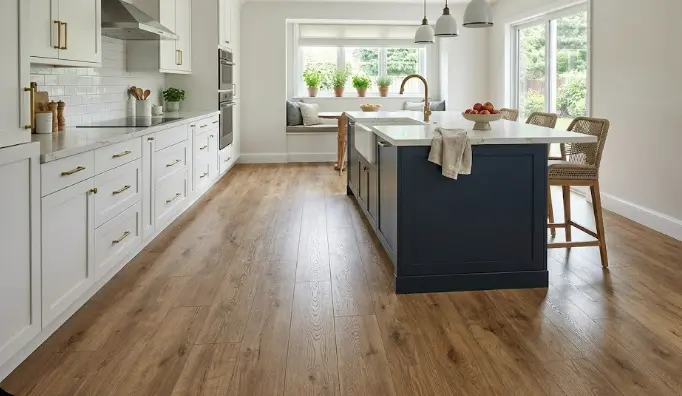
6 Key Factors: When to Choose Carpet vs. LVP
Before deciding, evaluate these six key factors for your specific home and lifestyle.
Moisture & Humidity
LVP wins for kitchens, basements, bathrooms. Carpet for dry bedrooms.
Foot Traffic
LVP better for hallways and main areas. Carpet for low-traffic zones.
Pets & Kids
LVP handles scratches and accidents. Carpet offers comfort but needs protection.
Sound Control
Carpet absorbs noise. LVP transmits sound — add underlayment for dampening.
Budget Timeline
Carpet saves upfront; LVP saves long-term. Both have valid use cases.
Resale Value
LVP in main areas appeals to buyers. Carpet remains expected in bedrooms.
Carpet vs. LVP: Head-to-Head Comparison
Direct comparison across durability, maintenance, comfort, cost, and suitability for Maryland, DC, and Virginia homes.
| Feature | Carpet | Luxury Vinyl Plank |
|---|---|---|
| Lifespan | 8-10 years before visible wear | 15-25 years with minimal care✓ Winner |
| Water Resistance | Absorbs moisture — risk of mold | Waterproof at plank level✓ Winner |
| Comfort Underfoot | Warm, soft, cushioned feel✓ Winner | Firmer, cooler (can add underlayment) |
| Sound Absorption | Excellent — reduces impact noise✓ Winner | Transmits more sound (needs underlayment) |
| Maintenance | Vacuum weekly, professional clean 1-2x/year | Sweep and mop occasionally✓ Winner |
| Stain Resistance | Susceptible; needs stain treatment | Non-porous; wipes clean instantly✓ Winner |
| Pet-Friendly | Scratches easily; absorbs odors | Scratch-resistant; no odor absorption✓ Winner |
| Installation Cost | $2-$8 per sq ft installed✓ Winner | $4-$16 per sq ft installed |
| Resale Value | Expected in bedrooms | Preferred in main living areas✓ Winner |
| Best for DMV Climate | Upstairs; low-moisture areas | Basements; humid spaces✓ Winner |
Pro tip from 2020 Flooring: The DMV's humid summers and seasonal moisture swings make LVP ideal for basements, entryways, and kitchens. Carpet excels in bedrooms and upstairs spaces where comfort and warmth matter most.
Best Rooms for Carpet vs. LVP: Room-by-Room Guide
The best flooring material depends on each room's moisture exposure, foot traffic, and intended use. Here's what works best for DMV homes.
| Room | Best Choice | Why |
|---|---|---|
| Master Bedroom | Carpet | Warmth and comfort underfoot in a low-traffic, dry space. |
| Guest Bedroom | Carpet | Acoustics and coziness — soft surface dampens footsteps. |
| Living Room | LVP | High visibility area; LVP shows durability and modern appeal to buyers. |
| Dining Room | LVP | Spill risk near tables — waterproof surfaces are easier to maintain. |
| Kitchen | LVP | Must-have for water resistance. Carpet absorbs spills and odors. |
| Hallway | LVP | High traffic — LVP resists scratches and requires minimal maintenance. |
| Bathroom | LVP | Moisture and humidity — carpet risks mold. LVP is fully waterproof. |
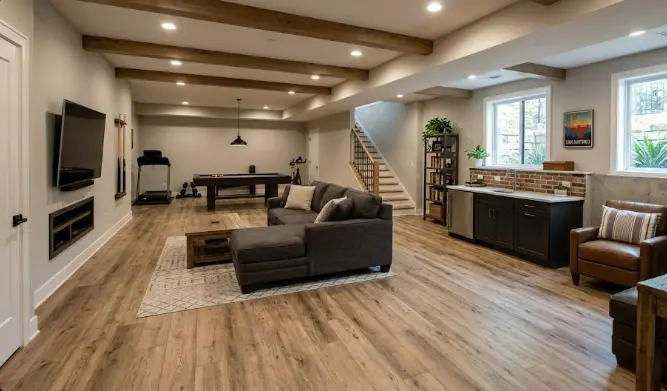
| Basement | LVP | Critical in DMV basements. Seasonal humidity and occasional moisture make LVP essential. |
| Playroom | Carpet | Safety for kids; sound absorption; spills can be managed with stain-resistant fiber. |
| Home Office | Mixed | Use LVP for main area (easy cleaning), carpet in seating zone (comfort). |
Want expert advice? Visit our Rockville showroom to see carpet and LVP samples side by side.
Carpet vs LVP in Bedrooms and Basements
These two rooms generate more carpet-vs-LVP questions than every other space combined — and they point in opposite directions.
Carpet vs LVP in Bedrooms
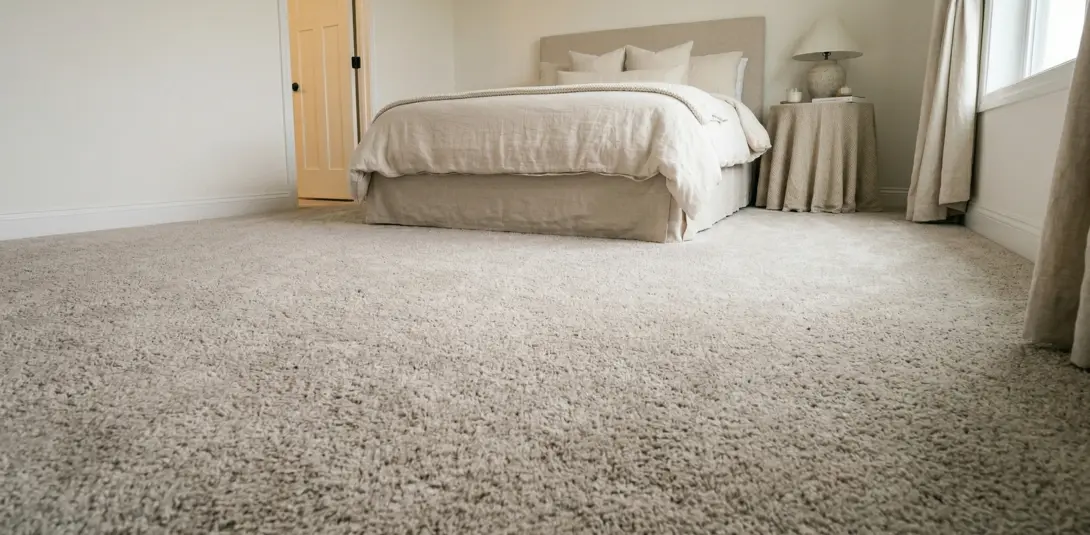
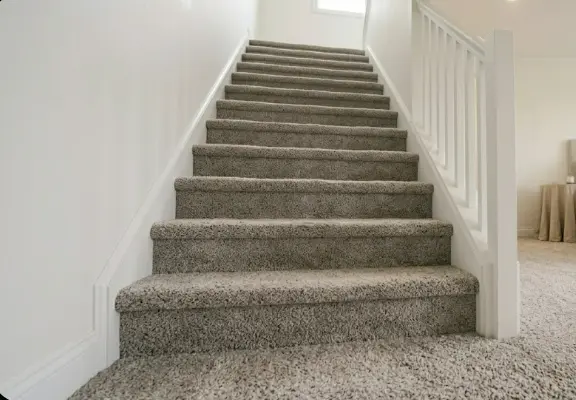
Carpet wins most bedrooms. Warmth underfoot on cold mornings, sound absorption, and lower cost make carpet the default choice where you walk barefoot and spills are rare. Buyers in the DMV still expect carpet in bedrooms, so it does not hurt resale the way main-level carpet can.
Choose LVP in a bedroom instead when allergies, pets, or home-office wear are in play — and add an area rug for warmth. LVP with a thick underlayment plus a rug gets close to carpet comfort with none of the maintenance.
Carpet vs LVP in Basements
LVP wins nearly every DMV basement. Summer humidity above 60% and seasonal moisture make below-grade carpet a mildew risk within months. Waterproof rigid-core LVP shrugs off damp air, minor seepage, and dehumidifier cycles.
Want softness for a basement playroom or media room? Install LVP wall-to-wall and layer washable area rugs — you keep the waterproof base and can replace an inexpensive rug instead of a room of carpet. See our basement flooring guide for the full comparison.
LVP is not automatically the right answer below grade, though — it depends on whether your basement is merely humid, seeps after a storm, or has actually flooded. Our installer’s guide to the best waterproof flooring for a basement ranks all seven options by water-exposure tier, covers cheap waterproof choices, and explains why porcelain or epoxy beats a floating floor in a basement that floods.
Not sure which is right for your space? Bring photos or a video tour to our showroom or schedule a free in-home consultation. Our experts will evaluate your moisture exposure, traffic patterns, and lifestyle to recommend the ideal flooring.
Cost Analysis: Upfront Price vs. 15-Year Total Cost
Carpet costs less upfront — but LVP's longer lifespan and near-zero maintenance typically produce 30-50% lower total cost of ownership over 15 years, especially in rental and multifamily settings.
| Cost Factor | Carpet | LVP |
|---|---|---|
| Upfront Material & Installation | $2-$8 per sq ft installed | $4-$16 per sq ft installed |
| Professional Deep Cleaning (annual) | $100-$300 per room / $0.25-$0.50 per sq ft | N/A — sweep & mop only |
| Stain Treatment & Spot Repairs | $50-$200 per incident | Minimal — wipes clean instantly |
| Typical Replacement Cycle | 5-7 years in rentals; 8-10 years in owner-occupied | 15-25 years with minimal wear |
| Turnover Replacement Cost (per unit) | $800-$2,500 per unit every 5-7 years | $1,500-$4,500 once per 15-25 years |
| 15-Year Total Cost of Ownership (per unit) | $4,500-$10,000+ (2-3 replacements + cleaning) | $2,500-$6,000 (one install, minimal maintenance) |
Break-Even Analysis: When Does LVP Pay Off?
For a typical 800 sq ft apartment unit, carpet runs $1,600-$6,400 installed vs. $3,200-$12,800 for LVP. That upfront gap closes quickly: carpet in rental units typically needs full replacement every 5-7 years — meaning two replacements in the time LVP needs zero. Add $300-$600/year in professional cleaning and per-incident repairs, and LVP typically breaks even within 6-9 years in multifamily settings. On a 20-unit complex, that can represent $40,000-$120,000 in avoided flooring costs over 15 years.
Bottom line: For DMV homeowners and property managers, LVP's lower maintenance burden and extended replacement cycle typically produce 30-50% lower total cost of ownership compared to carpet over a 15-year horizon — particularly in high-traffic units, pet-friendly buildings, and Maryland's humid climate. This lines up with broader flooring demand trends: industry research from The Freedonia Group found that U.S. demand for luxury vinyl tile grew at a 25% annual rate from 2020 to 2022, making it the fastest-growing flooring product category by volume.
LVP vs. Carpet in Multifamily Housing: Cost Savings & Benefits for Apartment Complexes
Property managers and multifamily investors increasingly choose LVP over carpet for new installations and unit renovations. Here's why the math works.
For apartment complexes, rental properties, and multifamily housing, the carpet vs. LVP decision is primarily a financial one — and it matters even more in the DMV, where multifamily development has become a larger share of new housing. According to George Mason University's Stephen S. Fuller Institute, the share of Washington-region housing permits in buildings with 5+ units rose sharply in 2022 to 63.6%. Carpet's lower upfront installation cost — typically $2-$8/sq ft vs. $4-$16/sq ft for LVP — is offset within 6-9 years by the compounding costs of cleaning, stain remediation, and accelerated replacement cycles. Across a portfolio of units, the average cost savings of LVP over carpet in multifamily housing typically ranges from $800-$2,500 per unit over a 10-year period, with larger buildings realizing proportionally greater savings through reduced turnover labor and materials.
Fewer Turnovers, Lower Turnover Costs
Carpet in rental units typically requires full replacement every 5-7 years due to staining, traffic patterns, and odors. LVP lasts 15-25 years — meaning you replace flooring once instead of two or three times per tenant cycle. On a 20-unit building, avoiding one extra carpet replacement run saves $16,000-$50,000.
Near-Zero Maintenance Between Tenants
Carpet requires professional steam cleaning at every turnover ($150-$400 per unit) plus ongoing spot treatment. LVP needs only a mop and a bucket. For a 50-unit complex turning over 15 units per year, that's $2,250-$6,000 in annual cleaning savings — without counting stain remediation.
Pet-Friendly Units Command Higher Rents
LVP allows landlords to confidently offer pet-friendly units without the typical carpet damage risk. Pet-friendly apartments in the DMV command a $50-$150/month premium. Over a 12-month lease, that's $600-$1,800 per unit in added revenue — often exceeding the upfront LVP cost premium.
Moisture & Spill Incidents Don't Become Capital Events
A single plumbing leak or tenant spill can require full carpet replacement in the affected area — a $500-$2,000 repair event. LVP's waterproof surface wipes clean in minutes. Individual planks can be replaced if damaged, rather than replacing an entire room.
Stronger NOI and Asset Valuation
Lower recurring maintenance costs improve Net Operating Income (NOI). In multifamily real estate, every $1,000 reduction in annual operating costs adds roughly $12,500-$16,700 in property value at a 6-8% cap rate. LVP's maintenance savings compound meaningfully at scale.
Easier Condition Documentation
Hard surface flooring makes move-in and move-out condition disputes simpler. Damage to LVP is visible and discrete — a scratched plank vs. a subjective carpet wear argument. Cleaner documentation reduces deposit disputes and potential legal exposure.
Typical Cost Savings: LVP vs. Carpet in Multifamily Housing
Per-unit estimates based on 800 sq ft apartment, 10-year horizon
| Savings Category | Typical Savings (per unit / 10 yr) |
|---|---|
| Avoided replacement (1 fewer full replacement) | $800-$2,500 |
| Professional cleaning at turnover (est. 2 turnovers/unit) | $300-$800 |
| Stain remediation & spot repairs avoided | $200-$600 |
| Pet damage avoided (pet-friendly units) | $400-$1,200 |
| Total average savings per unit over 10 years | $1,700-$5,100 |
Estimates vary based on unit size, tenant turnover rate, local labor costs, and LVP product tier. Contact 2020 Flooring for a project-specific cost analysis for your property. For a full landlord playbook, see our guide to the best flooring for rental properties in the DMV.
Commercial Spaces: LVP vs. Carpet
Outfitting an office, retail space, restaurant, or medical facility? The carpet-vs-vinyl decision shifts when the floor has to survive commercial traffic — here's how the two compare for business spaces.
The residential comparison above is a useful starting point, but commercial products are built differently. Commercial-grade materials use heavier construction, thicker wear layers, and glue-down installation rated for constant foot traffic and rolling loads — so a floor that suits a busy office or storefront is not the same spec you would put in a bedroom. If you are choosing flooring for a business, start with our dedicated commercial pages rather than the residential lines.
Commercial Carpet
Carpet tile and broadloom in low-profile loop construction and heavier-gauge fiber, glue-down for stability under chairs, carts, and daily traffic. Comfortable, quiet, and cost-effective for offices and hospitality.
Commercial carpet installation →Commercial Vinyl & LVP
Heavy-duty LVT, luxury vinyl plank, and sheet vinyl with 20–40 mil wear layers and rigid cores built for rolling loads, moisture, and heavy traffic. Waterproof and low maintenance for retail, healthcare, and kitchens.
Commercial vinyl flooring →In commercial work the choice is usually carpet tile against glue-down luxury vinyl tile rather than against residential plank, and it is decided zone by zone. Our carpet vs. LVT guide maps where each belongs in an office suite, the codes that decide the spec, and what the two cost over a 15-year lease.
Not sure which fits your space? 2020 Flooring installs both commercial carpet and commercial vinyl throughout Maryland, DC, and Northern Virginia — and can walk your space to recommend the right system.
The Smart DMV Approach: Using Both Carpet and LVP
The most popular approach we see at our Rockville showroom combining the best of both worlds.
Most of our clients choose to use both carpet and LVP in their homes. Here's the winning formula we recommend:
- 🎯Main Level & Basement: Install LVP for durability, water resistance, and easy maintenance. Perfect for kitchens, dining areas, living rooms, entryways, and basements where spills and moisture are concerns.
- 🎯Upper Floors & Bedrooms: Install carpet for warmth, comfort, and sound absorption. Bedrooms, hallways, and guest spaces benefit from carpet's soft feel and acoustic properties.
- 🎯Transitions: Professional transition strips create clean boundaries between carpet and LVP, ensuring a polished, seamless look throughout your home.
This balanced approach maximizes durability, resale value, and comfort while addressing the unique challenges of Maryland and Virginia's humid climate.
Outfitting an office or retail space instead of a home? commercial carpet installation has its own set of considerations — carpet tile, broadloom, and commercial-grade fiber all perform very differently from residential options. Our team handles commercial carpet throughout Maryland, DC, and Northern Virginia.
Installing in Silver Spring, MD?
Silver Spring homes — from the high-rises near downtown to the older colonials in Woodside and Four Corners — see a wide mix of flooring needs. Many owners are replacing worn carpet with hard flooring to handle foot traffic and the area's humid summers. If you're leaning toward LVP, luxury vinyl installation in Silver Spring is one of our most requested services in the area — waterproof planks are especially practical for the basement units and ground-floor condos common in 20910. For those who want the warmth and character of real wood, hardwood floor installation in Silver Spring is a strong choice in living rooms and dining areas — real wood holds up well in the drier upper floors of detached homes and adds meaningful resale value in Silver Spring's competitive market.
Frequently Asked Questions: Carpet vs. LVP
Answers to the most common questions homeowners ask when choosing between carpet and LVP.

Written by
Jason Brown
Flooring Specialist
Jason Brown has 14 years of flooring sales and installation experience across the DC, Maryland, and Virginia area.