
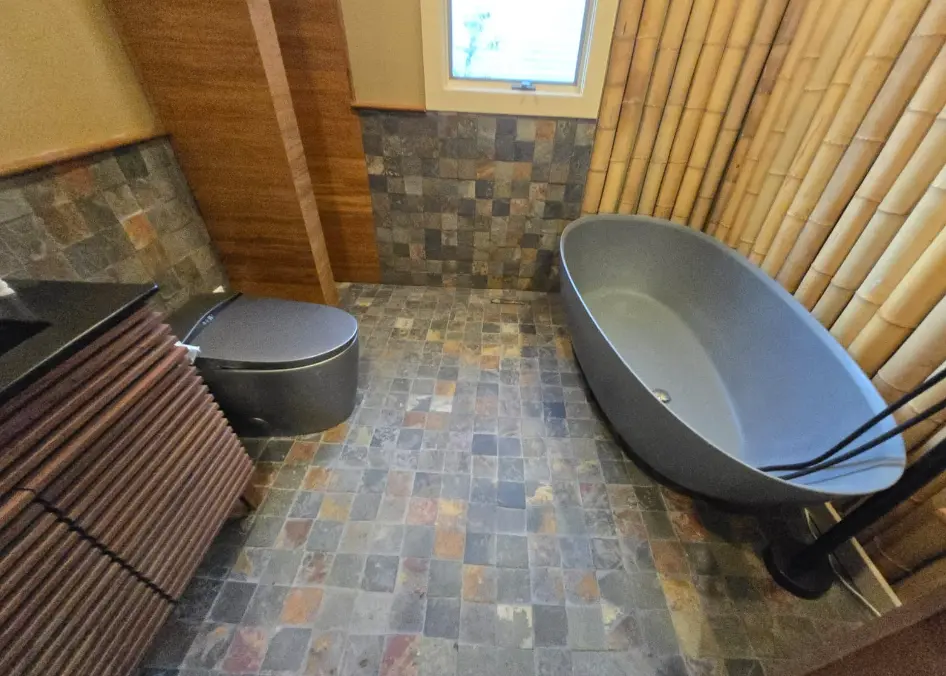



Slate Floor Restoration in Maryland, DC & Northern Virginia
Stripping old wax and failed sealers, repairing flaking and cracked tile, deep-cleaning grout, and colour-enhancing and sealing the stone — so dull, cloudy slate looks deep and rich again. Restoring floors across the DMV since 1997.
Dull, Cloudy Slate Is Almost Never Worn Out
Slate floor restoration is the process of stripping old wax and failed sealers off a slate floor, deep-cleaning the stone and grout, repairing flaking, chips, cracks, and loose tile, then colour-enhancing and resealing the surface to bring back the stone's natural depth and protect it. It costs a fraction of replacement, and in most homes the slate underneath decades of coating is in genuinely good condition — what looks like wear is usually build-up.
2020 Flooring restores slate in homes, entryways, sunrooms, kitchens, lobbies, and stair landings throughout Maryland, Washington DC, and Northern Virginia. Slate restoration is part of our full flooring repair service, alongside terrazzo floor restoration. Call (301) 881-1115 or request a free assessment online and we will strip a test patch so you can see your actual stone before you decide anything.
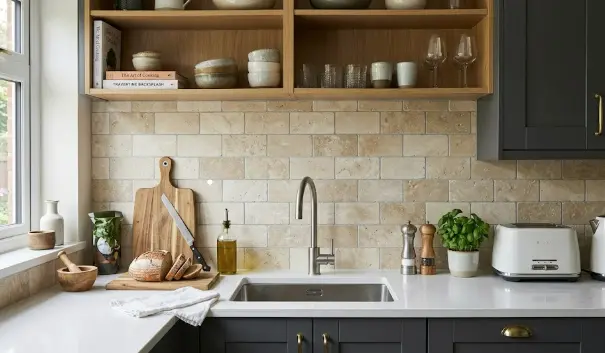
What Are the Common Problems Associated With Slate Floors?
Slate is durable but layered, porous, and easy to damage with the wrong cleaner. These are the conditions we are called out for most often in the DC metro area:
- Flaking and spalling — thin surface layers lifting off, usually where moisture is trapped beneath the tile or a hard topical coating is pulling at the stone.
- Dull, grey, chalky colour — the natural charcoal, plum, rust, and green tones fade as the sealer wears and the surface oxidises.
- Cloudy or peeling wax build-up — decades of mop-on acrylic that has yellowed, streaked, and started shedding in the traffic lanes.
- Etching and dull patches — from vinegar, citrus, ammonia, and bleach-based cleaners eating into the stone.
- Staining — oil, grease, wine, and pet accidents absorbed into unsealed or under-sealed slate.
- Cracked, missing, or mismatched grout — the fastest way for an otherwise sound floor to look neglected.
- Loose or hollow tiles — a failed mortar bed underneath, common in basements and additions.
- Moisture damage — sunrooms, covered porches, and slab-on-grade basements across Montgomery County and Northern Virginia take the brunt of freeze-thaw and summer humidity.
Every item on that list is repairable. If water is the underlying cause — a burst supply line, a flooded basement, a failed sunroom threshold — start with our emergency floor repair service, then restore the slate once the substrate is dry.
Slate Restoration, Stripping, Repair, Sealing & Polishing
Slate Floor Restoration
Full slate restoration strips everything off the stone that should not be there — old acrylic wax, failed topical sealers, silicone coatings, hazy build-up, paint and adhesive residue — then deep-cleans the tile and the grout, repairs damage, and rebuilds a proper finish from the stone up. Most slate floors that look "worn out" are not worn at all: the slate underneath is intact and the coating on top has yellowed, clouded, or peeled.
We restore slate throughout the DMV — mid-century entry halls in Bethesda and Chevy Chase, DC rowhouse vestibules and kitchens, sunrooms and screened porches in Potomac and McLean, and commercial lobbies and stair landings across Northern Virginia.
Stripping Old Wax, Sealer & Coatings
Decades of mop-on wax and DIY topical sealer leave slate looking milky, streaky, or plastic — and the surface flakes wherever traffic is heaviest. We strip coatings chemically with slate-safe strippers rather than aggressive grinding, because slate is a layered metamorphic stone and over-grinding removes the natural cleft texture that makes it worth keeping. Once the stone is bare, we can see exactly what condition it is truly in.
Slate Repair — Flaking, Spalling, Chips & Cracks
Slate delaminates: thin layers lift and flake off the surface, usually where moisture has been trapped underneath or where a hard coating has pulled at the stone. We consolidate flaking areas, fill chips and cracks with colour-matched fill, re-set loose or hollow-sounding tiles, and replace tiles that are beyond saving from salvage or matched stock.
Failing grout is repaired at the same time — cracked, missing, or mismatched grout is the fastest way to make a fully restored slate floor still look neglected.
Grout Cleaning & Recolouring
Slate is almost always laid with a wide grout joint that traps soil. We deep-clean the joints with controlled-pressure hot-water extraction, repair the failed sections, and recolour and seal the grout so it reads as one consistent tone instead of a map of every spill the floor has ever taken.
Colour Enhancing & Sealing
A colour-enhancing impregnating sealer is what brings the deep charcoal, plum, rust, and green tones back out of slate that has gone grey and chalky. It soaks into the stone rather than sitting on it, so it will not peel like a wax. Where you want visible sheen, we can add a breathable topical finish over the top in satin or gloss — but we always tell you honestly which finish suits your floor, because a high-gloss finish on heavily cleft slate looks wrong and wears unevenly.
Honing & Polishing for a Shine
Slate can be honed to a smooth, low-sheen surface where the cleft is too rough for the room — a common request on kitchen floors and stair treads. True mirror polishing is not what slate does; the achievable range runs from natural matte through satin to a soft gloss. We will show you samples on your own floor before committing to a sheen level.
How Do I Get My Slate Floor to Shine Again?
Strip, clean, seal — in that order. A slate floor that has lost its shine almost always has old wax or a failed topical sealer sitting on it, and adding another coat of product on top only makes it cloudier. Remove the coating with a slate-safe stripper, deep-clean the stone and grout, let it dry fully, then apply a colour-enhancing impregnating sealer to bring the depth of colour back. If you want visible sheen on top of that, a breathable topical finish in satin or gloss will give it.
Set expectations on the finish, though: slate is a naturally matte, cleft stone, and the honest range runs from natural matte through honed satin to a soft gloss. It will not take a mirror polish the way terrazzo or polished marble does. Anyone promising a mirror shine on cleft slate is planning to bury it under a thick plastic coating — which is exactly the coating we will be stripping back off in five years.
How to Modernise Slate Flooring
Slate reads as dated far more often because of its finish than because of the stone. Four options, in rising order of cost:
- Strip the wax and reseal matte. Removing decades of shiny yellowed acrylic and finishing with a natural or matte colour enhancer is the single biggest visual change available — and the cheapest.
- Recolour the grout. Wide, contrasting white or tan joints are what make a 1970s slate floor read as 1970s. Recoloured close to the stone tone, the same floor reads as a contemporary large-format natural stone install.
- Hone the surface. Reducing the heavy cleft texture gives a flatter, calmer, more modern floor — and makes kitchens and stair treads far easier to clean.
- Replace it. If the slate simply does not suit the room, we remove it and install large-format porcelain or natural stone through tile & stone flooring, or luxury vinyl plank where you want warmth underfoot. See tile & stone removal for how the tear-out works.
Most clients in Bethesda, Arlington, and DC find that steps one and two alone transform the room — for a fraction of what replacement would have cost.
What Not to Use on Slate — and What Vinegar Really Does
Vinegar is acetic acid. On slate it etches the surface, dissolves the mineral binders holding the stone's layers together, accelerates flaking, and strips any sealer straight off. Grout erodes faster than the tile. The damage is cumulative and hides for a while — a vinegar-mopped floor looks fine, then goes chalky and starts shedding surface layers all at once. There is no dilution that is safe for routine slate cleaning. The same goes for lemon and citrus cleaners, and for the opposite end of the scale: ammonia and bleach.
And WD-40, which comes up constantly: it is a petroleum penetrating oil that darkens porous stone temporarily, so the floor looks richer for a few weeks. Then it attracts dirt, goes patchy, leaves a genuinely dangerous slip film on entries and stairs, and — worst of all — contaminates the stone so a proper impregnating sealer will not bond. Removing WD-40 residue before sealing is billable extra work. A colour-enhancing sealer achieves the same look, permanently and safely.
Safe for slate
- Neutral-pH stone cleaner and soft microfibre mop
- Dry-dust or vacuum (hard-floor setting) before wet cleaning
- Blot spills immediately, especially oil and wine
- Walk-off mats at every exterior door
- Water-drop test annually; reseal when it fails
Never use on slate
- Vinegar, lemon, or any acidic cleaner
- Ammonia, bleach, or strong alkaline products
- Mop-on acrylic wax and "shine restorer" products
- WD-40, cooking oil, or oil soaps
- Steel wool, scouring powder, or stiff bristles
- Steam cleaners on sealed slate
Our Slate Floor Restoration Process
Assessment & Test Patch
We identify what is actually on the floor — wax, topical sealer, or nothing — check for flaking, hollow tiles, and moisture, then strip a small test patch so you can see what your slate looks like underneath before you commit to anything.
Strip & Deep Clean
Slate-safe strippers remove old coatings and build-up. The stone and grout joints are then deep-cleaned with controlled hot-water extraction, and neutralised so no residue is left to interfere with the new sealer.
Repair & Regrout
Flaking and spalling areas are consolidated, chips and cracks filled with colour-matched fill, loose tiles re-set, and failed grout cut out and replaced. Repairs happen before sealing so they lock in under the finish.
Hone to the Chosen Finish
Where a smoother surface is wanted, we hone the slate to the agreed sheen — natural cleft, honed matte, or satin. Skipped entirely on floors where the natural texture should be preserved.
Seal & Protect
A penetrating, colour-enhancing impregnating sealer restores depth of colour and protects against staining, with an optional breathable topical finish for added sheen. We finish with a walkthrough and a neutral-pH maintenance plan.
Residential & Commercial Slate
In homes across Bethesda, Chevy Chase, Silver Spring, and DC, slate turns up in mid-century entry halls, kitchen floors, hearths, sunrooms, and stair landings — often under a half-century of wax and in far better shape than the owner expects. We restore residential slate on a household schedule, room by room, with containment and dust control throughout.
For lobbies, churches, schools, and office entries, slate restoration is part of our commercial floor restoration service — night and weekend scheduling, phased work, and a dedicated project manager so the building stays open while the floor comes back.
Where We Restore Slate Floors
From our North Bethesda showroom we restore slate throughout the DC metro area — Montgomery County, Washington DC, and Northern Virginia:
- Bethesda, MD
- Chevy Chase, MD
- Silver Spring, MD
- Rockville, MD
- Potomac, MD
- Gaithersburg, MD
- Washington, DC
- Arlington, VA
- Alexandria, VA
- McLean, VA
- Falls Church, VA
- Tysons, VA
- Fairfax, VA
- Vienna, VA
- Great Falls, VA
- Annandale, VA
See every city we cover on areas we serve, or the Virginia-side overview at flooring in Northern Virginia.
Slate Floor Restoration FAQs
What are the common problems associated with slate floors?
Flaking and spalling, a dull grey chalky surface, cloudy or peeling wax build-up, etch marks from acidic or alkaline cleaners, staining in unsealed stone, cracked or missing grout, and loose tiles over a failed mortar bed. In the DC area we also see a lot of moisture damage in basements, sunrooms and covered porches where slate sits over a slab. Every one of these is repairable — slate almost never needs tearing out.
What does WD-40 do to slate?
It darkens the stone temporarily, which is why the trick circulates online, but it is not a restoration. The oil holds dirt, leaves a slip film that is a real hazard on entries and stairs, breaks down within weeks so the floor goes patchy, and contaminates the stone so a proper impregnating sealer cannot bond afterwards. Removing the residue before sealing is billable extra work. A colour-enhancing sealer gives the same look permanently.
How to modernise slate flooring?
Four options, in rising order of cost. Strip the old wax and reseal with a matte or natural-finish colour enhancer — the dated look is usually the coating, not the stone. Recolour the grout close to the slate, since wide contrasting grout is what reads as 1970s. Hone the surface to soften the cleft texture. Or, if the slate genuinely does not suit the room, replace it. Most clients find the first two alone transform the room.
How do I get my slate floor to shine again?
Strip, clean, seal — in that order. A floor that has lost its shine almost always has old wax or a failed topical sealer on it, and adding more product on top only makes it cloudier. Once the coating is off and the stone is dry, a colour-enhancing impregnating sealer restores depth, with a breathable satin or gloss finish over it if you want visible sheen. Slate is naturally matte and cleft, so the honest range is matte to soft satin — not a marble-style mirror.
What not to use on slate?
Nothing acidic (vinegar, lemon, citrus) and nothing strongly alkaline (ammonia, most bleach products). Skip all-purpose and "shine" cleaners, oil soaps, dish detergent, abrasive powders, steel wool and stiff-bristle scrubbers that gouge the cleft. No WD-40 or cooking oil as a shine trick, no steam cleaning, and above all no mop-on acrylic wax — it causes most of the dull, cloudy slate we are called out to fix. A neutral-pH stone cleaner and soft microfibre is genuinely all a sealed slate floor needs.
What does vinegar do to slate?
Vinegar is acetic acid, so it etches the surface, dissolves the binders holding slate’s layers together, accelerates flaking, and strips any sealer straight off. Grout erodes faster than the tile. The damage is cumulative and hides for a while — a vinegar-mopped floor looks fine, then goes chalky and starts shedding layers all at once. No dilution is safe for routine cleaning. A floor mopped this way for years can still be recovered, but the etched surface has to be honed and resealed rather than simply cleaned.
Can slate floors be restored instead of replaced?
Nearly always. Slate is dimensionally stable and the problems people mistake for terminal wear — dullness, cloudiness, flaking, staining, failed grout — are surface conditions with straightforward fixes. Restoration typically costs a fraction of tear-out and replacement, and it saves the original stone, which matters in mid-century Bethesda and Chevy Chase homes and in historic DC properties where the slate is part of the architecture and cannot be matched today.
How much does slate floor restoration cost in the DC area?
Cost depends on square footage, how much old coating has to be stripped, the amount of chip, crack, and grout repair required, whether the floor is honed, and the sealer and finish you choose. A clean-and-seal on a well-maintained floor is at the low end; a full strip, repair, hone, and seal on a heavily waxed entry is at the high end. Because every slate floor is different, we quote from an on-site assessment — call (301) 881-1115 or request a free estimate and we will give you a number you can budget against.
How often should slate floors be sealed?
Interior slate typically needs resealing every three to five years; entryways, kitchens, and covered porches that take heavy traffic or moisture may need it every two. The water-drop test tells you where you stand: put a few drops on the stone and wait five minutes. If the slate darkens where the water sat, the sealer has worn through and it is time to reseal. If the water beads, you are fine.
Do you restore slate patios, porches, and sunroom floors?
Yes. Exterior and semi-exterior slate — covered porches, screened sunrooms, stair treads, and patios — is common throughout Montgomery County and Northern Virginia, and it takes the worst of the DMV's freeze-thaw cycles and summer humidity. Those floors need a breathable, vapour-permeable sealer rather than a film-forming one, or trapped moisture pushes the finish off and worsens spalling. We assess drainage and moisture before recommending a system. Water-damaged slate over a slab may also need our emergency floor repair service first.
Which areas do you serve for slate floor restoration?
We restore slate floors throughout the DMV, including Bethesda, Chevy Chase, Silver Spring, Rockville, Potomac, and Gaithersburg in Maryland; all quadrants of Washington, DC; and Arlington, Alexandria, McLean, Falls Church, Tysons, Fairfax, Vienna, and Great Falls in Northern Virginia. Our showroom is at 5550-F Nicholson Lane in North Bethesda, MD.
Restore Flooring Before Winter Damage Compounds
Summer humidity, storms, and heavy use can leave floors with loose areas, stains, finish wear, or damaged transitions. That makes the project especially timely for DMV properties before winter. Fall repair and restoration correct those problems before dry indoor air and winter moisture add new stress. Preserving sound material can reduce disruption and maintain the property's original character.
Restore Your Slate Floor with 2020 Flooring
Contact us for a free on-site assessment and a stripped test patch. We restore slate throughout Maryland, Washington DC, and Northern Virginia — and we have been doing it since 1997.
2020 Flooring Showroom
2020 Flooring
5550-F Nicholson Lane, North Bethesda, MD 20852
Mon–Wed 10–7 · Thu–Sat 10–6 · Sun 11–5
Can't Come in Person?
We'll bring the showroom to you! Request a free in-home consultation and browse samples in the comfort of your own home.
Request Free In-Home ConsultTrusted by the DMV Community
For over 25 years, residential and commercial members of the DC, Maryland, and Virginia community have trusted 2020 Flooring. Check out what our customers have to say!
5.0on Google“We had a last minute major issue in the flooring we selected from another flooring installer on our kitchen renovation and addition. We had initially loved another flooring choice that we saw at 2020 Flooring. Unfortunately we found out it had been discontinued. Carol from 2020 Flooring went above and beyond to help us locate the amount of LVP flooring we needed by scouring the country. She found just the right amount and was able to get the order expedited so we could continue on the time schedule with our general contractor. Bobby from 2020 Flooring was great in helping us remedy an issue with the subfloor. We now have the exact flooring we wanted which has made our new kitchen and addition complete. Can't thank them enough!”
“As an architect, from the moment we walked into 2020 Flooring, upon seeing a standout recommendation on NextDoor, I was immediately impressed with Bobby and Carol's technical expertise, friendliness and professionalism. They asked the right questions, took their time to weigh flooring options for us without pressure and worked hard to meet our budget for new floors for our townhome. They committed to a date for installation and made it work. Their crew, led by Mariano, was highly competent, discrete, meticulous and worked long hours to complete the job in time. They stand by their work proudly and their warranty is better than anyone else's. Our new floors are fabulous and we wholeheartedly recommend 2020 Flooring!”
“I spent many hours trying to select a quality vinyl floor with the right color combination for my house and Carol at IDESIGN made the job easy with a great selection that I am very satisfied with. In general IDESIGN carries a good selection of quality floors but the added value of Carol's design expertise made the difference and I greatly benefited from her help. Thanks Carol😊”
Reviews sourced from Google. 2020 Flooring was given permission to publish reviews on this site.