The Look
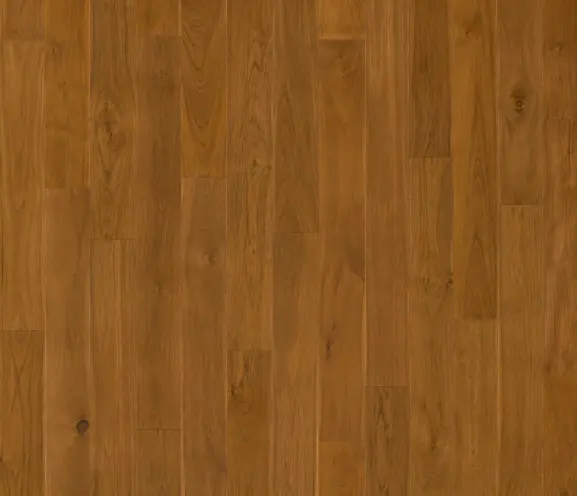
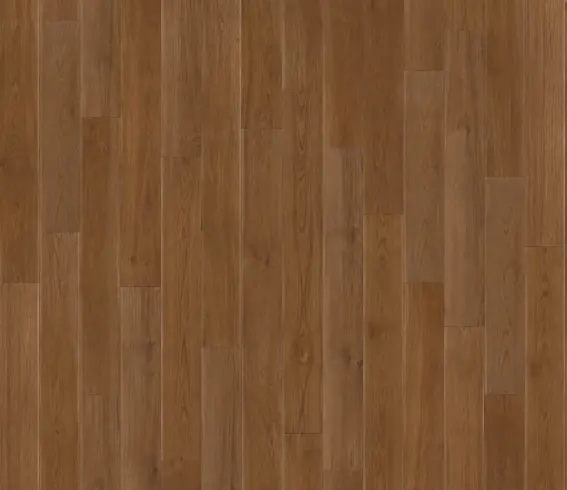
Teak is characterized by a golden to medium brown heartwood that radiates warmth. It does not have the red hues of Cherry or Mahogany, making it an excellent choice for clients who prefer a more neutral, organic aesthetic.
The grain is typically straight and dense, giving it a sleek, tailored appearance. Over time, with exposure to light, the golden tones deepen into a rich, mellow brown that exudes sophistication.
Performance and Technical Data
Teak sits around 1,100 to 1,300 on the Janka hardness scale, which is similar to Red Oak. This surprises many people who assume Teak is extremely hard. The true superpower of Teak is not hardness but its natural oil content and silica deposits. Teak contains a high percentage of natural oils that make it virtually waterproof. While no wood is truly waterproof, Teak is so resistant to moisture that it is often used in boat decks and outdoor furniture without any finish. In your home, this means a spilled glass of water or a damp entryway from a rainy DC afternoon will not cause warping or staining the way it would with other woods.
Additionally, Teak has remarkable dimensional stability. It moves very little with humidity changes, making it ideal for the Mid Atlantic climate where we see large swings between seasons. The high silica content in Teak also acts as a natural abrasive, which deters termites and other pests. However, that same silica quickly dulls standard cutting tools and sandpaper, which is why only experienced crews with industrial grade equipment should handle Teak installation and refinishing.
Installation and Refinishing Expertise
The natural oils in Teak present a unique challenge for adhesives and finishes. Standard wood glues and water based polyurethanes will not bond properly to an oily surface. We use specific two part adhesives and epoxy based fillers for Teak installations. For finishing, we recommend penetrating oil finishes or hardwax oils that soak into the wood and cure from within, rather than sitting on top as a film. This approach enhances the natural water resistance and makes spot repairs far easier.
If your Teak floor is decades old and looking dull, we do not simply sand and recoat like we would with Oak. Instead, we perform a deep cleaning to remove built up grime, then apply a fresh coat of penetrating oil to restore the rich golden tone without removing the valuable wear layer.
Teak in the DMV Climate
Teak is our first recommendation for the rooms that punish a floor in this region: the entry that catches a rainy DC afternoon, the mudroom off a Bethesda driveway, the powder room that sees splashes. It moves less through the seasonal swing than almost anything else we sell, and it shrugs off the water that marks other woods.
That protocol is the same whether the floor is going into a Bethesda colonial, a Washington DC rowhouse, or a new build in Arlington. It is described in full on our hardwood installation page.

Solid or Engineered Teak?
Every species on this page is sold both ways, and the choice is usually made by the room rather than by the wood. Solid hardwood is 3/4 inch of teak through its full thickness, nailed down above grade, and sandable six to eight times over its life. It is the floor you buy once for a main level.
Engineered hardwood puts a real teak wear layer over a cross-ply core that holds flat where an exotic solid would move. It goes over concrete, below grade, and over radiant heat, and for imported species with a wide seasonal swing it is very often the more sensible specification in this region. Most of the teak we stock is engineered for exactly that reason.