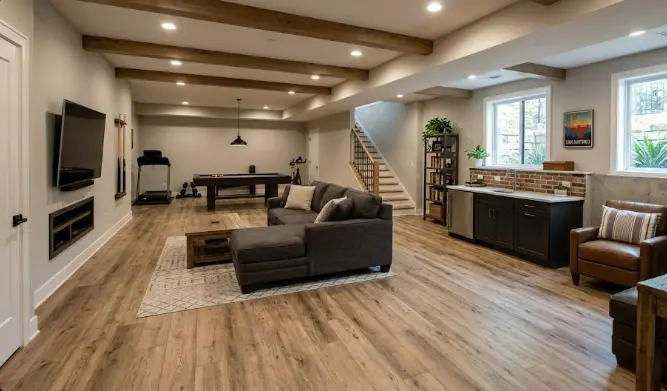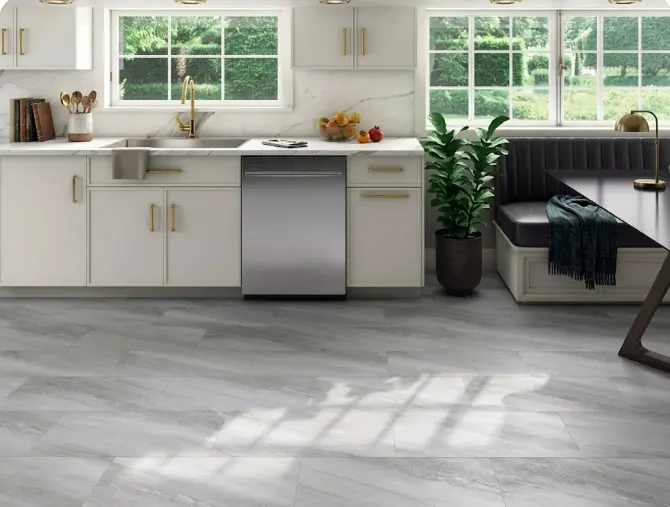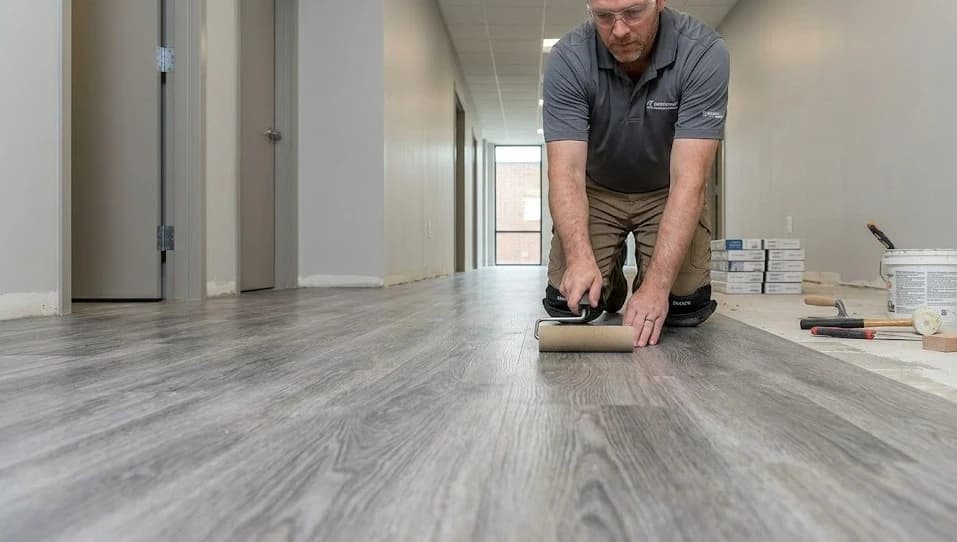
Landlord Guide · 2020 Flooring · Serving DC, MD & VA Since 1997
For most DMV rental properties, luxury vinyl plank (LVP) is the best overall flooring choice — it is waterproof, scratch- and pet-resistant, fast to turn over, and delivers the lowest cost of ownership of any rental floor. Reserve engineered hardwood for premium and luxury single-family rentals, use tile in wet areas, and keep carpet to bedrooms only. This guide covers durability, water resistance, ROI, costs, property-type recommendations, and the Mid-Atlantic climate factors that make or break a rental floor.
If you own or manage rental property in Washington DC, Maryland, or Northern Virginia, your flooring decision is a business decision, not a decorating one. The right floor has to survive back-to-back tenancies, shrug off spills and pet claws, clean up fast between renters, and keep your unit competitive on rent — all while protecting your bottom line. The wrong floor adds vacancy days, eats your security deposits in disputes, and gets replaced far sooner than it should.
At 2020 Flooring, we have completed hundreds of successful flooring projects for rental property owners, investors, and property managers across the DMV — from single-condo turns in DC to whole-building multifamily roll-outs in Montgomery County and single-family portfolios in Northern Virginia. We have seen exactly what holds up to tenants and what fails, and this guide distills that field experience into a clear playbook. We have also weighed it against national rental-market research from the National Association of Realtors, the National Multifamily Housing Council, and the World Floor Covering Association so it is more than one contractor’s opinion.
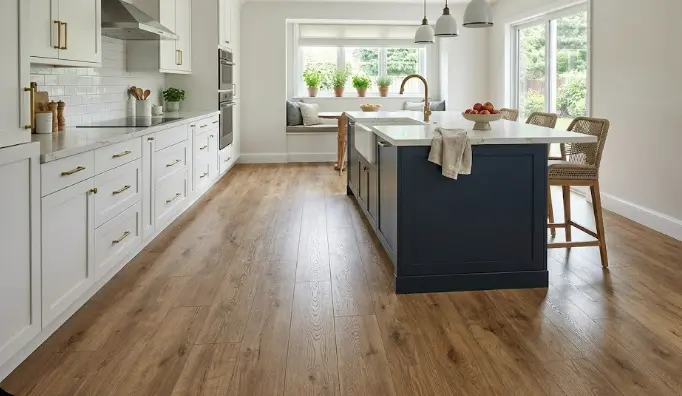
Quick Answer: The Best Flooring for Rental Properties
No single floor is right for every room — but one material does most of the heavy lifting in rentals.
For the vast majority of DMV rental properties, the best overall flooring is rigid-core luxury vinyl plank (LVP) with a 20-mil or thicker wear layer. It is genuinely waterproof, resists scratches and pet damage, wipes clean in minutes between tenants, and lasts 10–20 years — giving it the lowest total cost of ownership of any rental floor.
- Luxury vinyl plank (LVP): The default for whole-unit turns — living areas, kitchens, baths, basements, and most bedrooms.
- Tile / porcelain: Bathrooms, entries, and any wet area where waterproofing and easy cleaning are non-negotiable.
- Engineered hardwood: Premium and luxury single-family rentals where a real-wood floor justifies higher rent.
- Carpet: Bedrooms and stairs only — accept that you will replace it every one to two tenants.
- Laminate: Only for a tight-budget turn in guaranteed-dry rooms. LVP is almost always the better buy.
Re-flooring a rental in DC, Maryland, or Northern Virginia? Get a free on-site measurement, landlord-grade product recommendations, and a line-item proposal you can compare.
Get a Free Rental Flooring QuoteWhat Landlords Should Consider Before Choosing Flooring
Five factors separate a floor that pays for itself from one that drains your returns.
Durability and tenant turnover
The single biggest hidden cost in rental flooring is how often you replace it. Carpet in a busy unit often needs full replacement every one to two tenants; each replacement adds material cost and vacancy days while the work happens. A durable hard surface like LVP can ride through five or more tenancies with nothing more than cleaning and the occasional spot repair. Fewer replacements mean fewer turn days, faster re-listing, and more rent collected per year you own the floor.
Water resistance
Tenants spill, overflow tubs, leave windows open in storms, and report leaks late. In kitchens, bathrooms, basements, and entryways, water resistance is not a luxury — it is what stops a small accident from becoming a sub-floor replacement. Waterproof rigid-core LVP and tile contain the damage; carpet and laminate amplify it. This matters even more in the Mid-Atlantic, where humidity and below-grade moisture are constant. See our waterproof flooring options for the products we install in moisture-prone units.
Maintenance and repair costs
Cleaning between tenants is real labor. A floor a property manager can damp-mop in an afternoon beats one that needs professional carpet extraction every turn. Just as important is repairability: with LVP or tile, your crew can swap a single damaged plank or tile instead of redoing the room. Laminate and broadloom carpet rarely allow a clean spot repair, so one damaged area becomes a whole-room job.
ROI and tenant expectations across DC, Maryland & Virginia
Renters in this market increasingly expect hard-surface, wood-look floors — dated carpet reads as “tired unit” and slows leasing. NMHC apartment-resident research consistently ranks modern finishes and easy-clean surfaces among the features that drive lease-up and renewals, and NAR data shows hard-surface and wood floors among the most-requested features overall. Tenant expectations vary by submarket:
- DC condos & rowhomes: Renters expect hard surface and quiet floors; HOAs and condo boards often require acoustic underlayment.
- Maryland townhomes: Family and pet tenants reward waterproof, low-maintenance LVP across the main level and basement.
- Northern Virginia single-family rentals: Higher rents support engineered hardwood in living areas, with LVP in wet rooms and basements.
Why Luxury Vinyl Plank Is the Best Flooring for Most Rentals
It wins on the five factors that actually matter to a landlord — not just on looks.
LVP has become the default rental floor for a reason: it lands in the sweet spot of durability, water resistance, appearance, and cost that rental investing demands. Here is what makes it the workhorse of the modern rental:
Waterproof construction
A 100% waterproof rigid core means spills, mop water, and minor leaks do not destroy the floor.
Scratch & dent resistance
A thick wear layer takes furniture drags, foot traffic, and moving-day abuse across many tenancies.
Pet-friendly
Claw marks and accidents wipe away — the top reason landlords switch pet units away from carpet.
Lower lifecycle cost
10–20 year service life means far fewer replacements than carpet or laminate over the hold period.
Modern, rent-lifting look
Realistic wood and stone visuals keep units competitive and photograph well in listings.
Fast, low-labor turnover
Damp-mop clean and spot-replace single planks instead of re-carpeting between tenants.
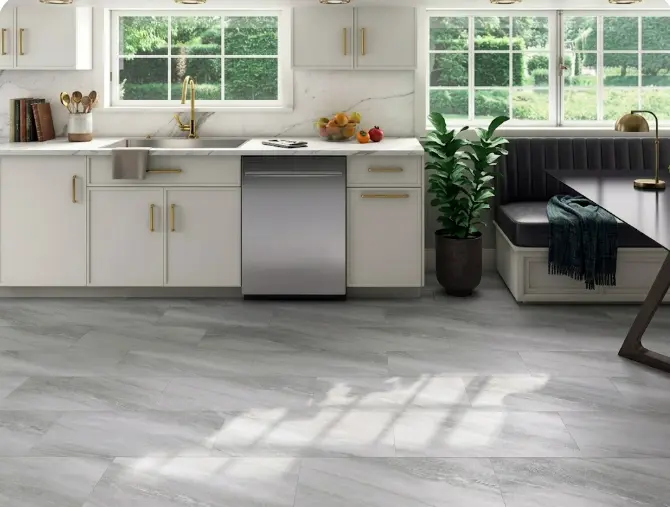
Best For
LVP is the strongest pick for multifamily communities, townhomes, condos, and most single-family rentals. For larger portfolios, step up to a commercial-grade LVP — the same products we install through our commercial flooring division for property managers running many units. In laundry rooms and baths on a tight turnover budget, sheet vinyl goes down in one piece and costs less still. Running the numbers before your next turnover? Our carpet vs LVP comparison breaks down cost, replacement cycles, and durability side by side.
Weighing LVP against the alternatives in detail? Our carpet vs. LVP guide and laminate vs. LVP guide break both match-ups down head to head for DMV properties.
Comparing the Top Flooring Options for Rental Properties
The five rental flooring options, scored on what matters to a landlord.
| Flooring type | Durability | Water resistance | Maintenance | Installed cost | Best use case |
|---|---|---|---|---|---|
| Luxury Vinyl Plank (LVP)TOP PICK | Excellent | Waterproof (100% rigid core) | Very easy — sweep & damp mop | $4 – $9 / sq ft | Best all-around rental choice; whole-unit turns |
| Engineered Hardwood | Very good | Water-resistant, not waterproof | Moderate — refinishable veneer | $9 – $16 / sq ft | Premium single-family & luxury rentals |
| Tile / Porcelain | Excellent | Waterproof | Easy surface; grout needs care | $10 – $22 / sq ft | Bathrooms, entries, wet areas |
| Carpet | Fair | Poor — stains & holds moisture | High — cleaning & frequent replacement | $3 – $7 / sq ft | Bedroom comfort; replace every 1–2 tenants |
| Laminate | Good | Weak — seams swell when wet | Easy surface; not repairable | $3 – $7 / sq ft | Tight-budget dry rooms only |
Installed price ranges for the DMV. Final pricing depends on subfloor condition, prep, and unit size. Material durability guidance is consistent with World Floor Covering Association material comparisons.
LVP vs. Hardwood for Rental Properties
The decision most single-family landlords actually wrestle with.
For premium single-family rentals, the real debate is LVP versus real or engineered wood. Both look great in a listing; they diverge on cost, risk, and who your tenant is.
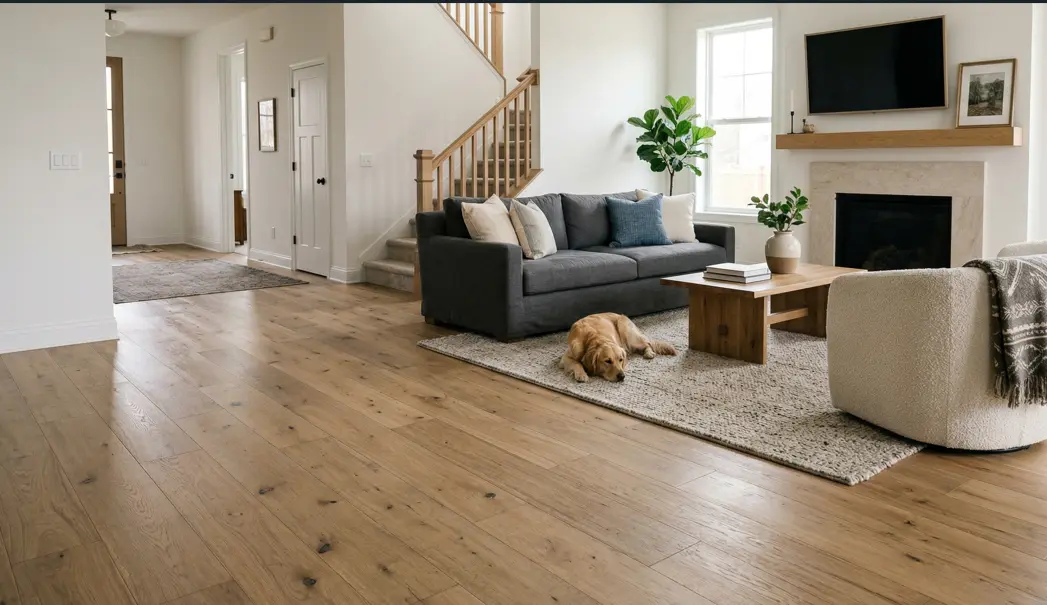
Choose LVP when
- You want the lowest risk against water and tenant damage
- The unit has pets, kids, or fast turnover
- You manage at scale and want consistency across units
- Basement, kitchen, or bath are in scope
- You want the wood look at roughly half the installed cost
Choose hardwood when
- The home is a premium or luxury rental commanding top rent
- Existing hardwood can be refinished instead of replaced
- Tenants are long-term and lower-churn
- You want a refinishable floor that lasts decades
- Resale of the property — not just rent — is part of the plan
Key takeaway: use real or engineered hardwood for premium rentals where the floor justifies higher rent and you can protect it; use LVP for most rental investments where durability, water resistance, and turnover economics rule the decision. For a deeper cost and resale-value breakdown, see our carpet vs. hardwood guide.
Best Flooring by Property Type
The right spec changes with the building. Here is where each floor earns its place across DMV rentals.
DC condos and apartments
Go with LVP and add a quality acoustic underlayment — most DC condo boards and HOAs require a minimum sound rating between units. LVP keeps the unit waterproof and quiet while meeting building rules. Confirm the underlayment spec before you order.
Historic DC rowhomes
If original hardwood is sound, refinishing it usually beats replacement — it preserves character renters pay for. Where the wood is too far gone or in wet areas, premium wood-look LVP fills the gap without fighting an uneven historic subfloor.
Maryland townhomes
Waterproof LVP across the main level and basement is the sweet spot for family and pet tenants. It handles spills, muddy paws, and basement humidity, and it turns over fast between leases.
Northern Virginia single-family rentals
Higher rents support engineered hardwood in living and dining areas, paired with LVP in kitchens, baths, basements, and mudrooms. This blend reads as premium while keeping the wet and high-traffic zones bulletproof.
Multifamily communities
Commercial-grade LVP is the standard — consistent across units, fast to install at scale, and easy for on-site maintenance to spot-repair. We handle portfolio roll-outs through our commercial flooring division.
Airbnb and short-term rentals
Short-term units take heavy, varied use and constant cleaning. Waterproof LVP or tile is the move — it photographs well for listings, cleans fast between guests, and shrugs off the abuse rotating guests bring.
Re-flooring a rental in DC, Maryland, or Northern Virginia? Get a free on-site measurement, landlord-grade product recommendations, and a line-item proposal you can compare.
Spec My Rental FloorFlooring Costs in DC, Maryland & Virginia
Installed price ranges for DC, Maryland, and Northern Virginia rentals — and why the cheapest floor rarely wins.
| Flooring type | Typical installed cost | Rental lifespan | Notes |
|---|---|---|---|
| Carpet | $3 – $7 / sq ft | 3 – 7 years | Often replaced every 1–2 tenants |
| Laminate | $3 – $7 / sq ft | 5 – 10 years | Water damage shortens life sharply |
| Luxury Vinyl Plank | $4 – $9 / sq ft | 10 – 20 years | Best lifecycle cost for rentals |
| Engineered Hardwood | $9 – $16 / sq ft | 20 – 30+ years | Refinishable; premium positioning |
| Tile / Porcelain | $10 – $22 / sq ft | 25 – 50 years | Highest upfront; lowest wet-area risk |
DMV installed ranges including materials and standard labor; excludes major subfloor repair or moisture mitigation. Confirm with a site measurement.
Look past the upfront number. Carpet is the cheapest floor to install and the most expensive to own, because you replace it so often. Run the math on total cost of ownership — install cost plus every replacement and deep-clean across your hold period — and LVP almost always wins. A unit you re-carpet five times in fifteen years costs far more than one LVP installation that lasts the whole stretch, before you even count the lost rent from extra turn days.
Mid-Atlantic Climate Considerations
The Mid-Atlantic throws conditions at a floor that out-of-town buying guides simply miss.
The DMV climate is uniquely hard on flooring, and it is the biggest reason generic “best rental floor” advice fails here. Local conditions to design around:
- Humid summers: High indoor humidity swells wood and laminate seams. Waterproof LVP and properly acclimated engineered wood handle the swing far better than solid wood or laminate.
- Snow, ice, and road salt: Tracked-in salt and grit abrade finishes at entries. Tile or LVP at doorways plus walk-off mats protect the floor through winter.
- Mud and seasonal moisture: Spring rain and muddy paws hammer entryways and mudrooms — exactly where waterproof surfaces pay off.
- Basement moisture: DMV basements are prone to humidity and occasional seepage. Solid hardwood and laminate do not belong below grade; rigid-core LVP and tile do.
- Seasonal expansion and contraction: Big temperature and humidity swings move flooring all year. Dimensionally stable LVP and engineered wood resist the gapping and cupping that plague solid wood here.
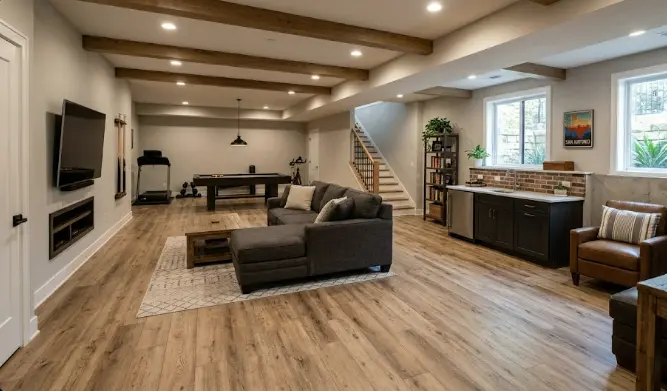
Key takeaway: the Mid-Atlantic climate is precisely why LVP and engineered hardwood outperform carpet, laminate, and solid wood in DMV rentals. For below-grade units, start with our basement flooring guidance; for any moisture-prone space, see waterproof flooring. We have also documented how these conditions damage wood in our guide to hardwood floor cupping in the DMV.
2020 Flooring Local Insights
Aggregated from 2020 Flooring's own rental-property installations across DC, Maryland, and Northern Virginia.
Across hundreds of rental-property projects in the DMV, clear patterns emerge in what landlords actually choose and why. These figures are a useful reality check against generic, out-of-town flooring advice — in this market, one material does most of the work, and the same handful of priorities drive nearly every decision.
Local Insight 01
What we install in DMV rentals
Share of installed floor area, by material
Whole-unit turns, kitchens, baths, basements, living areas
Bedrooms and stairs in family rentals and single-family homes
Bathrooms, entries, and wet areas
Premium and luxury rentals, historic rowhomes
Tight-budget bedroom and hallway turns
Sheet vinyl, transition materials, repairs
LVP alone accounts for well over half the floor area we install in rental properties.
Local Insight 02
What landlords prioritize
How often each priority drives the decision
Waterproofing and fast turnover top the list — the two areas where LVP is hardest to beat.
Figures reflect aggregated trends from 2020 Flooring rental-property projects and are shared for planning guidance. For broader market context on the DMV’s large renter-occupied housing share, see U.S. Census Bureau housing data. Your property’s conditions will vary — a site survey is the only way to confirm scope and price.
Frequently Asked Questions
The questions DMV landlords and property managers ask us most before re-flooring a rental.
Final Recommendation
Match the floor to the rental, then let durability and turnover economics make the call.
For most DMV rental properties, the answer is clear: install luxury vinyl plank and reserve upgrades for the units that earn them. Here is the quick-reference by rental type:
| Rental type | Recommended flooring |
|---|---|
| Apartment unit | Luxury Vinyl Plank |
| Condo | LVP with acoustic underlayment |
| Townhome | Waterproof LVP throughout |
| Single-family rental | LVP, or engineered hardwood for premium homes |
| Luxury rental | Engineered hardwood |
| Airbnb / short-term | Waterproof LVP or tile |
| Multifamily community | Commercial-grade LVP |
Whatever you choose, the installer matters as much as the material. The right partner helps you pick a landlord-grade product, preps the subfloor correctly, and turns the unit fast so you lose fewer rent days. Explore our luxury vinyl plank, carpet, tile & stone, and hardwood services, or see the cities we cover on our areas we serve page.
Re-Flooring a Rental? Get a Free Quote
2020 Flooring has completed hundreds of successful projects for DMV landlords, investors, and property managers — from single-condo turns to multifamily roll-outs. We bring licensed local installation, in-house crews, a North Bethesda showroom, and more than 25 years of experience to every rental project across Washington DC, Maryland, and Northern Virginia. We measure the unit, recommend landlord-grade products, and hand you a line-item proposal you can actually compare.
Call (301) 881-1115 or visit our Rockville-area showroom at 5550-F Nicholson Lane to compare LVP, tile, and hardwood samples in person. Free on-site estimates throughout the DMV — and volume pricing for portfolios.
Sources & Further Reading
- National Association of Realtors (NAR) — renter and buyer feature preferences and property-value research.
- National Multifamily Housing Council (NMHC) — apartment-resident preferences, turnover, and multifamily management insights.
- World Floor Covering Association (WFCA) — flooring durability guidance and material comparisons.
- U.S. Census Bureau Housing Data — rental housing statistics and regional housing trends for DC, Maryland, and Virginia.

Written by
Jason Brown
Flooring Specialist
Jason Brown has 14 years of flooring sales and installation experience across the DC, Maryland, and Virginia area.