Hospitality Guide · 2020 Flooring · Serving DC, MD & VA Since 1997
There is no single best flooring for a hotel — there is a best flooring per zone. In the DMV, the winning mix is porcelain tile in lobbies and guest baths, patterned carpet in corridors, glue-down LVP with acoustic underlayment in guest rooms, and rubber or sheet vinyl in fitness and back-of-house areas. This guide maps each zone, gives installed cost ranges for Maryland, Washington DC, and Northern Virginia, and covers the local conditions — brand PIP cycles, occupancy windows, historic buildings, and Mid-Atlantic humidity — that decide whether a hotel floor project succeeds.
Hotel flooring is the hardest-working finish in hospitality. A single corridor can see more foot traffic in a year than a home floor sees in a lifetime, and every zone of the property — lobby, corridor, guest room, bath, restaurant, gym, laundry — runs a different duty cycle. Choose by looks alone and the floor becomes a maintenance line item; choose by zone and it quietly protects the guest experience for a decade.
At 2020 Flooring, our licensed and insured in-house crews have installed commercial floors across Maryland, Washington DC, and Northern Virginia since 1997 — a region that happens to be the corporate capital of the hotel industry itself. This guide breaks down the best flooring for hotels zone by zone, what it costs installed in the DMV, and the local realities that out-of-town advice never mentions.
Quick Answer: The Best Flooring for Hotels, Zone by Zone
Think in zones, not products. Each area of the property has a different job for the floor to do.
- Lobby & entry: Porcelain or stone-look tile with a recessed walk-off mat system. Survives rain, salt, and rolling luggage; mops clean overnight.
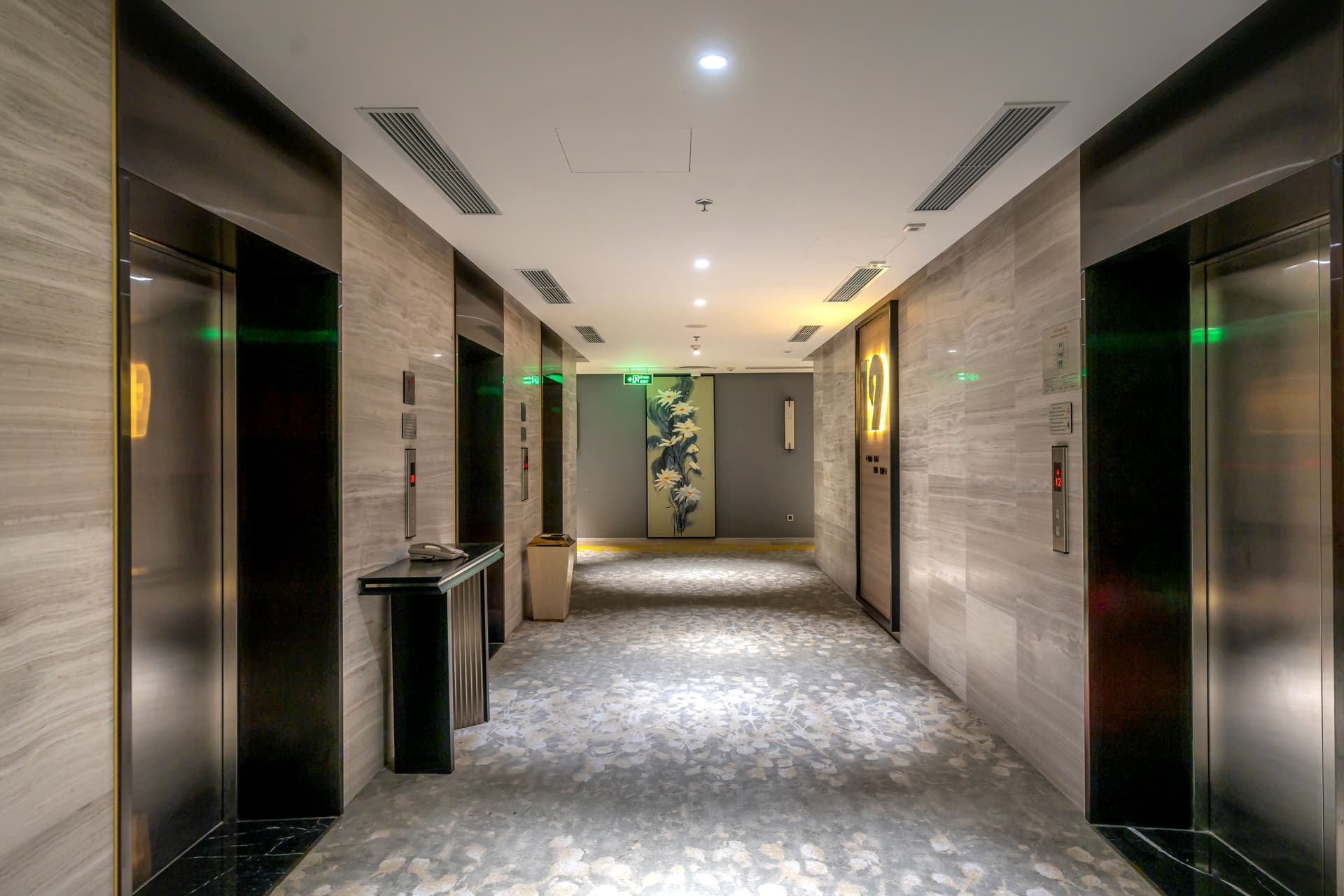
- Corridors: Patterned carpet or cushion-backed carpet tile. Absorbs footfall and cart noise outside guest room doors and hides traffic lanes.
- Guest rooms: Glue-down LVP over acoustic underlayment, with an inset area carpet at the bed. Waterproof, faster turnovers, reads as cleaner to guests.
- Guest bathrooms: Textured porcelain over a waterproofing membrane, meeting the ANSI A326.3 wet DCOF ≥ 0.42 threshold for level interior wet spaces.
- Restaurant & breakfast areas: Wood-look LVT for most properties; engineered hardwood where a boutique dining room justifies the upkeep.
- Fitness, pool & back of house: Rubber in the gym, slip-rated porcelain at the pool, heat-welded sheet vinyl in laundry and service corridors.
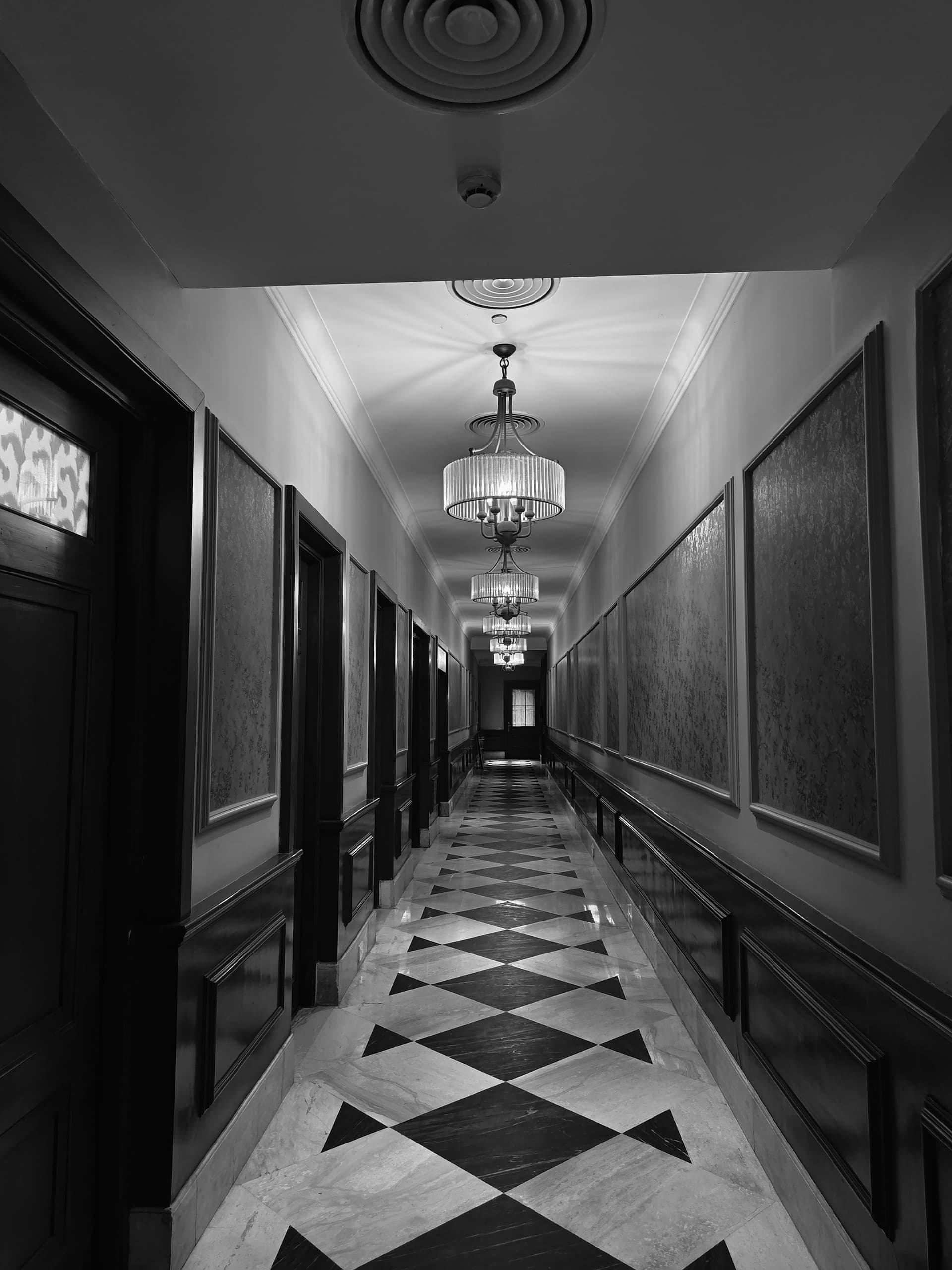
The Hotel Flooring Zone Map
Follow the guest from the front door to the back of house — the floor changes jobs five times along the way.
Every flooring decision in the sections below flows from this map. The most common mistake we see in DMV hotel renovations is letting one zone’s logic leak into another — hard surface in corridors because it worked in guest rooms, or lobby-grade polish carried into a pool surround where it becomes a slip hazard.
Installed Hotel Flooring Costs in the DMV
Realistic planning ranges for hotel projects in Washington DC, Maryland, and Northern Virginia.
Hotel pricing moves with square footage, floor prep, acoustic requirements, phasing, after-hours labor, and freight access. These are realistic installed planning ranges for DMV hospitality work.
| Flooring type | Installed cost / sq ft | Best use | Watch-outs |
|---|---|---|---|
| Glue-down LVP / LVT (guest rooms, suites) | $7 – $13 | Guest room living areas, extended-stay kitchenettes | Needs flat slab, moisture testing, acoustic underlayment plan |
| Patterned broadloom / Axminster-style carpet | $9 – $18 | Corridors, ballrooms, upscale meeting space | Pattern match adds waste; plan interim deep-clean schedule |
| Commercial carpet tile | $5 – $11 | Corridors, meeting rooms, select-service common areas | Spot-replaceable, but keep attic stock from the same dye lot |
| Porcelain tile | $14 – $30+ | Lobbies, guest baths, pool decks, public restrooms | Wet areas need a slip-rated finish and waterproofing membrane |
| Engineered hardwood | $12 – $22+ | Boutique lobbies, restaurant and bar areas | Walk-off mats and humidity control are non-negotiable |
| Rubber flooring | $10 – $18+ | Fitness centers, stair towers, service corridors | Ventilate after install; limited design palette |
| Commercial sheet vinyl | $6 – $12 | Laundry, kitchens, housekeeping, back-of-house | Heat-welded seams recommended in wet service areas |
Installed planning ranges for the DMV. Figures exclude major floor prep, acoustic underlayment upgrades, after-hours premiums, and moisture mitigation unless noted.
Per-key budget example. Re-flooring a typical guest room and bath (about 300–350 sq ft) with glue-down LVP in the room and porcelain in the bath usually lands between $3,000 and $6,500 per key in the DMV before heavy floor prep or sound-rating upgrades. A 120-key select-service property re-flooring rooms plus corridors typically plans $450,000 to $900,000 for the flooring scope of a PIP.
Planning a hotel renovation or PIP in Maryland, Washington DC, or Northern Virginia? Get a free on-site walkthrough and a phased, line-item proposal built around your occupancy.
Get a Per-Key EstimateLocal Insights: Hotel Flooring in the DMV
The DMV is not a generic hotel market — it is the industry's home office. That changes how flooring projects here actually run.
1. The brand standards are written here
Marriott International is headquartered in downtown Bethesda, Hilton in McLean, and Choice Hotels in North Bethesda — all within a short drive of our Rockville showroom. The design and PIP (Property Improvement Plan) standards that dictate hotel flooring nationwide are literally written in this market, and DMV properties tend to be early adopters: when a flag shifts its prototype from carpeted guest rooms to hard surface, area franchisees hear about it first. If your property carries a flag, bring the current brand design standards to the first flooring meeting — they will override any generic recommendation, including ours.
2. Renovation windows follow DC’s demand calendar
Washington-area occupancy peaks with the spring cherry-blossom and school-trip season, then again with fall conventions and government fiscal year-end travel. Practically, that means most DMV hotel flooring work clusters in late fall through mid-winter, when a wing can go dark with the least revenue pain — and it means installers who can staff night corridor shifts and hit hard reopening dates are worth more than the lowest bid. Inauguration years compress the calendar further: downtown DC properties want every key sellable by mid-January.
3. Historic and converted buildings hide the real scope
A large share of the region’s boutique inventory lives in older structures — converted rowhouses and office buildings in downtown DC and Georgetown, historic blocks in Old Town Alexandria and Annapolis. Demo in these buildings routinely uncovers layered old flooring, out-of-flat slabs, and wood subfloors that need reinforcement before tile. Concrete slabs should be moisture-tested before any resilient flooring goes down — ASTM F710 calls for testing regardless of the slab’s age or grade level. Skipping it is how guest-room LVP ends up bubbling eighteen months after a renovation.
4. Mid-Atlantic humidity is a design input
The DMV swings from muggy 90-degree summers to dry heated winters, and hotel HVAC setback schedules amplify the indoor swing in unsold rooms. Wood and wood-based floors move with that cycle, which is why engineered hardwood belongs only in conditioned, high-visibility spaces with a humidity plan — and why glue-down LVP, which barely moves, has become the guest-room default across the region. Acclimation and expansion allowances are not fine print here; they are the difference between a quiet floor and a warranty claim.
5. Airport-corridor and National Harbor properties run harder
Hotels clustered around Reagan National and Dulles, in Crystal City and Tysons, and at National Harbor run some of the highest occupancy and shortest average stays in the region — more check-ins per key means more luggage wheels, more cart trips, and faster corridor wear. For these properties we push clients toward solution-dyed corridor fibers, higher-wear-layer LVP (20 mil minimum), and attic stock on day one, because the soft-goods cycle arrives early no matter what the warranty says.
Best Hotel Flooring by Zone
Where each material earns its place — and where it becomes a guest complaint.
Lobby & entry
Best choices
Porcelain tile, natural stone, engineered hardwood accents
Best value
Stone-look porcelain
Premium pick
Large-format porcelain or terrazzo
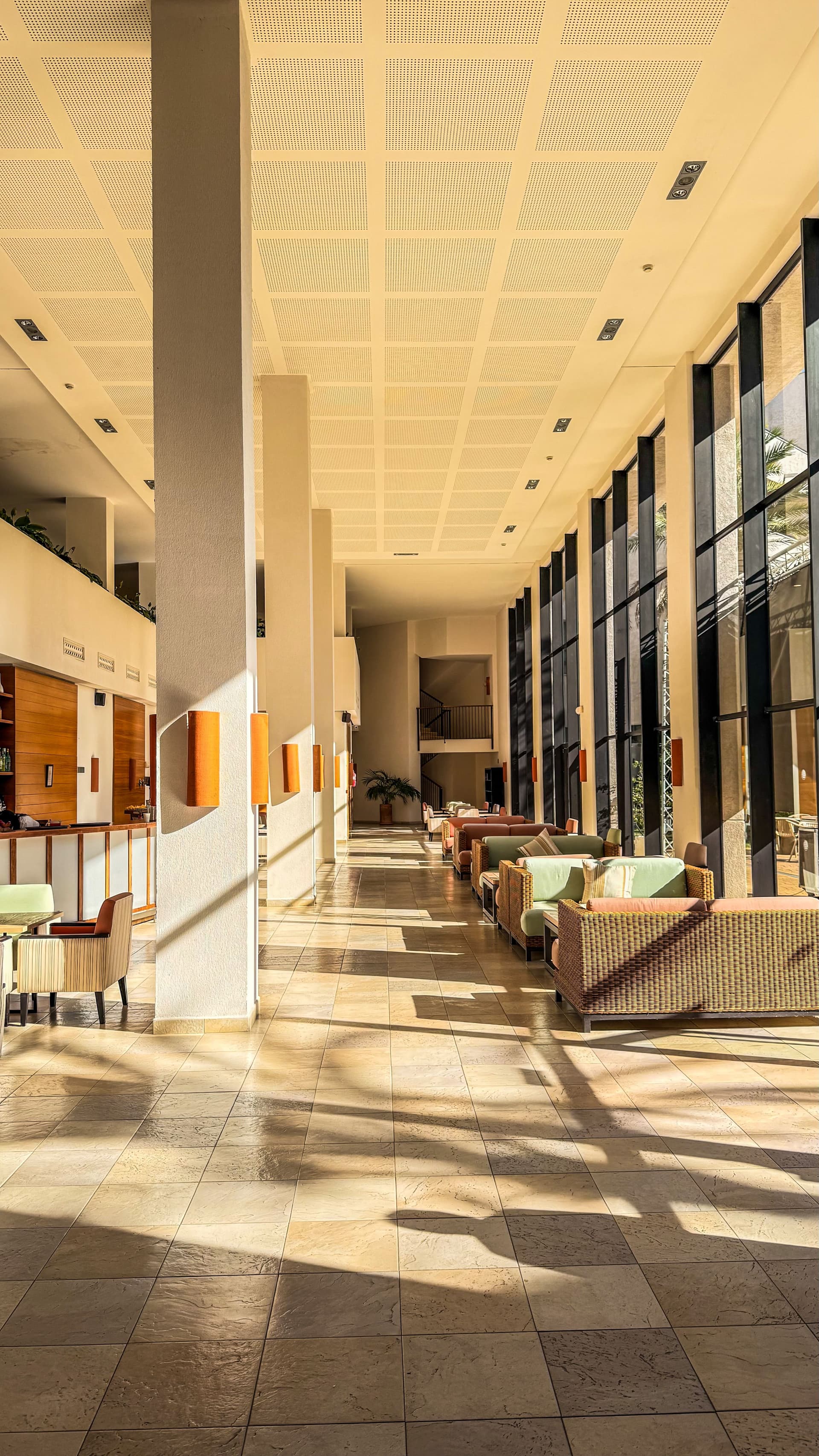
The lobby sells the room rate. It also takes the worst abuse on the property: rain and snow tracked off the sidewalk, de-icing salt in winter, rolling luggage, and bell carts. Porcelain tile shrugs all of it off and mops clean overnight. Whatever you choose, budget for a recessed walk-off mat system at every entrance — in the DMV’s slushy winters, entry matting protects the first thirty feet of flooring more than any product spec does.
Guest room corridors
Best choices
Patterned broadloom, carpet tile with cushion backing
Best value
Solution-dyed carpet tile
Premium pick
Custom patterned Axminster-style broadloom
Corridors are the quietest argument for carpet in the building: hard flooring outside guest room doors telegraphs every footstep and luggage wheel at 11 pm. Mid-scale patterns hide traffic lanes and housekeeping-cart wear. Carpet tile lets engineering swap a stained square in minutes; broadloom delivers the seamless upscale look full-service flags expect. Either way, order attic stock from the same dye lot.
Guest rooms
Best choices
Glue-down LVP with acoustic underlayment, carpet in sleeping areas
Best value
Glue-down LVP + area carpet
Premium pick
Premium-wear-layer LVP with inset broadloom
The industry-wide shift from wall-to-wall carpet to LVP in guest rooms is about turnovers and guest perception: hard surface reads as cleaner to travelers, survives spills and pet stays, and lets housekeeping flip a room faster. The catch is sound — multi-story properties need an acoustic underlayment or sound-rated LVP so the floor below does not hear every footfall. An inset area carpet at the bed keeps warmth underfoot where guests actually want it.
Guest bathrooms
Best choices
Textured porcelain tile over a waterproofing membrane
Best value
Matte porcelain, mid-tone grout
Premium pick
Large-format porcelain with linear drains
Guest baths need a wet-rated, slip-resistant finish — specify tile that meets the ANSI A326.3 wet DCOF threshold of 0.42 for level interior wet spaces, and insist on a waterproofing membrane rather than relying on grout. Mid-tone grout with narrow joints keeps the room looking fresh between full renovations. Skip polished finishes anywhere water lands.
Restaurant, bar & breakfast area
Best choices
LVT, engineered hardwood, porcelain tile
Best value
Wood-look LVT
Premium pick
Engineered hardwood with site-applied finish
Food-and-beverage floors juggle spills, dropped flatware, chair scrape, and nightly wet cleaning. Wood-look LVT handles all four at a defensible cost. Engineered hardwood elevates a boutique dining room but demands chair glides and a refinishing budget. In breakfast areas at select-service properties, LVT is close to the default choice across the DMV.
Fitness center & pool surround
Best choices
Rubber flooring (fitness), textured porcelain (pool deck)
Best value
Rolled rubber, 8 mm+
Premium pick
Interlocking rubber tile + slip-rated porcelain deck
Rubber absorbs dropped dumbbells and treadmill vibration and gives sure footing to guests in running shoes at 5 am. Pool surrounds are the highest slip-risk surface on the property — specify textured, wet-rated porcelain and verify the drainage slope before tile goes down, not after.
Back of house, kitchen & laundry
Best choices
Commercial sheet vinyl, quarry tile, sealed concrete
Best value
Heat-welded sheet vinyl
Premium pick
Quarry tile with epoxy grout
Nobody photographs the laundry corridor, but it carries the heaviest rolling loads in the building. Heat-welded sheet vinyl gives a seamless, chemical-resistant surface for housekeeping and laundry zones; quarry tile with epoxy grout remains the workhorse in commercial kitchens. Budget honest floor prep here — service areas in older DMV properties hide the roughest slabs.
For wet areas, hold every tile spec to the slip-resistance bar: the Tile Council of North America points specifiers to ANSI A326.3, which sets a minimum wet DCOF of 0.42 for level interior spaces expected to get wet — guest baths, pool surrounds, and public restrooms all qualify. Our commercial tile installation team specifies to that standard by default.
Planning a hotel renovation or PIP in Maryland, Washington DC, or Northern Virginia? Get a free on-site walkthrough and a phased, line-item proposal built around your occupancy.
Plan My Property's FlooringGuest Rooms: Carpet vs. LVP
The biggest shift in hotel flooring over the past decade, and how to decide for your property.
Ten years ago nearly every guest room in the DMV was carpeted wall to wall. Today most renovations we quote replace that carpet with glue-down LVP — and the drivers are operational, not aesthetic.
The case for LVP
- Reads as cleaner to guests — a review-score input, not just a maintenance one
- Waterproof: spills, pet stays, and HVAC condensate stop being replacement events
- Faster housekeeping turnovers between stays
- Survives two soft-goods cycles (12–15 years) when spec’d with a 20 mil wear layer
- One damaged plank is a repair, not a room-out-of-service
Where carpet still wins
- Acoustics: carpet with cushion is still the cheapest sound control money buys
- Warmth and comfort in the sleeping area — solved with an inset area carpet
- Some full-service and luxury brand standards still require it
- Lower per-square-foot cost when the soft-goods budget is tight
- Older concrete or wood subfloors that would need costly prep for LVP
If you go hard surface, do not skip the acoustic package on upper floors: sound-rated underlayment (or LVP with an attached acoustic backing) is what keeps the room below from hearing every footstep. And if you keep carpet, choose a solution-dyed commercial construction certified under the Carpet and Rug Institute’s Green Label Plus program — low-VOC carpet, cushion, and adhesive matter in rooms where guests sleep eight hours a night.
Weighing the same trade-off for a smaller property or an extended-stay conversion? Our carpet vs. LVP guide goes deeper on the head-to-head, and our commercial vinyl & LVT service covers the glue-down systems hotels actually spec.
Installing Flooring in an Operating Hotel
Most hotel flooring is installed while the property sells rooms. The logistics are half the job.
Phase by wing, not by trade
The standard DMV playbook takes a floor or wing out of inventory, completes demo, prep, and installation end-to-end, then releases it back to sales before the next block goes dark. Corridors are trickier — they cannot close — so corridor carpet is typically installed overnight in sections, with walk paths protected and transitions ramped before the morning rush.
Budget the invisible line items
The bids that blow up are the ones that skipped moisture testing, floor prep, furniture and case-goods handling, freight elevator scheduling, floor protection along the haul route, and after-hours premiums. In older DC properties, add slab patching and leveling almost by default. A complete proposal names each of these; a low bid that is silent on them is not actually low.
Protect what you are not replacing
Existing stone lobbies and recently renovated elevators need protection while demo debris and material pallets roll past. If existing hardwood in a bar or dining area is staying, this is also the moment to schedule refinishing — our commercial floor restoration crews routinely re-coat F&B floors overnight between service windows, and our hardwood refinishing team handles full re-sands where the wear is deeper.
Planning a hotel renovation or PIP in Maryland, Washington DC, or Northern Virginia? Get a free on-site walkthrough and a phased, line-item proposal built around your occupancy.
Get a Phased Renovation ProposalHotel Flooring FAQs
The questions DMV hotel owners, GMs, and asset managers ask us most.
What is the best flooring for hotel guest rooms?
For most properties renovating today, glue-down luxury vinyl plank with an acoustic underlayment, paired with an inset area carpet in the sleeping area. LVP is waterproof, reads as cleaner to guests than carpet, and speeds up housekeeping turnovers. Full-service and luxury flags still specify carpet in many room types — check your brand standard before committing.
Why do hotels still use carpet in corridors?
Acoustics. Corridor flooring sits directly outside guest room doors, and carpet absorbs footfall, luggage wheels, and cart noise that hard surfaces amplify. Patterned carpet also hides the traffic lane that forms down the center of every corridor within months.
How much does it cost to replace hotel flooring in the DMV?
As a planning range, re-flooring a typical guest room and bath (about 300–350 sq ft) lands between $3,000 and $6,500 per key in the DMV — LVP in the room, porcelain in the bath — before major floor prep or acoustic upgrades. Corridor carpet typically runs $9–$18 per sq ft installed for patterned goods. A site walkthrough is the only way to firm up numbers.
Can you install hotel flooring while the property stays open?
Yes — most DMV hotel flooring work happens in occupied buildings. The job is phased floor-by-floor or wing-by-wing, corridors are often run overnight, and the schedule is built around occupancy forecasts, freight elevator windows, and quiet hours. The proposal should spell out phasing, protection, and after-hours labor up front.
What flooring do hotel brand standards require?
Each flag publishes its own design and PIP standards — many now prescribe hard surface in guest rooms, specific corridor carpet constructions, and wet-area slip ratings. Because Marriott, Hilton, and Choice are all headquartered in the DMV, local designers and installers here see those standards early and often. Bring your brand’s current PIP documents to the first site meeting.
How long should hotel flooring last?
Plan around your renovation cycle, not the product warranty: soft goods (corridor and room carpet) typically turn every 5–7 years, while hard surfaces like porcelain and quality LVP are specified to survive two soft-goods cycles — 12–15 years. Buying corridor carpet rated for 20 years is usually money wasted; buying lobby tile that only lasts 7 is worse.
Final Recommendation
Zone the property, spec to the duty cycle, and phase around occupancy.
For hotels in Maryland, Washington DC, and Northern Virginia, start from the zone map: porcelain tile at the entry and in guest baths, patterned carpet in corridors, glue-down LVP with an acoustic package in guest rooms, wood-look LVT in food and beverage, and rubber and sheet vinyl where the property does its heavy lifting. Match each spec to your flag’s current design standards, test every slab before resilient flooring goes down, and buy attic stock while the dye lot is open.
Then choose an installer who treats phasing, protection, and after-hours logistics as part of the scope — not change orders. Explore our commercial flooring services, including commercial carpet & carpet tile, commercial vinyl & LVT, and commercial tile installation across the DMV.
Get a Free Hotel Flooring Quote
2020 Flooring brings licensed in-house crews, a North Bethesda showroom minutes from the industry’s own headquarters, and more than 25 years of DMV commercial installation experience to hotel projects across Washington DC, Maryland, and Northern Virginia. We walk the property, test the slabs, build the phasing around your occupancy forecast, and hand you a per-key, line-item proposal you can take to ownership.
Call (301) 881-1115 or visit the Rockville showroom at 5550-F Nicholson Lane to review corridor carpet, guest-room LVP, and slip-rated porcelain samples in person. Free on-site estimates throughout the DMV.
Sources & Standards
- ASTM F710 — Standard Practice for Preparing Concrete Floors to Receive Resilient Flooring, including moisture testing of concrete slabs regardless of age or grade level.
- Tile Council of North America — Industry guidance referencing ANSI A326.3, the slip-resistance standard setting a minimum wet DCOF of 0.42 for level interior spaces expected to get wet.
- Carpet and Rug Institute — Green Label Plus — Low-VOC certification for carpet, cushion, and adhesive products used in occupied guest spaces.

Written by
Jason Brown
Flooring Specialist
Jason Brown has 14 years of flooring sales and installation experience across the DC, Maryland, and Virginia area.