Healthy Home Guide · 2020 Flooring · DC · Maryland · Northern Virginia
“Hypoallergenic carpet” used to be a marketing phrase. In 2026 it's a measurable spec: there are now independently certified allergy-friendly carpets, strict low-VOC emission standards, and — here in Maryland — a state law that bans PFAS “forever chemicals” in any carpet sold. This guide covers what actually makes a carpet hypoallergenic and non-toxic, which fibers and certifications to ask for, the brands we install every week across the DMV, and the local humidity realities that decide whether carpet works for an allergy-prone household at all.
The 30-second answer
The best hypoallergenic, non-toxic carpets in 2026
Best certified pick
Mohawk SmartStrand with Pur-Ease — in April 2026 it became the world's first treated carpet to earn the Asthma & Allergy Friendly certification, with testing showing up to 75% lower pet dander, pollen, and dust mite allergen versus untreated carpet. Triexta fiber, so stain resistance is built into the polymer — no topical PFAS chemistry.
Best natural pick
Dense, low-pile wool — naturally resists dust mite colonization and actively absorbs indoor pollutants like formaldehyde without re-emitting them, per published fiber research. The lowest-chemistry option when paired with a natural backing and no topical treatments.
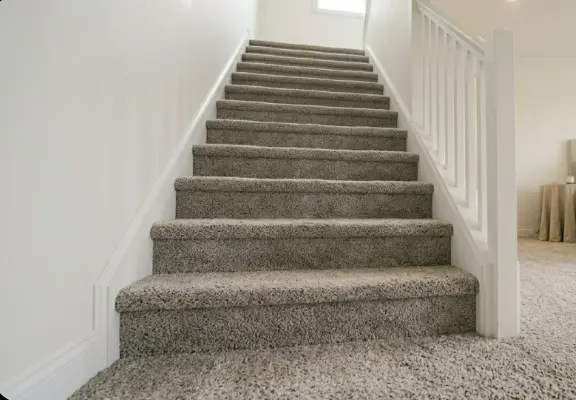
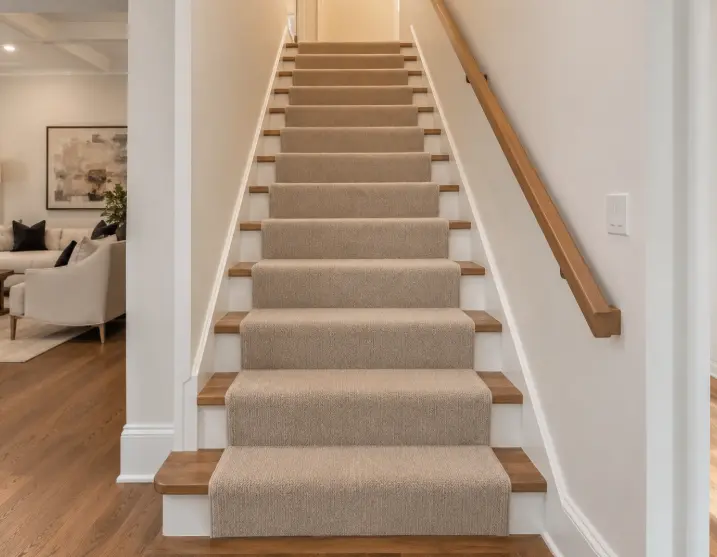
Whichever direction you lean, insist on two marks: the CRI Green Label Plus low-VOC certification on the carpet (and pad, and adhesive), and — for allergen performance specifically — the Asthma & Allergy Friendly mark. Our carpet installation team carries certified samples from every mill below to in-home consultations across DC, Maryland, and Northern Virginia. Carpeting a staircase too? Durability matters more than softness there, so see our guide to the best carpets for stairs before you choose one fiber for the whole house.
How it actually works
What makes a carpet hypoallergenic (it's the whole stack)
A carpet doesn't create dust mite allergen, pollen, or pet dander — your home does. The question is where those particles end up. Peer-reviewed work, including a 2022 review of carpet and indoor air studies in Applied Sciences, shows that carpet behaves like a sink: particles settle low in the pile and stay out of the breathing zone until a vacuum removes them, rather than recirculating every time someone walks by, as they do on hard floors. That only works in your favor when the pile is dense enough to hold particles down, the chemistry of every layer is clean, and the carpet actually gets vacuumed.
Installer's note: the layer homeowners always forget is #3. A bargain low-density rebond pad can undo a premium certified carpet — it off-gasses more, crumbles into dust over time, and its open cells hold moisture in humid DMV basements. We quote Green Label certified felt or rubber cushion on every allergy-driven job.
Material science
The best carpet fibers for allergies, compared
Four fibers dominate the hypoallergenic conversation in 2026. The common thread: solution dyeing (color locked into the fiber as it's extruded, so no dye baths) and built-in rather than sprayed-on stain resistance, which is what eliminated most of the topical chemistry older carpets carried.
| Fiber | Why it's hypoallergenic / non-toxic | Trade-offs | Installed cost* |
|---|---|---|---|
| Wool | Naturally resists dust mite colonization; absorbs formaldehyde and other VOCs from room air without re-emitting; no synthetic chemistry needed | Highest price; needs humidity kept in check; professional cleaning only | $9–$18+ /sq ft |
| Triexta (SmartStrand) | Stain resistance is permanent and built into the polymer — no topical PFAS treatments; solution-dyed; Pur-Ease styles are Asthma & Allergy Friendly certified | Softer styles can crush on stairs; pick denser weights for traffic | $4–$8 /sq ft |
| Solution-dyed nylon | Most durable synthetic; solution dyeing removes dye chemistry; widely available in Green Label Plus certified styles | Some styles still use topical stain treatment — ask for untreated or built-in | $4–$9 /sq ft |
| Solution-dyed PET (polyester) | Inherently stain-resistant (no treatments needed); often made from recycled bottles; inert, very low-emission fiber | Less resilient under heavy furniture and traffic than nylon or triexta | $2.50–$5 /sq ft |
*Typical 2026 installed ranges (carpet + pad + labor) in the DC/MD/VA market for mid-grade styles of each fiber. Premium wools and patterned goods run higher.
The wool numbers deserve a citation, because they sound like marketing: AgResearch fiber scientists found wool carpet pulled a high concentration of formaldehyde (300 ppm) down to virtually zero within four hours, absorbing faster and more completely than nylon — and crucially, wool does not re-emit what it absorbs, even when heated. The Woolmark Company summarizes the research here, and the International Wool Textile Organisation's Breathe Easy fact sheet estimates a wool carpet can keep purifying room air for decades.
Cut through the labels
The three certifications that actually mean something
1. Asthma & Allergy Friendly® (AAFA / Allergy Standards Ltd)
The gold standard for allergen performance. To pass, a carpet must reduce common allergens — pollen, pet dander, dust mite allergen — by at least 75%, cut allergens trapped within the fibers by at least 50% versus untreated carpet, and not release allergens back into the air during simulated activity. Mohawk's SmartStrand styles with Pur-Ease became the first treated carpet ever certified under the program's enhanced textile flooring standard in April 2026.
2. CRI Green Label Plus (low VOC)
The Carpet and Rug Institute's Green Label Plus program chamber-tests carpet for 14 days under California's Section 01350 protocol and caps emissions of 13 chemicals, including formaldehyde, styrene, and acetaldehyde. It exists for carpet, cushion, and adhesive — specify all three. It also earns credit under LEED, which is why it's the default spec on DC commercial work.
3. Cradle to Cradle Certified®
A full material-health and circularity audit. The benchmark here is Shaw's PVC-free EcoWorx carpet tile — among the first products in the world certified under the rigorous Cradle to Cradle v4.0 standard (Silver), and a past winner of the EPA's Presidential Green Chemistry Award. Mostly a commercial spec, but it tells you the mill's chemistry is audited top to bottom.
From our showroom
Hypoallergenic lines from the brands we install
These aren't theoretical recommendations — they're the mills whose carpet our crews stretch in across the DMV every week, and you can see all of them in our North Bethesda showroom:
- Mohawk: SmartStrand with Pur-Ease is the headline: the first Asthma & Allergy Friendly certified treated carpet (2026), with probiotic-based allergen reduction of up to 75%. Mohawk’s EverStrand PET lines are solution-dyed and made from recycled bottles.
- Shaw Floors: Anso high-performance solution-dyed nylon for busy households, ClearTouch solution-dyed PET for budget bedrooms, and Green Label Plus certification across residential lines. On the commercial side, PVC-free EcoWorx tile is Cradle to Cradle Silver.
- Dixie Home: Premium solution-dyed nylon styles with high twist levels and dense construction — the density that keeps allergens settled low in the pile and holds up on stairs.
- Southwind & Kimberly: Value-priced solution-dyed PET lines — inherently stain-resistant with no topical treatments, a smart pick for rentals and quick bedroom refreshes.
If you're comparing mills more broadly, our guide to the top American flooring brands ranks them across every category.

The non-toxic question
PFAS, VOCs, and what “non-toxic carpet” means in 2026
Two chemistry concerns drive the “non-toxic” search: PFAS (the per- and polyfluoroalkyl “forever chemicals” once used in topical stain repellents) and VOCs (volatile organic compounds that off-gas from backings and adhesives — the EPA's indoor air quality guidance covers why indoor VOC levels matter). Both problems are largely solved in new, properly specified carpet:
PFAS is banned in Maryland carpet. Under the George “Walter” Taylor Act (SB 273), since January 1, 2024 no carpet or rug with intentionally added PFAS may be manufactured, sold, or distributed in the state, and manufacturers must maintain certificates of compliance. Major U.S. mills — including Mohawk and Shaw — had already phased topical PFAS treatments out of residential carpet around 2019–2020, which is exactly why fibers with built-in stain resistance (triexta, solution-dyed PET) took over the market. The remaining risk isn't the new broadloom you buy from a local installer; it's pre-2020 carpet still on your floors and imported area rugs of unknown chemistry.
VOCs are a spec, not a gamble. Green Label Plus caps emissions across carpet, cushion, and adhesive, and glue-free stretch-in installation over tack strip — how nearly all residential carpet in the DMV is installed — sidesteps adhesive emissions entirely. Ventilate for the first 48–72 hours and the “new carpet smell” is gone. If low-chemistry flooring is the broader goal, our eco-friendly flooring page covers the non-carpet options too.
Where it goes
Best hypoallergenic carpet picks, room by room
Bedrooms are where hypoallergenic specs pay off most — you spend a third of your life there, inches from the floor. Our bedroom carpet installation page covers the comfort-versus-density decision in detail, and for stairs the wrap method matters as much as the fiber — see our waterfall vs. Hollywood stairs guide. Still weighing carpet against hard surfaces for allergy reasons? Our carpet vs. hardwood comparison has a dedicated allergies section.
On the ground
DMV local insights: humidity, pollen, and old carpet
Our humidity is the deciding factor. Dust mites — the region's dominant indoor allergen — essentially stop proliferating when indoor relative humidity stays below 50%, per the NIH-published environmental control practice parameter. Washington-area summers make that a real fight: July dew points here routinely sit in the 70s, and homes with older HVAC, window units, or damp basements run indoor humidity well above the threshold for weeks. When we quote basement carpet in Silver Spring or College Park split-levels, we ask about dehumidification before we talk fiber — a certified hypoallergenic carpet over a chronically damp slab is still a dust mite farm. The CRI's dust mite technical bulletin reaches the same conclusion: control moisture first, then carpet performs.
Spring pollen is a carpet argument, not a carpet problem. The DC region's notorious tree pollen season (that yellow-green film on every car from late March through May) tracks indoors on shoes and pets. On hard floors it recirculates with every footstep; in a dense pile it settles low and leaves in the vacuum. The households that struggle are the ones vacuuming with an old non-HEPA machine once a month.
The biggest allergy win in most local homes is removing the old carpet. A large share of our work is in colonials and split-levels in Bethesda, Rockville, and Arlington built decades before the PFAS phase-out, with original pad that has absorbed twenty-plus years of allergen, moisture events, and pet history. Tearing that out — pad, tack strip debris, and the dust beneath — and replacing it with a certified low-VOC assembly is a bigger indoor-air upgrade than any fiber choice on top. Our Bethesda, Silver Spring, and Arlington crews do full tear-out, haul-away, and subfloor vacuuming on every replacement job.
Offices, schools & multifamily
Hypoallergenic specs for commercial spaces
In commercial buildings the same logic applies at scale — and the certifications shift from nice-to-have to contractual. DC-area offices chasing LEED points spec Green Label Plus carpet and adhesive as a matter of course; daycare centers, medical offices, and senior living communities increasingly write low-VOC and PFAS-free requirements directly into their fit-out standards. PVC-free, Cradle to Cradle certified tile systems like Shaw's EcoWorx dominate those bids because the material health documentation already exists. If you manage an office, school, or multifamily building, our commercial carpet installation team handles product submittals, moisture testing, and low-VOC adhesive specs — and can phase installation around occupied hours so tenants never smell a thing.
After the install
Keeping a hypoallergenic carpet hypoallergenic
Certification gets you a clean starting point; maintenance keeps it that way. The routine that works, distilled from CRI guidance and what we see hold up in local homes:
- Vacuum weekly with a HEPA-sealed machine (twice weekly with pets or during pollen season). Look for the CRI Seal of Approval on the vacuum — it certifies the machine removes soil without blowing fine dust back out.
- Hot-water extraction every 12–18 months. Most manufacturer warranties — including Mohawk's and Shaw's — require it anyway, and it's what resets the allergen load deep in the pile.
- Keep indoor humidity under 50% — run AC in summer, dehumidify basements, and fix leaks fast. This single habit does more against dust mites than any fiber choice.
- Shoes off at the door. Most pollen, lead dust, and lawn-chemical residue in carpet walks in on footwear.
Good questions
Hypoallergenic & non-toxic carpet FAQs
What is the most hypoallergenic carpet you can buy in 2026?
For a certified, verifiable answer: Mohawk SmartStrand styles with Pur-Ease technology, which in April 2026 became the world’s first treated carpet to earn the Asthma & Allergy Friendly certification from the Asthma and Allergy Foundation of America and Allergy Standards Ltd. Independent testing showed it reduces pet dander, pollen, and dust mite allergen by up to 75% versus untreated carpet. For a natural-fiber answer: dense, low-pile wool, which resists dust mite colonization and actively absorbs indoor pollutants like formaldehyde without re-emitting them.
Is carpet actually bad for allergies?
The research is more nuanced than the old advice to rip out all carpet. Modern peer-reviewed reviews find that carpet acts as a sink that traps allergen particles low in the pile and out of the breathing zone — as long as it is vacuumed regularly with a HEPA-filter vacuum and deep-cleaned periodically. Where carpet genuinely hurts allergy sufferers is when it is old, moisture-exposed, or never deep-cleaned, and in chronically humid rooms where dust mites thrive. Severe dust-mite allergy sufferers may still be advised by their allergist to use hard flooring in bedrooms.
What is the least toxic carpet material?
Undyed or naturally dyed wool with a natural (jute or felt) backing and zero topical treatments is the lowest-chemical option. Among synthetics, solution-dyed triexta and solution-dyed nylon or PET are the cleanest: the color is locked into the fiber during extrusion, so no dye baths or topical color chemistry are needed, and triexta’s stain resistance is built into the polymer rather than sprayed on. Whatever the fiber, look for the CRI Green Label Plus mark, which caps emissions of 13 VOCs including formaldehyde and styrene.
Do new carpets still off-gas VOCs?
Far less than they used to. That distinctive “new carpet smell” (largely the compound 4-PCH from latex backing) dissipates within about 48–72 hours with good ventilation. Green Label Plus certified carpets are chamber-tested for 14 days under California’s Section 01350 protocol and are among the lowest-emitting interior products of any category. We still recommend ventilating the room well for the first two or three days after installation.
Does carpet sold in Maryland still contain PFAS “forever chemicals”?
New carpet legally sold in Maryland should not. Under Maryland’s George “Walter” Taylor Act (SB 273), it has been illegal since January 1, 2024 to sell or distribute carpets or rugs in the state with intentionally added PFAS, and manufacturers must certify compliance. Major U.S. mills had already phased PFAS stain treatments out of residential lines around 2019–2020. The practical caution is with imported area rugs bought online and old existing carpet installed before the phase-out.
What carpet pad is best for allergy sufferers?
Choose a cushion carrying the Carpet and Rug Institute’s Green Label certification for low VOC emissions. Synthetic felt (fiber) pads and 100% rubber pads are dense, resist moisture and crumbling, and give dust mites less open cell structure to colonize than cheap low-density rebond. Avoid salvaging an old pad under new carpet — decades of embedded allergen come with it.
Is hypoallergenic carpet worth it in the humid DC area?
Yes, with one condition: humidity control. Dust mites essentially cannot proliferate when indoor relative humidity stays below 50%, and Washington-area summers routinely push indoor humidity past that in homes without good HVAC or with damp basements. Pair a dense, low-pile certified carpet with air conditioning or dehumidification (especially in basements) and weekly HEPA vacuuming, and carpet performs well even for allergy-prone households in the DMV.
Want to see certified hypoallergenic carpet in person?
Bring your allergy concerns to a free in-home consultation — we'll show you Asthma & Allergy Friendly certified SmartStrand, solution-dyed nylons, and wool side by side, quote a full certified assembly (carpet, pad, and install method), and handle tear-out of the old carpet safely. Explore our carpet installation service or get a free quote anywhere in DC, Maryland, and Northern Virginia.

Written by
Jason Brown
Flooring Specialist
Jason Brown has 14 years of flooring sales and installation experience across the DC, Maryland, and Virginia area.