
It is one of the most common questions we get, and it almost always arrives the same way — quietly, on the last afternoon of the job, while the crew is loading the van. Do you tip floor installers? Homeowners ask because nobody wants to be the person who stiffed a hardworking crew, and because the internet gives wildly different answers depending on who wrote the article.
Here is our answer, as a flooring company that has been installing floors across Maryland, Washington, DC and Northern Virginia since 1997: tipping is never required and never expected at 2020 Flooring. Not on a single-room carpet job, not on a whole-home hardwood installation, not on a five-day refinishing project in August. We want to explain exactly why — because the reason says something about how the whole job is priced and who is standing in your house.
The Short Answer · 2020 Flooring · Serving MD, DC & VA Since 1997
No — you do not need to tip your floor installers. 2020 Flooring uses in-house crews who are paid fair wages and compensation by the company, so no installer's earnings depend on a gratuity. The price you signed in the contract is the price of the job, with no gratuity line and no end-of-job ask. If you want to thank the crew, a Google review naming them and a referral to a neighbor are worth far more than cash — and cold water, coffee or snacks, while never required or expected, are genuinely appreciated on a hot DMV afternoon.

Why Tipping Is Never Expected at 2020 Flooring
The short version: tipping norms exist to fill gaps in how workers are paid. We closed that gap on purpose.
Tipping culture in the trades exists for a specific reason. In industries where the person doing the work is paid thinly, unpredictably, or per job by a middleman, a tip stops being a courtesy and quietly becomes part of the compensation. Customers sense that, feel obligated, and the whole exchange gets awkward — for everyone.
We do not run that way. Our installers are in-house crews, not subcontracted labor. They are paid fair wages and compensation by the company. Many of them have been with 2020 Flooring for years — the same faces show up on job after job across Bethesda, Rockville, Silver Spring and Arlington, which is not something a company can say when it books whoever is available that week. They are licensed, insured and background-checked before they ever set foot in your home.
The practical consequence for you is simple: no part of your installer's livelihood is riding on what you do at the end of the job. Their compensation is settled before they pull into your driveway. Tipping cannot improve the work you get, and declining to tip cannot diminish it. That is by design, and it is what lets us tell you plainly: put your wallet away.
In-House Crews vs. Subcontracted Labor
Why the same question gets a different answer depending on which flooring company you hired.
If you have read tipping advice elsewhere that recommends handing each installer cash, it was almost certainly written about a different labor model. Big-box retailers and lead-generation marketplaces typically sell you the flooring and then hand the installation to a subcontracted crew paid per job or per square foot by an intermediary. Nobody in that chain is doing anything wrong — but in that model a tip really can be a meaningful share of what the installer takes home, so the etiquette gets murky and homeowners are left guessing.
In-House Crews
How 2020 Flooring works
- Who is in your home
- Our own installers — the same crews, job after job
- How they are compensated
- Fair wages and compensation paid by the company
- Tenure
- Many installers have been with us for years
- Vetting
- Licensed, insured and background-checked
- Does a tip change their pay
- No — their compensation is settled before they arrive
- Is tipping expected
- Never required, never expected, never hinted at
Subcontracted Labor
The model behind many big-box and lead-gen quotes
- Who is in your home
- A crew assigned per job — often unknown until the morning of
- How they are compensated
- Paid per job or per square foot by an intermediary
- Tenure
- Varies; crews rotate between retailers and referral platforms
- Vetting
- Depends entirely on who assigned the crew
- Does a tip change their pay
- It can be a meaningful share of what they take home
- Is tipping expected
- Norms are murky, which is why homeowners feel unsure
The reason we are so direct about this is that the labor model is the thing homeowners cannot see from a quote sheet. Two estimates can look nearly identical on paper while one sends its own long-tenured crew and the other sends whoever picked up the job. When you know which one you hired, the tipping question answers itself.
The Price You Signed Is the Price of the Job
No gratuity line. No end-of-job ask. No fee that appears after the work is done.
Tipping anxiety is usually money anxiety wearing a different coat. The real worry underneath “should I tip?” is often “is this going to cost more than I was told?” So let us answer that one too: the number on your signed contract is the price of the job as scoped — there are no hidden fees and no surprise costs.
Locked at signing
What the contract price covers
- The labor to install the floor you signed for
- The material quantities specified in your estimate
- Standard trim, transitions and thresholds as quoted
- Normal jobsite cleanup at the end of the work
- The crew showing up, on the scheduled day, at the agreed price
No gratuity line. No end-of-job ask. No surprise fees.
Quoted, not sprung
Scope work priced on its own
- Extensive furniture moving beyond what was quoted
- Subfloor leveling or repair discovered after tear-out
- Haul-away and disposal of old flooring, where applicable
- Stair work, custom trim or transitions added after the walkthrough
- Rooms or square footage added to the job after signing
These are additional work, not hidden charges — you approve the price before we do them.
There is one honest caveat, and we would rather state it plainly than let you discover it on a job site. Scope can change. Extensive furniture moving beyond what was quoted, subfloor leveling we find only after the old floor comes up, haul-away and disposal, stair work added mid-project, rooms tacked on after signing — that is additional work, not a hidden charge. It gets priced on its own and you approve it before we do it. What never happens is a number changing after the fact, and what never appears is a gratuity line on an invoice.
The best defense against scope surprises is a real on-site evaluation rather than a phone-quote guess. That is why every 2020 Flooring estimate starts with someone standing in the room, looking at the subfloor and the transitions and the doorway heights before a price is written down.
What If You Want to Tip Anyway?
What actually happens when a customer will not take no for an answer.
Some homeowners insist. A crew nails a difficult stair install, or works through a 95-degree day without complaint, and the customer wants to do something about it. Here is exactly what happens in that moment: our installers will accept graciously and say thank you. They are not going to argue with you in your own hallway.
What they will never do is solicit, hint at, or expect one. No lingering by the door. No comment about how long the day was. If you ever feel angled at for a tip by someone wearing our name, we want to know — that is a conversation for us, not something you should have to manage.
And on the question people search most — how much should you tip a floor installer? — we deliberately do not publish a figure. Naming a dollar amount implies there is a customary number you are falling short of, and there is not. The honest answer for a 2020 Flooring job is zero, plus a review.
Three Things Worth More Than a Tip
If you want to do something for the crew, these three are worth more than cash — and two of them are free.
A Google review that names the crew
This is the single most valuable thing a happy customer can do. A review that says "Miguel and his crew" or "the team that did our stairs" gets read out loud in our office. It follows the installer, it brings the next job in the door, and unlike an envelope of cash it keeps working for years.
A referral to a neighbor or friend
Word of mouth is how a flooring company in the DMV actually grows. When a Bethesda homeowner sends us to the house two doors down, that is worth more to the business — and to the crew’s steady work — than any gratuity on any single job.
Cold water, coffee and a place to sit
Never required. Never expected. But on a 95-degree August day in Rockville, a cooler of cold water is the thing crews genuinely remember. Coffee on a January morning does the same job. If you want to do something for the people in your home, this is the one we will always point you toward first.
If you only do one thing
Leave a review that names the crew. “The installers were great” is nice. “Ask for the team that did our hardwood — they were meticulous about the transitions” is the kind of thing that gets read in our office, followed around by the installer's reputation, and remembered a year later. You can leave one on our reviews page or straight on Google.
Water, Coffee & Snacks: The Gesture Crews Remember
Never required. Never expected. Always appreciated — and in a DMV August, genuinely felt.
We want to be careful here, because we do not want to trade one obligation for another. You are not expected to feed the crew. Nobody is keeping score, and a job with no snacks gets exactly the same floor as a job with a full spread.
That said — flooring installation is hot, heavy, kneeling, hauling, physical work, and summers in Maryland, DC and Northern Virginia are punishing. Crews spend July and August in houses where the AC is off because the doors are propped open for material. A cooler of cold water on a day like that lands harder than any envelope. In January it is coffee. On a long refinishing job it is knowing where the tap is.
Hot-day hospitality — optional, appreciated
- Cold water or sports drinks in a cooler
- Coffee on a cold morning
- A shaded or air-conditioned spot to take a break
- Simple snacks — nothing catered, nothing fancy
- Telling them which bathroom to use
- Somewhere to refill a bottle from the tap
If you want to support the people working in your home, this is the thing we will always point you toward before cash.
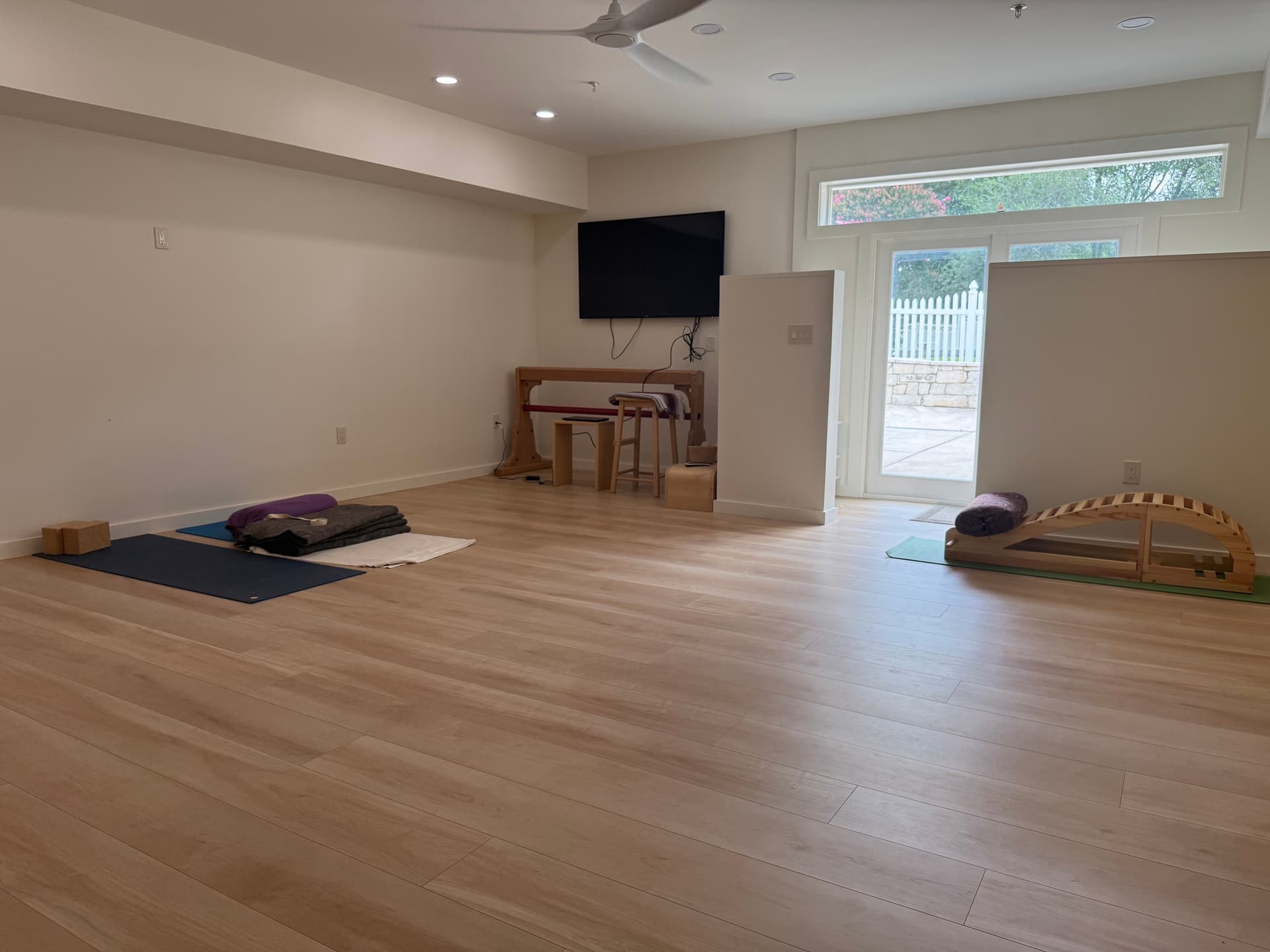
Does It Change for Carpet vs. Hardwood vs. Tile Crews?
Carpet, hardwood, tile, luxury vinyl, refinishing, stairs, repairs — the answer does not move.
People ask this a lot, and the instinct behind it is understandable: a carpet installation might wrap by mid-afternoon while a hardwood refinishing job runs most of a week. Surely the longer, harder one deserves something?
It does not change the answer. Every trade we run is staffed by the same in-house crews on the same compensation, doing work that was quoted and scheduled and paid for. The difficulty of the job is priced into the estimate, not left for the customer to top up at the door.
| Type of installation | Tip expected? | What we actually see |
|---|---|---|
| Hardwood installation | Not expected | Multi-day jobs make homeowners feel they should do something. Water and a clear workspace are the thing that helps. |
| Hardwood refinishing | Not expected | The longest and dustiest job on the list — and still not a tipping job. Air flow and access matter far more. |
| Carpet installation | Not expected | Usually a one-day job. Nothing about the speed of the work changes the answer either way. |
| Tile and stone | Not expected | The most physically demanding install we do. Crews appreciate cold drinks; they do not appreciate being tipped. |
| Luxury vinyl plank and laminate | Not expected | Fast, clean installs. Homeowners often ask because the crew finished early — that is skill, not a favor. |
| Stairs and custom trim | Not expected | Precision work that reads as craftsmanship, which is exactly why people reach for their wallet. Write the review instead. |
| Flooring repair | Not expected | Small jobs feel like a favor. They are not — they are quoted, scheduled and paid work like any other. |
Two rows deserve a note. Tile and stone crews do the most physically punishing work on that list — hauling material, cutting, kneeling all day. And repair jobs feel to homeowners like a favor because they are small. Neither of those facts turns into a tipping obligation. Both of them turn into an excellent argument for cold drinks.
What Actually Helps on Installation Day
The genuinely useful version of “what can I do for the crew?” — six things that make the job faster, safer and better.
If the impulse behind tipping is I want to make this easier for them, there is a much more effective way to spend it. These six things save a crew real time and real strain, and every one of them makes your finished floor better.
Clear the rooms before the crew arrives
Closets, under beds, the corner of the basement where everything ends up. Every box the crew has to move is time not spent installing your floor.
Sort out parking and access
In Silver Spring, Arlington and much of DC, a reserved spot near the door is worth more than a tip. Crews carry heavy material a long way otherwise.
Keep the HVAC running
Hardwood and luxury vinyl need the house at normal living conditions to acclimate and install correctly. Turning the AC off to save on the bill causes real problems later.
Contain pets and plan for kids
Open front doors, nail guns, saws and adhesive. A closed door on one room keeps everyone safe and the job moving.
Point out the bathroom and a water source
A ten-second conversation at the start of the day that crews are usually too polite to ask about.
Do the walkthrough before the crew packs up
Look at the floor while the people who installed it are still standing on it. Anything you want addressed is easiest to fix in that window.
Notice how many of those are about the day going smoothly rather than about money. That is the point. A cleared room and a parking spot in Silver Spring are worth more to an installation crew than any amount of cash handed over at 5pm — and unlike a tip, they show up in the quality of the floor.
An Installer's Bottom Line
Do you tip floor installers? Not at 2020 Flooring. Not required, not expected, not hinted at. Our crews are in-house, long-tenured, licensed, insured and background-checked, and they are paid fairly by the company that sent them. The price you signed is the price of the job — no hidden fees, no gratuity line, no surprise at the end.
If the work was good and you want to say so, say so where it counts: a Google review that names the crew, and a referral to a neighbor. And if it is 95 degrees in Bethesda and you want to put a cooler of cold water by the door — nobody asked, nobody expected it, and we promise you the crew will remember it.
Free On-Site Estimate · MD, DC & Northern Virginia
One Price, In-House Crews, No Surprises
2020 Flooring has installed hardwood, carpet, tile and stone and luxury vinyl across Maryland, Washington, DC and Northern Virginia since 1997 — with our own crews, an on-site evaluation before any number is written down, and a contract price that stays the contract price.
No gratuity line, no end-of-job ask, no hidden fees. Just the floor you paid for.
Tipping Floor Installers: FAQs
The tipping and pricing questions DMV homeowners ask our crews and our office most often.

Written by
Jason Brown
Flooring Specialist
Jason Brown has 14 years of flooring sales and installation experience across the DC, Maryland, and Virginia area.