What is the difference between vinyl plank and luxury vinyl plank?
The terms get used interchangeably, but luxury vinyl plank (LVP) means a premium product: a rigid or composite core rather than a flexible sheet, a measurable wear layer stated in mil, embossed texture rather than a flat print, and a real waterproof rating. Basic vinyl plank is thinner, prints flat, and dents. Everything we carry is the former.
What is the difference between LVP and LVT?
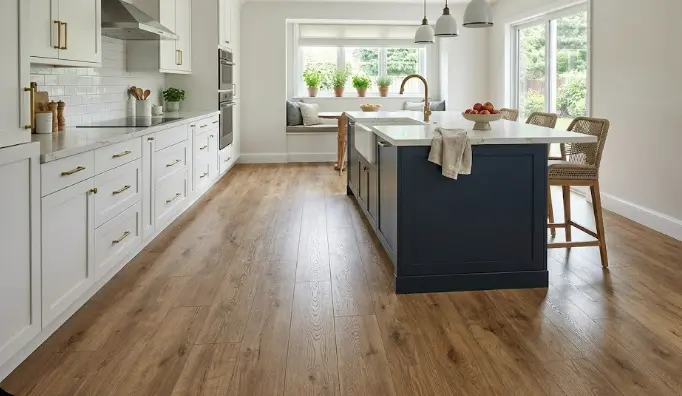
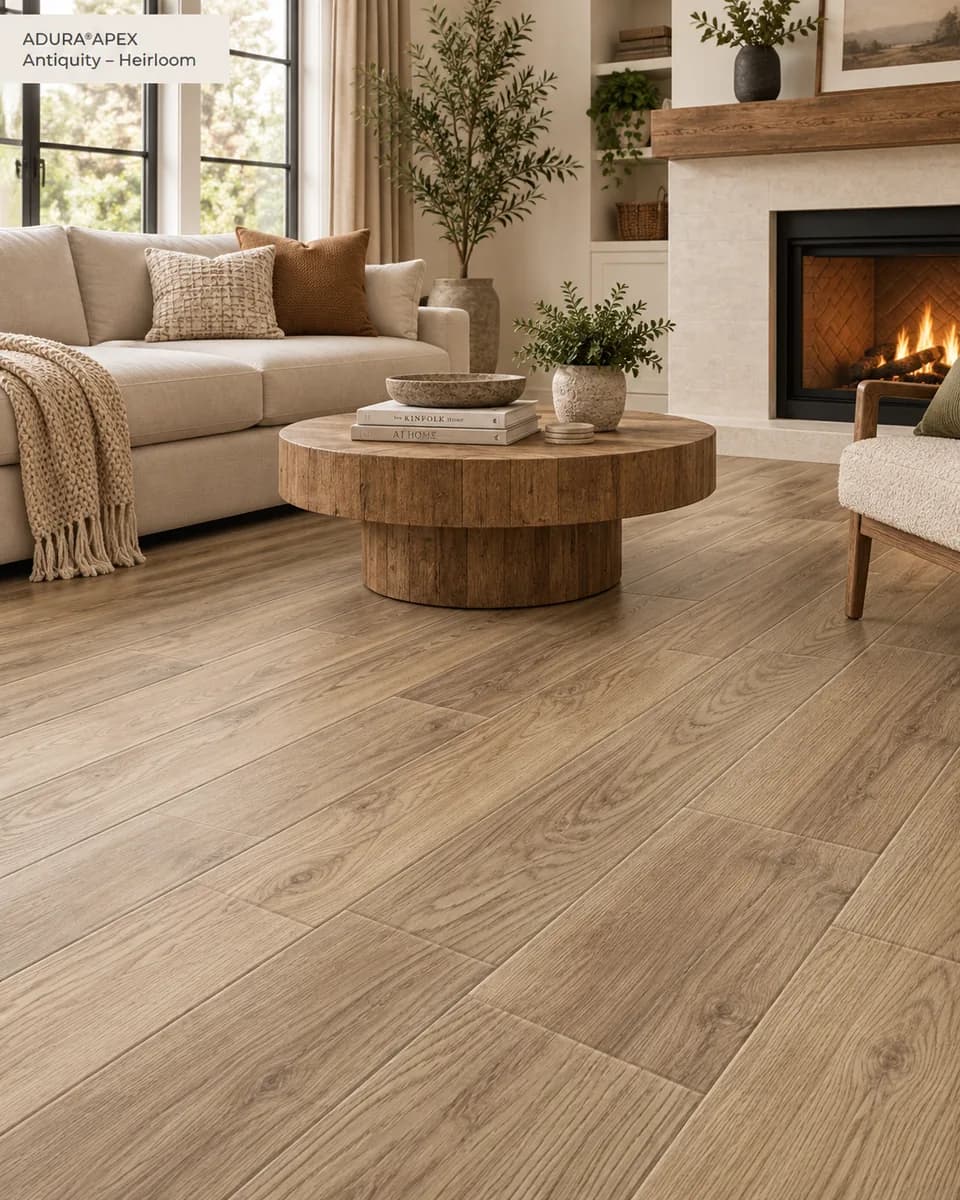
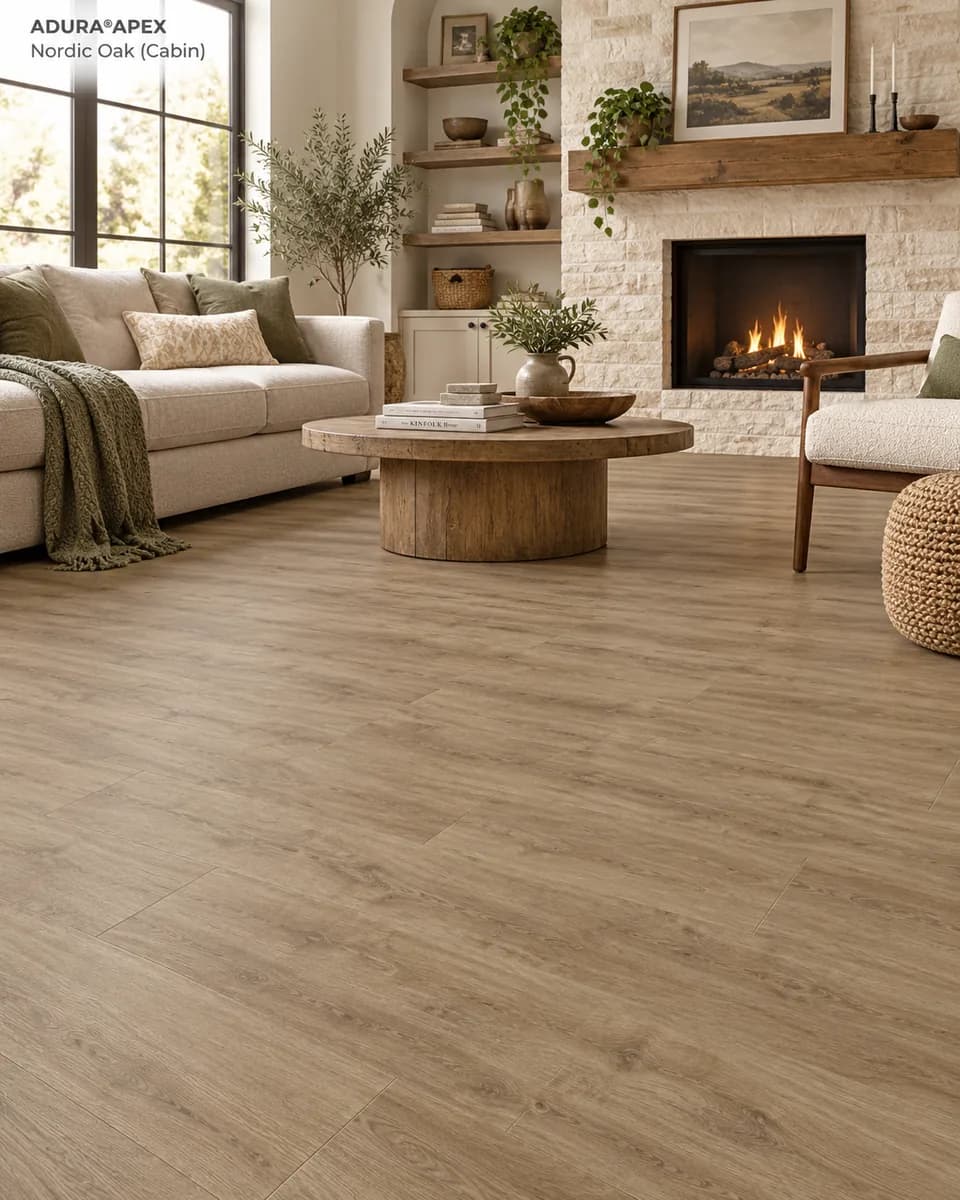
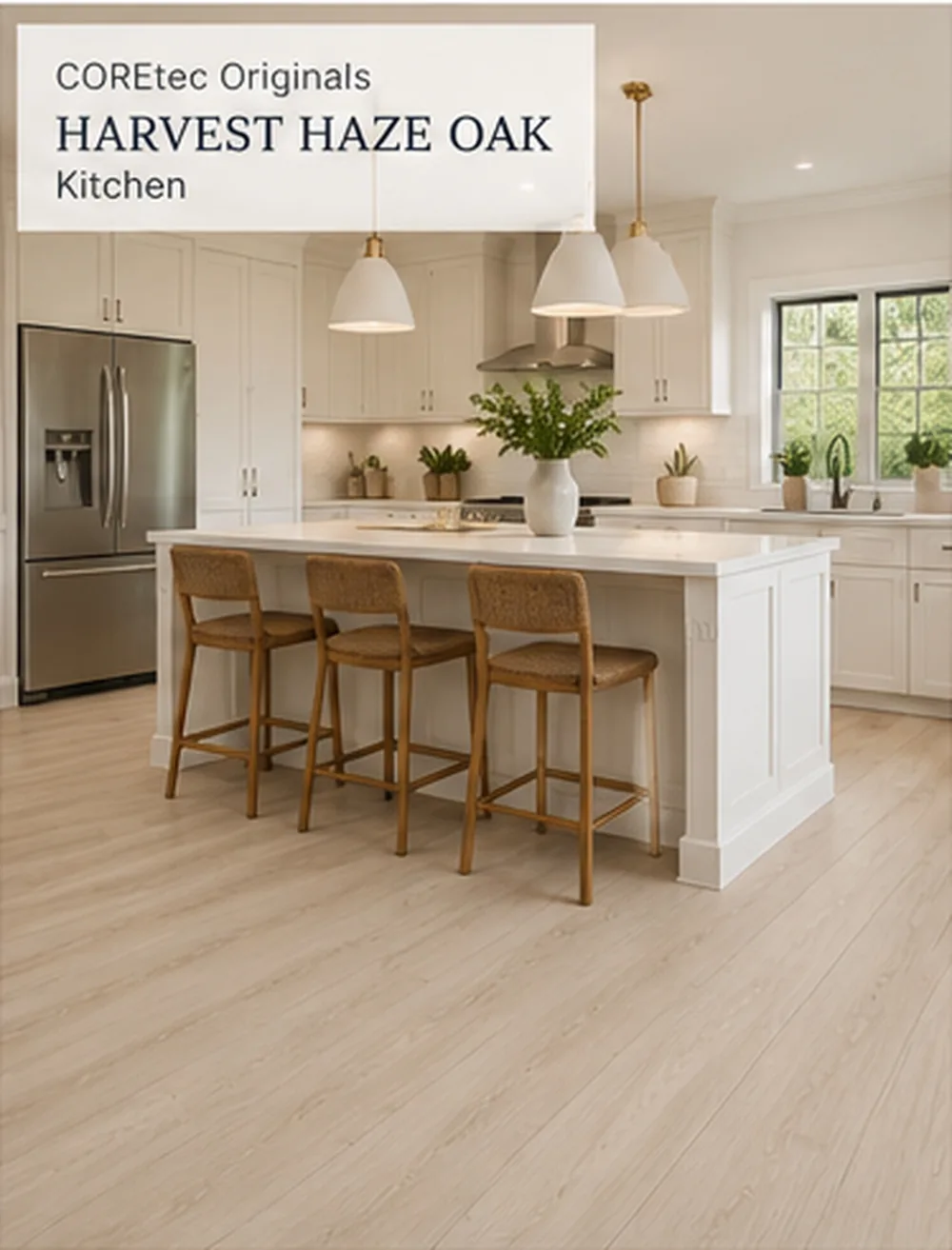
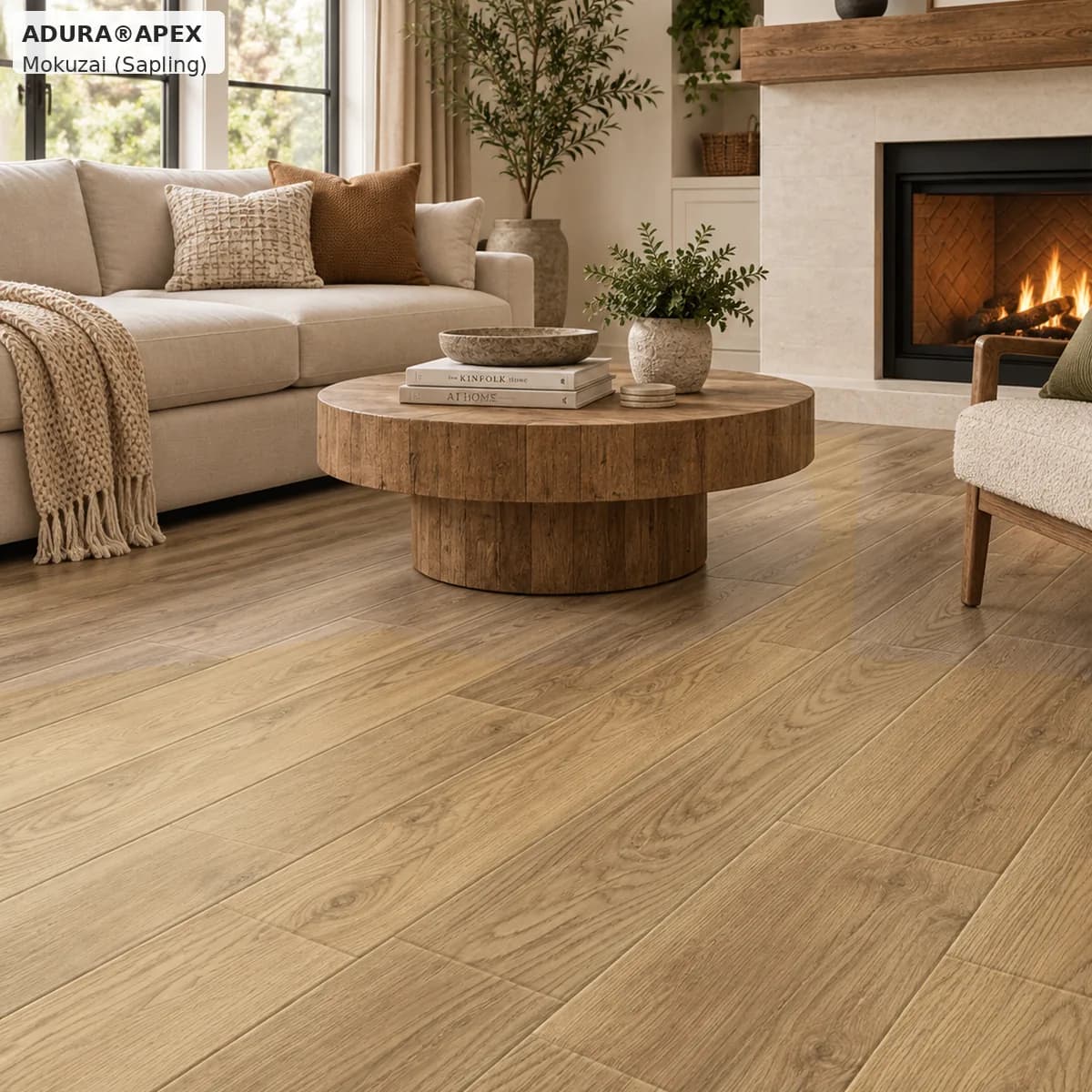
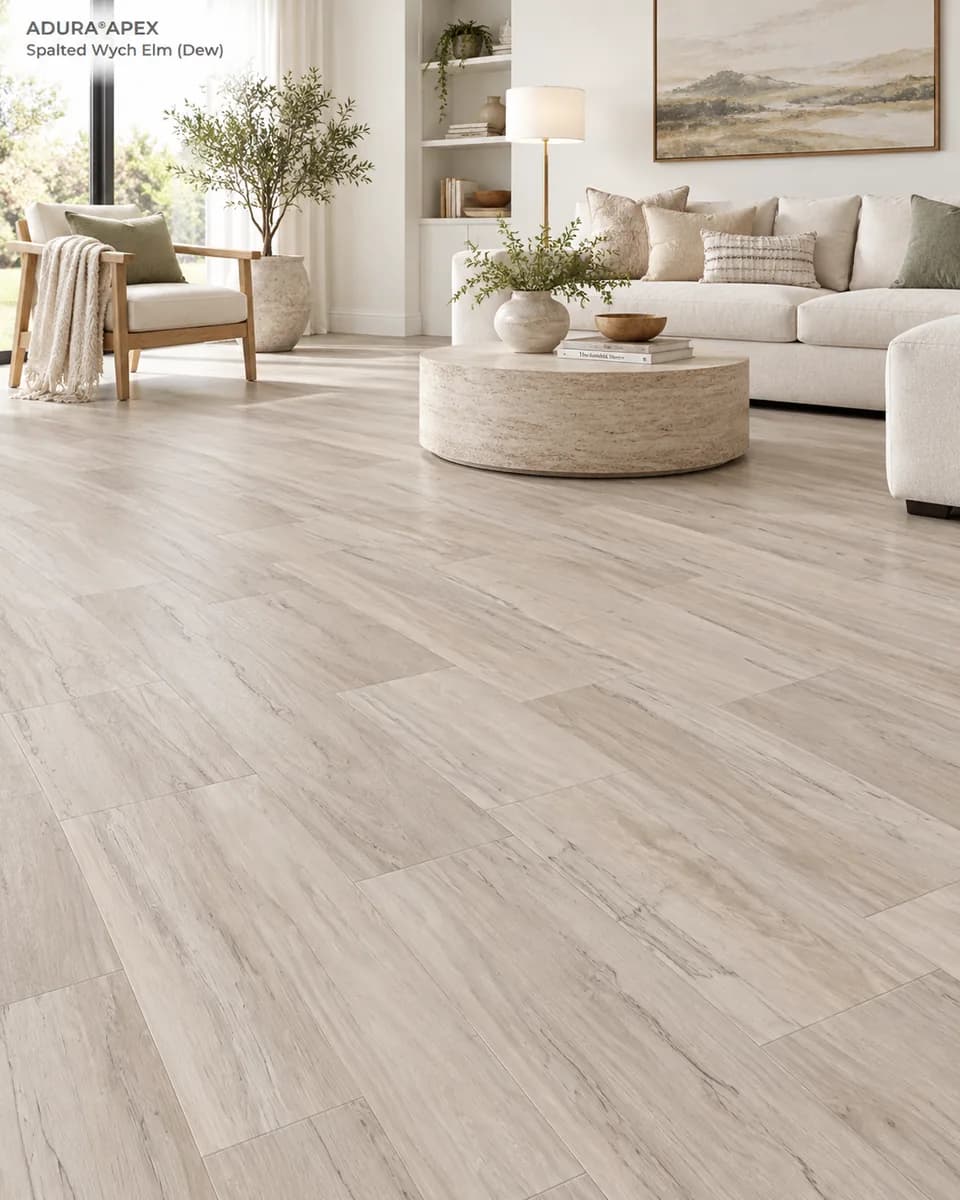
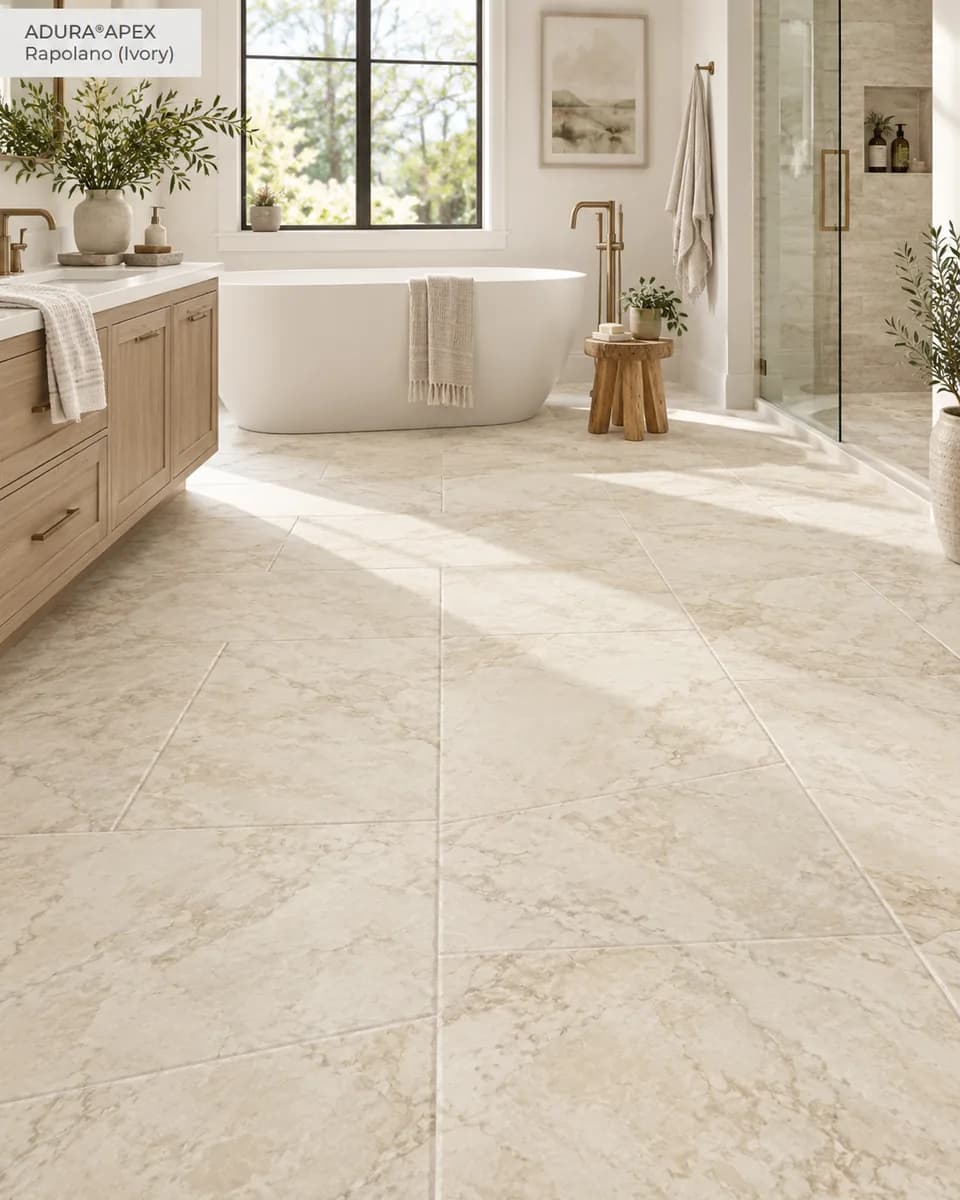
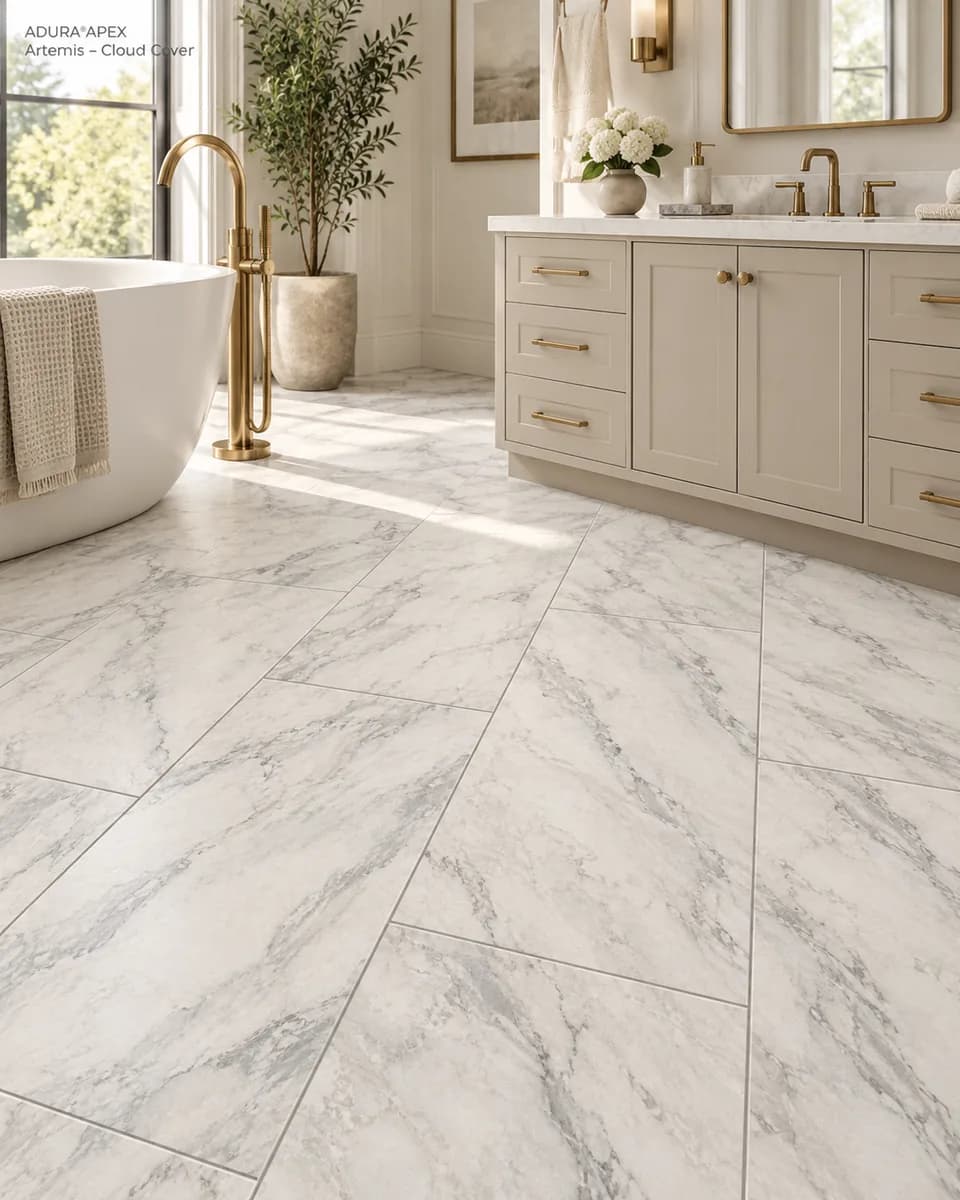
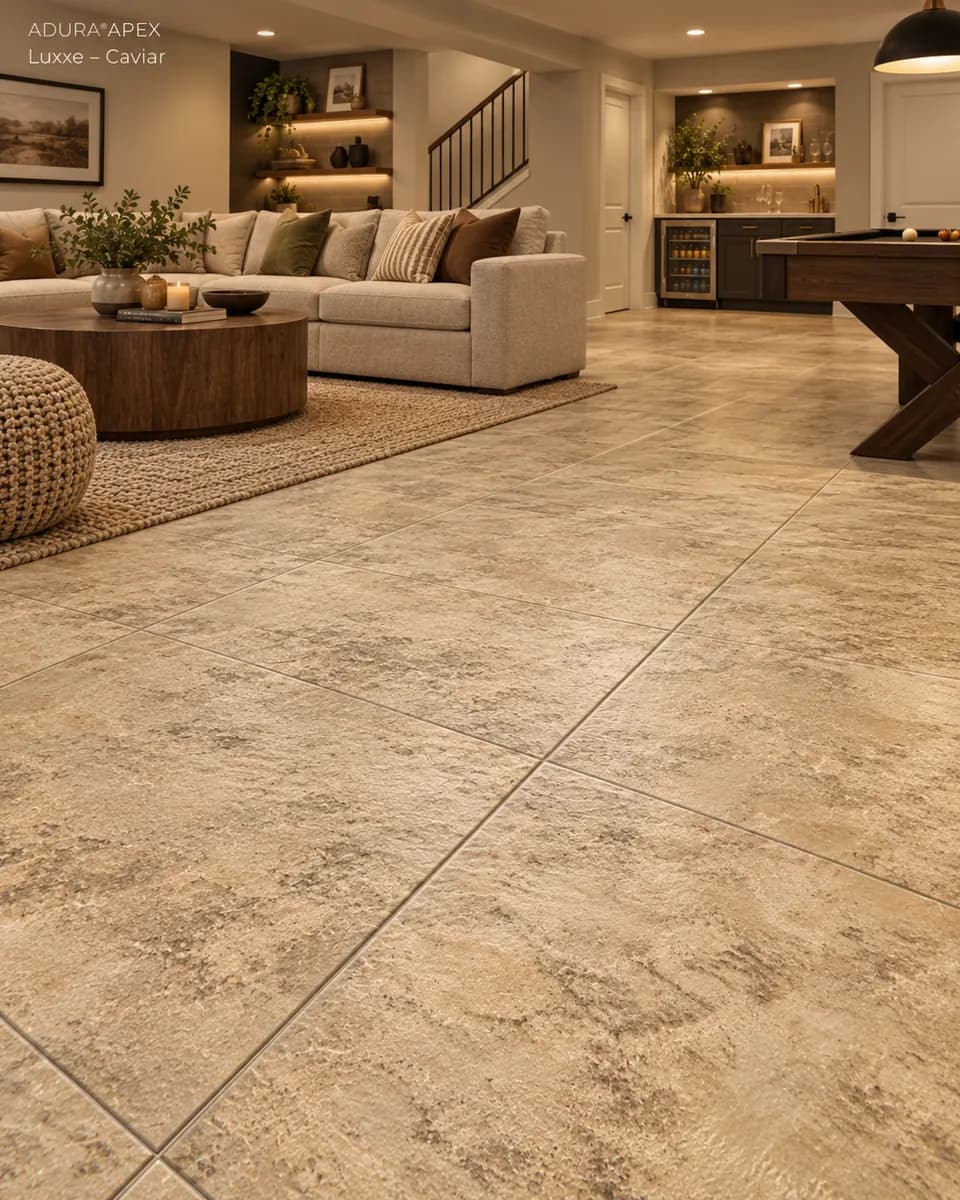
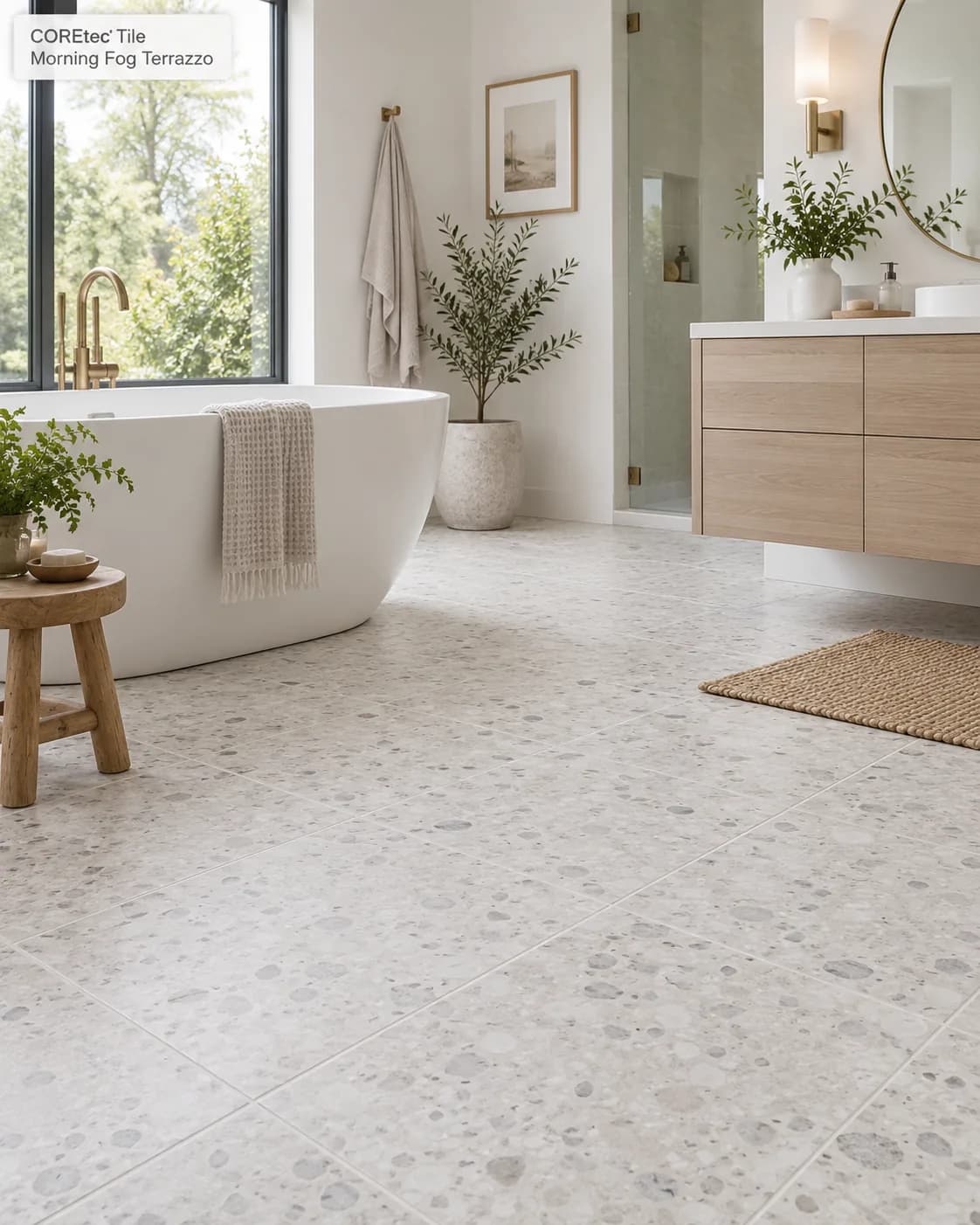
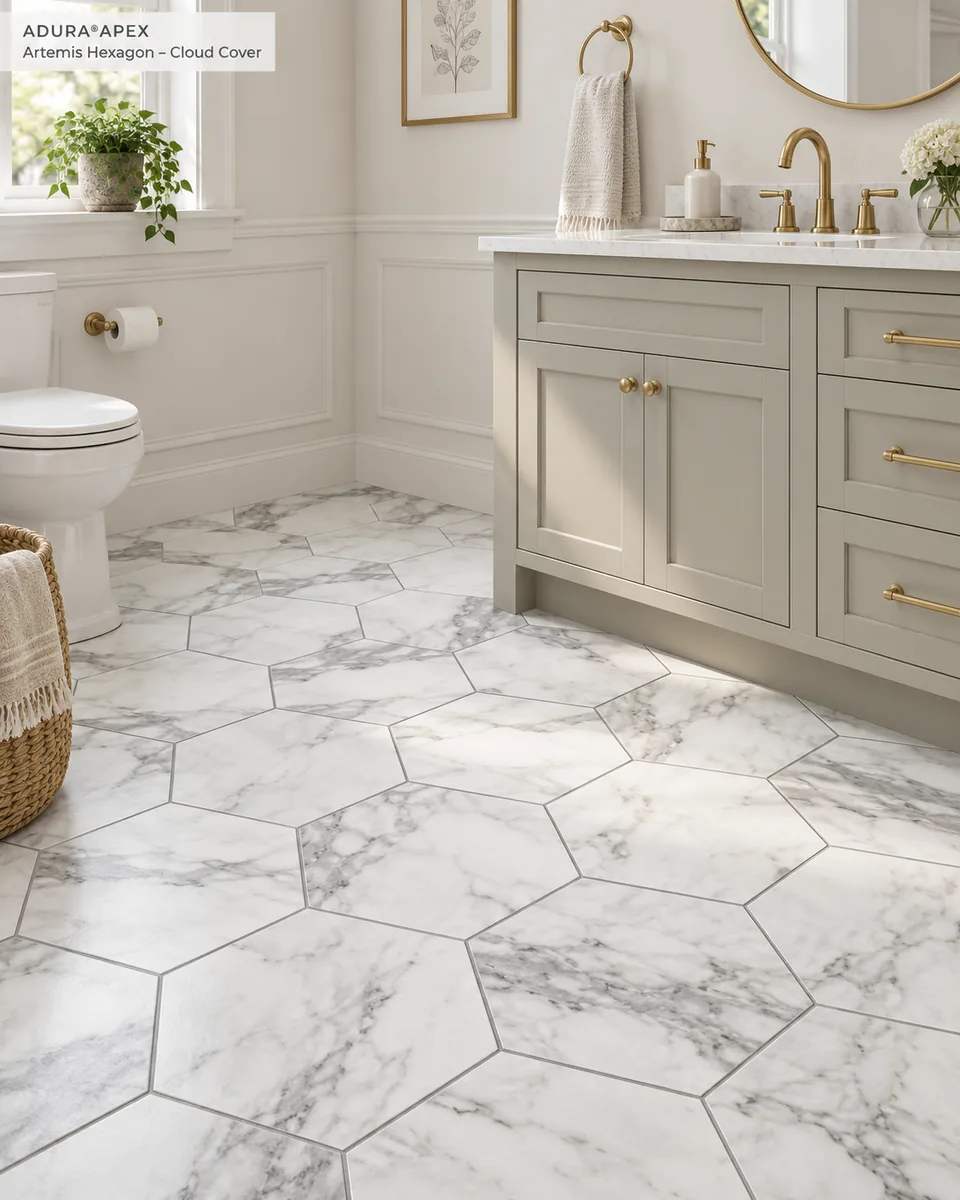
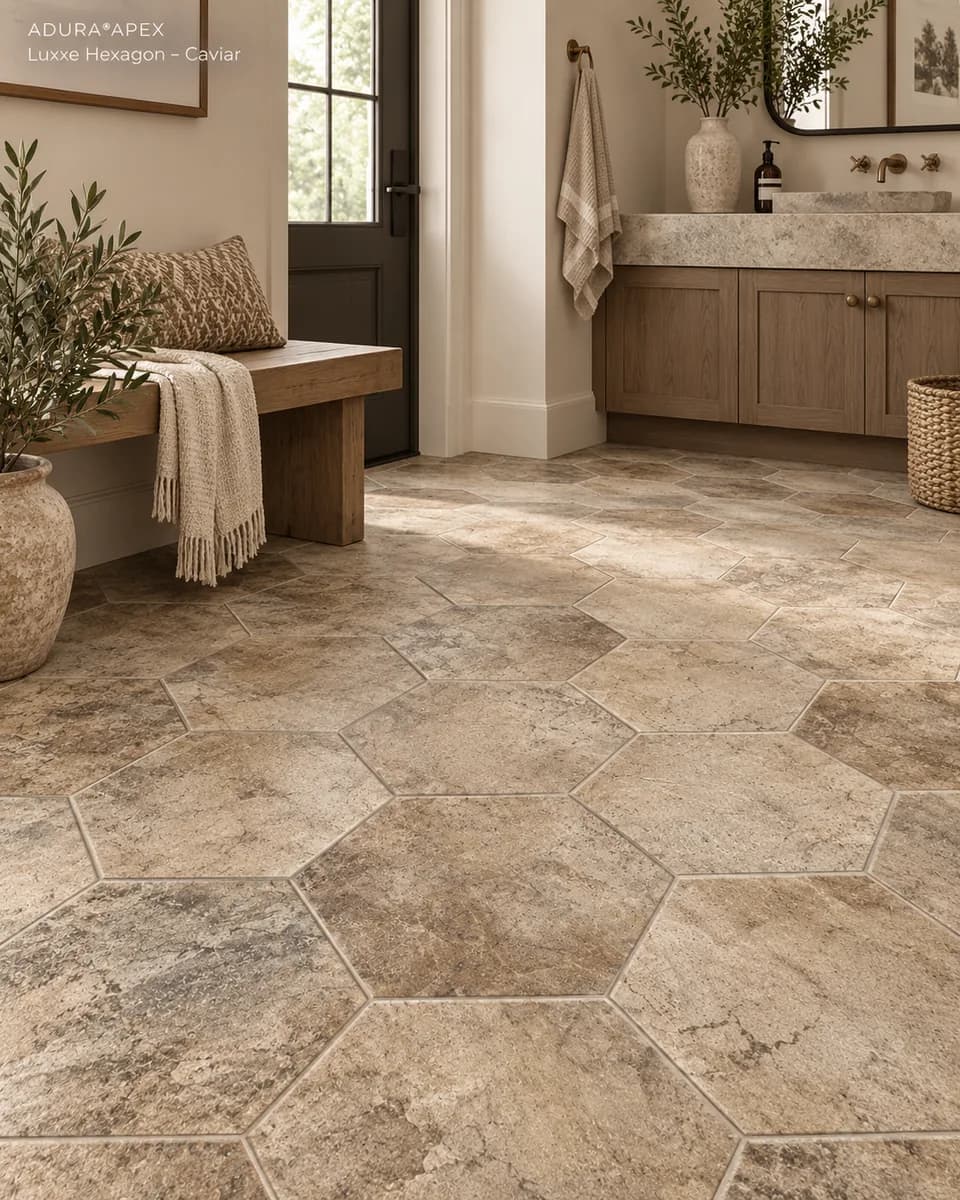
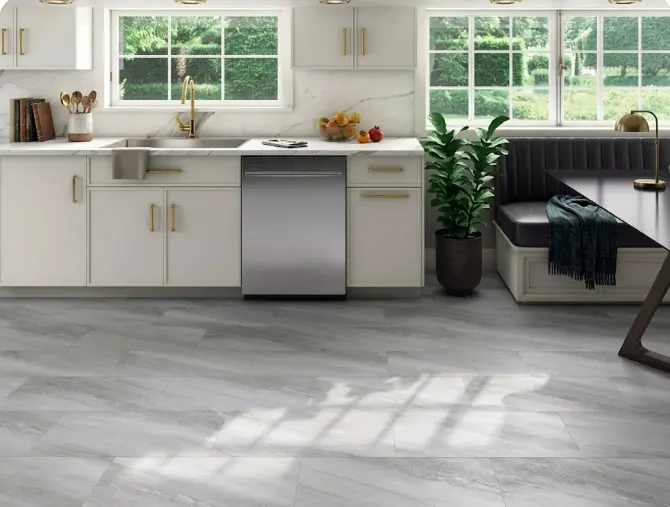
Format, not material. Luxury vinyl plank comes in long boards that read as hardwood — the ADURA APEX planks we carry run 7 or 8 inches wide by 60 or 72 inches long, and COREtec Originals sits alongside them in the same wood-look role. Luxury vinyl tile comes in squares, rectangles and hexagons that read as stone or ceramic, from 12 x 24 up to 18 x 36, which is where COREtec Tile and the ADURA APEX tiles and hexagons live. The core, the wear layer and the waterproofing are the same technology in both.
What is a wear layer, and how many mil do I need?
The wear layer is the clear coat above the printed decor, and it is the number that determines how long the floor keeps looking new. It is stated in mil, not millimetres — 20 mil is 0.5mm. For a family home 20 mil is the sensible floor, and it is what every ADURA APEX pattern we carry runs. Anything at 6 or 8 mil is builder-grade and will show traffic paths.
What is the difference between WPC, SPC and flexible LVT cores?
WPC is a wood-plastic composite core — thicker, warmer and quieter underfoot, and forgiving of small subfloor variation. SPC is a stone-polymer core — denser, harder and more dimensionally stable in a room that swings in temperature. Flexible LVT is a thin glue-down build with no rigid core, used where the floor has to stay low at a doorway. The ADURA APEX planks and tiles are 8mm WPC with an attached pad; the hexagons are 5mm glue-down LVT.
Is luxury vinyl really waterproof?
The plank body is, genuinely. A waterproof core does not swell, warp or delaminate when water sits on it, which is why luxury vinyl is the default in basements, kitchens, baths and laundry rooms. What is not waterproof is the subfloor underneath and the perimeter around the edge, which is a question of how the floor is installed rather than what the product is.
Is LVP better than laminate?
For wet rooms, clearly. Luxury vinyl is waterproof through the body and laminate, even water-resistant laminate, has a fibreboard core. In dry living rooms and bedrooms the case is closer: laminate is harder on the surface, often more scratch-resistant, and many people find a good laminate reads more convincingly as real wood. Our laminate collection is worth a look before you decide.
How does luxury vinyl compare to hardwood?
Vinyl wins on water, scratch resistance, price and maintenance. Hardwood wins on authenticity, on resale value in higher-end DMV housing stock, and on being refinishable — a hardwood floor can be sanded back several times over its life, where a damaged vinyl plank is replaced rather than repaired.
What does luxury vinyl flooring cost per square foot?
Material for quality LVP and LVT generally runs $3 to $7 per square foot depending on wear layer, core and format, with installation on top. A 1,000 square foot project typically lands between $2,500 and $6,000 installed. Our cost calculator will put a number on your specific square footage across 25+ brands.
How long does luxury vinyl flooring last?
Fifteen to twenty-five years and beyond for a 20 mil product that was installed properly and lives in a normal household. The ADURA APEX patterns we carry are warranted for life residentially and ten years in light commercial use.